Top Fifty Films of the 40s — Number Eleven

#11 — Bicycle Thieves (Vittorio De Sica, 1948) So much of the cinema of the nineteen-forties needs to be approached with the contextualizing recollection that the active engagements of World War II consumed around half of the decade-long span. It’s useful when considering the very different weight that war films must have carried — especially given how reticent filmmakers have been to build fictions that run in chronological proximity to contemporary wars in more recent decades — but it adds shading to so many films outside of that genre, even — or especially — tough-minded dramas that emerged in the aftermath of … Continue reading Top Fifty Films of the 40s — Number Eleven

We don’t know the meaning of fear, we play every minute by ear

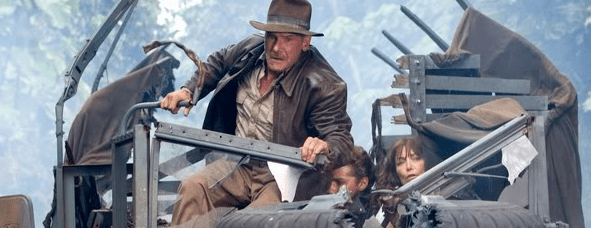
Amazingly for a director who used to routinely face a barrage of critical darts for a supposed inability to progress past the childish stuff of frothy fantasy, Steven Spielberg has become one of the most dependable cinematic chroniclers of the planet’s tumultuous history. Across the last decade, with the odd exceptions of a misguided Indiana Jones sequel and a diversion into computer animation, Spielberg has been filming in the past. That’s not an entirely newfound preoccupation, of course. Even before Munich, which I’m using as the dividing line ahead of this era of Spileberg’s filmmaking, Spielberg kept cycling back to historical … Continue reading We don’t know the meaning of fear, we play every minute by ear

Oh, now I don’t hardly know her

Guillermo del Toro takes a clear, unbridled pleasure in sharing the wildest worlds of his imagination. Like Wes Anderson — and this is probably the sole cinematic instinct the two directors have in common — del Toro loves to spread his favorite playthings all over the screen. While Anderson presents them meticulously arranged, under glass, and with an implicit instruction that they must not be touched or moved even a millimeter, del Toro upends the toy box and romps delightedly as the colorful contraptions come raining down. It’s not that he has no control. The film that remains his finest proves decisively … Continue reading Oh, now I don’t hardly know her

Top Fifty Films of the 40s — Number Twelve

#12 — The Magnificent Ambersons (Orson Welles, 1942) Orson Welles was happy to cultivate legend. The towering wunderkind brought an overwhelming panache to absolutely everything he did, but he was rarely more at comfortable home than when engaging in something that burnished his own monumental reputation, either as genius, a showman, or, increasingly as his career progressed, a semi-tragic figure discarded by the very entertainment establishment that could have most benefited from his distinctive brilliance. Just one look at Welles facing the press in the aftermath of the infamous “War of the Worlds” radio broadcast, playing every variant of chastened … Continue reading Top Fifty Films of the 40s — Number Twelve

Tomorrow’s sun with buildings scrape the sky

For a sizable portion of his career — at least since Back to the Future first positioned him to be able to take pricey risks in his projects — director Robert Zemeckis has been most enlivened by material that allows him some opportunity to bend the latest cinematic technology to the needs of classic Hollywood narrative. At its best, this has led to films where the exuberance of Zemeckis’s relentless invention gave truth to the overused term movie magic. It also led to an unfortunate stretch of years that found him stuck in the Uncanny Valley. Even at the most dire, the … Continue reading Tomorrow’s sun with buildings scrape the sky

The boys are worried, the girls are shocked, they pick the sound and let it drop

Sicario, the new drug war drama directed by Denis Villeneuve, is delivered with the certainty that it has all sorts of profound things to offer about the dire state of the world. It is serious and intent, a brave face with just the merest hint of a quiver. Unfortunately, despite it’s stalwart intentions and clear self-regard, Sicario is a movie without much to actually say, a problem compounded by an overly stylized approach that makes its relative emptiness become almost unbearable. Written by Taylor Sheridan, the film purports to examine the cross-border drug trade with a barbed focus on the widespread … Continue reading The boys are worried, the girls are shocked, they pick the sound and let it drop

Top Fifty Films of the 40s — Number Thirteen

#13 — The Red Shoes (Emeric Pressburger and Michael Powell, 1948) I’m less likely than most who turn themselves over to cinema to become hopelessly enamored of a film strictly on the basis of its visuals. I’m not immune to such affections, and I certainly believe that striking imagery is one of the vital tasks of a great piece of moviemaking. Still, my patience is tested whenever I feel that a film is overemphasizing the scenery with a disregard for the fundamentals of narrative storytelling. The Red Shoes is something of a refutation of my prejudice. To be clear, the story … Continue reading Top Fifty Films of the 40s — Number Thirteen