Dominik, Howard, Junger, Miller, Wolchok

Deadpool (Tim Miller, 2016). And so we’ve reached the point in the superhero era of cinema that allows for a caustically deconstructionist take on the genre to become one of the biggest hits of the year. There might be no better methodology for tracing the chronology of the genre’s takeover than measuring the comparative impact of Mystery Men (a dud in 1999) to Kick-Ass (a solid hit in 2010) to Deadpool (a sensation in 2016). Technically, Ryan Reynolds first played Wade Wilson in the dismal X-Men Origins: Wolverine, release in 2009. Besides the smirking countenance of the actor, that iteration … Continue reading Dominik, Howard, Junger, Miller, Wolchok

Bird, Coon and Skousen, Garrone, Huston, Paradisi

Tomorrowland (Brad Bird, 2015). There’s nobility in Brad Bird’s oft-stated aspiration to use Tomorrowland to reanimate the futuristic optimism of his youth, countering the long meander into an endless procession of sci-fi dystopias. Intent is one thing. Execution is quite another. Bird’s second outing as a director of live-action features is a muddled, overbearing squawk of condescending nonsense that too often barrels headlong into disastrous inane storytelling choices. As a grizzled, grumpy outcast of a once-proud secret nation of innovators, George Clooney is in the mode of hammy, insistent twitches that rightly earned him derision when he made his initial … Continue reading Bird, Coon and Skousen, Garrone, Huston, Paradisi

Branagh, Brooks, Leigh, McGrath, Trank

Cinderella (Kenneth Branagh, 2015). It’s grading on the most generous of curves, but as a crass attempt to develop a new revenue stream for a beloved Disney animated class, the live action Cinderella isn’t so bad. It’s certainly a damn sight better than the grotesque senses assault of Tim Burton’s Alice in Wonderland, which basically established this type of cinematic tomb raiding. Similarly, Kenneth Branagh’s directing is more tightly controlled and snappily efficient than anything else he’s done in ages, the stricter corporate oversight perhaps taming his penchant for dragging indulgence. Most of the acting is merely perfunctory, save for … Continue reading Branagh, Brooks, Leigh, McGrath, Trank

Landis, McDonagh, Nichols, Parks, Trevorrow

The Blues Brothers (John Landis, 1980). I routinely think of this musical-action-comedy as the strongest film of the many that have been spun off from Saturday Night Live recurring characters, though we’re admittedly looking at a shallow, fetid pool. A recent fresh viewing suggests I might have been inflating in, undoubtedly on the basis of how freely I and my cohort of dopey high school friends quoted it, as if reciting a bar order of “three orange whips” at a purportedly clever moment would position us as comic geniuses. The movie is more slapdash than I remembered and spotted with … Continue reading Landis, McDonagh, Nichols, Parks, Trevorrow

Daley and Goldstein, Dougherty, Letterman, Ritchie, Silverstein

Vacation (John Francis Daley and Jonathan M. Goldstein, 2015). Like any Freaks and Geeks devotee, I’m rooting for Sam Weir as he transitions from actor to one half of a comedy filmmaking team, but this thing is hideous. A supposed continuation of the Vacation franchise, it’s more of a lazy remake of the 1983 Harold Ramis film, replacing what minor vestiges of wit it carried with hollow raunch. There’s nothing inherently wrong with raw, audacious comedy, but there’s still an obligation to actually structure humor. Instead, Daley and Goldstein have a kid hurl blue insults at his older brother and … Continue reading Daley and Goldstein, Dougherty, Letterman, Ritchie, Silverstein

Attenborough, Feig, Peyton, Tourneur, Werker

Oh! What a Lovely War (Richard Attenborough, 1969). The feature directorial debut of Richard Attenborough adapts a hit British musical that used era-appropriate songs to slyly satirize the pretty geopolitical messiness that fed into and then prolonged World War I. Though initially intriguing in its brash theatricality, the film’s conceits quickly prove to be stiff and overly distancing. It begins to come across as a revue with only the thinnest of through lines, especially as it stretches to a overlong running time pushing two and a half hours. There are scattered pleasures, led by Maggie Smith as a bawdy music hall … Continue reading Attenborough, Feig, Peyton, Tourneur, Werker

Auer, Bateman, Halperin, Nelson, Newley

Bad Words (Jason Bateman, 2014). The feature directorial debut of Bateman has a nifty story hook and an admirable nasty streak. It’s especially nice to see Bateman fully tap the vein of dark consternation that pulses through his best, smartest comedic work. Unfortunately, the screenplay by Andrew Dodge also relies on a adult-child friendship that feels patently phony and is also fairly hackneyed for this sort of dark comedy. That there are a few slightly more clever notes played between Bateman and Rohan Chand (playing a more appropriately-aged rival in a national spelling bee that Bateman’s disgruntled adult has pushed … Continue reading Auer, Bateman, Halperin, Nelson, Newley

Abrams, Benson and Moorhead, Fosse, Jones, Roach

Star Wars: The Force Awakens (J.J. Abrams, 2015). As a piece of nostalgic reclamation, the latest “Episode” of the Star Wars saga does its job so efficiently that its hard to get overly enthused about it as cinema. In a strangely fitting turnabout, the film series that fundamentally changed the business of U.S. moviemaking has turned into a follower, adhering closely to the mighty Marvel model. There’s little indication that The Force Awakens is laying the groundwork for vaster, interconnected stories, but it’s all introduction and reassurance, a tapping of the baton before commanding the symphony to life. The sense of … Continue reading Abrams, Benson and Moorhead, Fosse, Jones, Roach

Carey, Harvey, Hill, Maloof and Siskel, Shepard

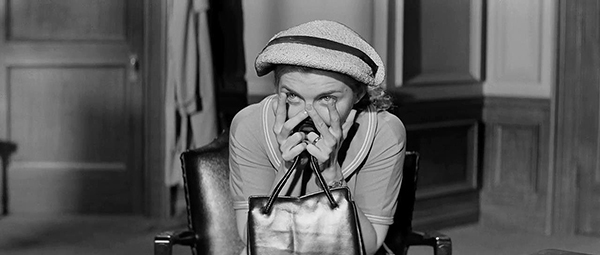
Carnival of Souls (Herk Harvey, 1962). The film begins with a car crash, the vehicle careening off a cliff into the murky drink. Though the authorities are unable to find the vehicle’s female occupant (Candace Hilligoss), she eventually emerges, carrying no memory of how she survived. She proceeds with her plan, traveling to Utah for a job as a church organist. From there, writer-director Harvey, along with co-screenwriter John Clifford, comes up with downright ingenious ways to build scenes with unsettling layers with an obviously meager budget. The movie is ticklishly amusing given some of its more dated elements and amateurish … Continue reading Carey, Harvey, Hill, Maloof and Siskel, Shepard

Broomfield, Demme, Radice, Safdie and Safdie, Truffaut

Ricki and the Flash (Jonathan Demme, 2015). By the last third of the film, it seems clear that Demme’s chief motivation for taking on this project is the opportunity to apply his extensive experience directing concert films to this fictional story of a derelict mother (Meryl Streep) who fronts a bar band. He certainly demonstrates only passing interest in the tepid familial drama in the script, written by Diablo Cody with a equal freedom from her previous dialogue quirks and recognizable humanity. When Streep’s bedraggled singer returns to her former home, responding to a suicide attempt by her daughter (Mamie Gummer), every … Continue reading Broomfield, Demme, Radice, Safdie and Safdie, Truffaut