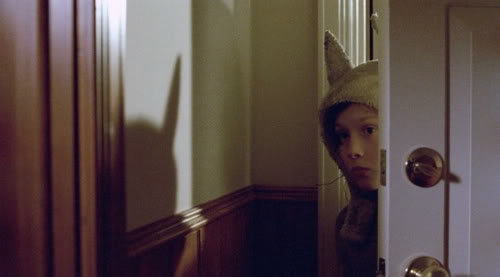
Making a film adaptation of Maurice Sendak’s revered children’s book Where the Wild Things Are seems like the height of doomed folly. As has been noted often in the long run-up to the film’s release, this is a book that has so few sentences they can be tallied on the fingers of two hands, no toes required. These aren’t long, winding sentences jammed with information of the sort found in a novel by Jonathan Franzen or David Foster Wallace, either. Impactful as they may be, they are also direct and lean, suitable for those who have only recently adopted reading as a pastime. They certainly don’t hold the needed details to fill out a ninety minute movie without ample embellishments, a prospect that inspires pure dread. Those worries, however, don’t take into account that it is Spike Jonze at the helm.
Jonze has a prowess that holds flashes of genius, as demonstrated by his best, boldest work in music videos, commercials and films. He has a deadpan approach to his work that proves perfect for the tale of Max in his wolf costume and the island populated by monsters that he discovers after retreating from his home after a particularly nasty confrontation with his mother. The fanciful aspects of the story aren’t overplayed. Jonze isn’t laboring to convince us of some sort of magic like other filmmakers almost certainly would with the same material. He understands that a world like this is at its most convincing (and, therefore, at its most magical) when it is presented as something that just is. Max needs no explanation for these towering creatures, so why should we?
Indeed, it is Max’s perspective that carries the movie. I don’t know that I’ve ever seen a film that captures the feeling of childhood so completely, so compellingly. It is a time of wonder, but also a time for loneliness, when sometimes only your own imagination can keep you company, and no matter how many times you call out for loved ones to see your creations, you’re left stranded as they continue on with their own responsibilities and diversions. It is a time when the switch from fun to fear can happy so quickly that the shift in emotions is like its own severe little tragedy. Jonze’s Where the Wild Things Are has wild rumpuses and boisterously engaged piles for sleeping (the slumber all the better immersed in the shared warmth of friends), but it is also incredibly melancholy, tapping into the emotions that weigh the heaviest at those times when all you can think to do is wait to grow up. The entire film operates guided by the logic of childhood, wherein the construction of a new utopia must begin with a perfectly crafted fort. The dialogue is simple, direct. It communicates what is needed and no more, spoken plainly and thoughtfully, often in a rush of words because the next adventure must be engaged.
The story is not adorned with new elements as much as artfully and dramatically fleshed out, hinting at the psychology at work in Max’s escape. Jonze collaborated with Dave Eggers on the screenplay, crafting an unfussy expansion of Sendak’s world. (Eggers also wrote a novel-length version of the story, an endeavor that seems entirely superfluous until you get a chance to read some of it.) The individual creatures on the island are vividly realized as full-scale characters that manage to be fascinating, even as they are seemingly manifestations of different parts of Max’s own psyche. What’s more, Jonze and Eggers never settle for the short cut of making the members of this strange population merely endearing. There is always a sense that, kind as they may be at any given moment, these are still monsters, unpredictable dangers with untold strength and withheld ferocity. This is especially true of Carol, voiced by James Gandolfini. He is the one who hands Max his crown, celebrates his leadership. He is also the one guided by the most volatile emotions, whose personal hurt comes pouring out of him the second he feels it.
There is great care in the film, and an investment in true, deeply felt emotions that are sometimes overwhelming. When the conflicts get intense, Jonze doesn’t shy away. Like everything else in his film, he presents it openly, with somber exactitude and without caution. In doing so, he creates a film that is filled with delight and oddly moving moments. And when he ends with one last scene that is so quiet is is practically drawn in on itself, he reminds us that sometimes the best we can possibly hope for is a little bit of grace.
(Posted simultaneously to “Jelly-Town!”)
Discover more from Coffee for Two
Subscribe to get the latest posts sent to your email.
 Coffee for Two
One thought on “I think you move me”