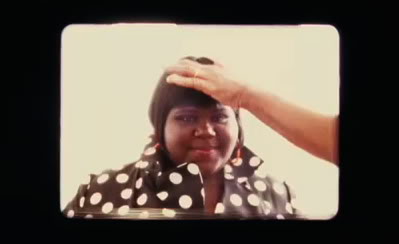
It’s hard to deny the emotional wallop built right in to Precious: Based on the Novel “Push” by Sapphire. Set in 1987, the film tells the story of an overweight black teenager living in poverty with her abusive mother in Harlem. Played by Gabourey Sidibe, she is withdrawn and unresponsive, the result of a lifetime in being told in every way imaginable, from verbal diatribes to household objects hurled as weapons, that she plainly doesn’t matter. The film is relentless, even punishing, in its depiction of the title character’s life. She contends with unimaginable pain, and her only triumphs come when she effectively takes ownership of her own bleak existence. She turns a corner only in declaring her freedom. In this role exists the reflection of actual lives endured in misery, those discarded by the system and disdained by the privileged. The cruel words that accumulate onscreen are an invention, but they’re also an echo. Knowing that this film includes scenarios that are recognizable to some, perhaps to many, makes the depth charge pity it generates borderline unbearable.
And yet it also feels like a complete sham, a manipulative whirligig of degrading stereotypes and corrosive falsehoods. Sapphire has acknowledged that Precious is a composite of various students she encountered while working as a New York City literacy teacher, and the character certainly seems like it. Onscreen, Claireece “Precious” Jones is a Frankenstein of hardship, inelegantly stitched together from the bleakest parts of a few dozen downtrodden souls. Her story never really finds the necessary footing to be genuinely moving. It’s hard to see the arc of the story when you’re constantly bracing for the next indignity that’s sure to come. Geoffrey Fletcher’s screenplay lines up the vicious blows like widgets on an assembly line, and Lee Daniels films it with a lascivious adoration of grotesquerie. He revels in it, as if he were creating a freakshow instead of a film. Natural empathy from the audience is what gives the film its power, but Daniels demonstrates little of that quality himself. It may be clumsiness instead of callousness–his rapid-fire cutting and oily slo-mo when Precious remembers some particularly unsettling instances of sexual abuse belong in a poorly graded student film instead of a significant Oscar contender–but it undermines the production either way.
The entire project feels damnably scattershot, intriguing bits subsumed by unconvincing anguish. None of it holds. Mo’Nique is fearless as Precious’s horrid mother, and when she gets her big scene that essentially ushers the film to a close, she acts the hell out of it. It doesn’t exactly feel connected to the character that she’d played up until that point. There’s no apparent aspiration towards cohesion, not when striving for the most wrenching thing that can happen at any given moment will leave an audience shaken and crumbling just fine on its own questionable terms. A film doesn’t need to be honest to make an impact.
(Posted simultaneously to “Jelly-Town!”)
Discover more from Coffee for Two
Subscribe to get the latest posts sent to your email.
 Coffee for Two
One thought on “Now Howard the Duck and Mr. Stress both stayed trapped in a world that they never made”