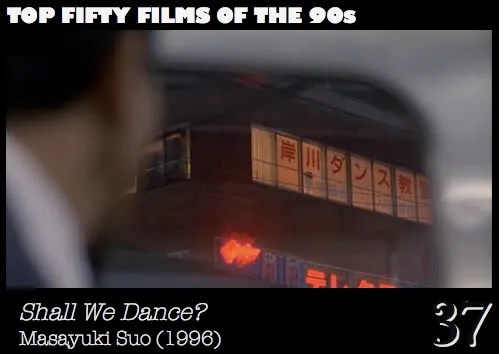
#37 — Shall We Dance? (Masayuki Suo, 1996)
Part of the appeal of foreign films is the glimpse they can provide of a different culture. There’s a distancing angle to this as a film-goer, a sense that perhaps having a passport from a different home country than the filmmakers guarantees an automatic elusiveness to their product, an inherent inability to truly grasp what they’re trying to convey. There’s also a self-congratulatory note to the experience. A prideful self-delusion develops as the film represents a personal diversity training. Just reading subtitles can start to feel like embracing a kindred soul from another land and quietly humming “Kumbaya” into that person’s ear. These potential pitfalls are made a little more dangerous when the film in question is actively, overtly about the culture it is set in, when the social mores are a plot point. With this sort of whirligig of distractions built right into the viewing process, it can especially difficulty to lose sight of whether or not a film passes one of its most crucial tests: Is it entertaining? Masayuki Suo’s Shall We Dance? is terrifically entertaining.
The film follows a Tokyo businessman whose nightly rides home on the train take him past a dance studio, that he covetously stares up at. Against his nature and in direct opposition to the expectations laid out for him he ventures up to the studio, signs up for lessons and begins to dance. Before long he finds himself immersed enough in the activity that he’s preparing for a ballroom dance competition and arousing suspicion from his wife about his whereabouts as he remains secretive about his new hobby. His button-down life begins to open up as he finds himself with access to a form of personal expression that he’s never had before, and, more importantly, corresponding feelings of freedom.
Shall We Dance? is indeed a reflection of the culture it was made in–much is made of the stolidness and repression of Japanese society–but it also has a rhythm that’s echoes traditional Hollywood narrative cinema. That’s the sort of observation that’s usually leveled as a complaint when it’s a film that’s categorized as “Foreign Language,” but I mean it as a compliment instead. Suo, who also wrote the film, took the title from The King and I and specifically references the classic musical. That doesn’t lead to slavish homage, but instead reflects an aspiration to capture the same sort of grace and flair that Hollywood once did so well, where the reward of a movie is based less in its capacity to shock or surprise and more in the satisfaction of perfectly crafted storytelling. There are clever wrinkles in the fabric of Shall We Dance? and a gratifying depth of feeling in the lead performance by Koji Yakusho. There’s also an elegance that comes from following well established steps in just the right way, forging a creativity within the familiar from an inspired combination of personality and conviction.
Discover more from Coffee for Two
Subscribe to get the latest posts sent to your email.
 Coffee for Two