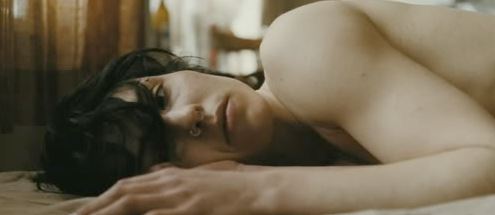
On the basis of Niels Arden Oplev’s film adaptation of it, I don’t think I’d enjoy reading Stieg Larsson’s freakishly successful novel The Girl with the Dragon Tattoo. I don’t mean that as a condemnation of the film. On the contrary, it’s a solidly satisfying thriller, hitting all the right beats in a way that should make Hollywood studios anxious to secure the director’s services, particularly if there’s any interest in orchestrating a comeback for Ashley Judd. Along with credited screenwriters Nikolaj Arcel and Rasmus Heisterberg, Oplev lays everything out with depth and clarity, moving matters along fairly briskly despite an extended running time. It falls prey to some of the most tired tropes of the genre, but those are built right into the plot and seem increasingly impossible to avoid in this sort of endeavor. Sometimes the only way to sate the audience is to play directly to their expectations. There will be blood, there will sex, there will be a last minute rescue as one character falls into mortal peril just as another finally cracks the case, sending them rushing to their cohort’s aid. It’s like chicken soup: no one’s likely to get excited about its originality, but it’s still usually fairly pleasant to consume.
So why not be enticed by the prospect of unfolding one of Larsson’s weighty tomes after viewing this? For me, this sort of material just works better on the screen. The central mystery involves the disappearance of an heiress some forty years earlier, sort of a cold case version of one of Agatha Christie’s old drawing room mysteries. When it happened, there were a few dozen family members collected at an isolated estate, so one of them must be the culprit. At one point the disgraced journalist played by Michael Nyqvist who is initially recruited to solve this mystery uses old photos and scraps of paper to assemble the family tree on the wall of his frigid bungalow. I took some relief in having the visuals before me, including the visages of distinct actors, to help sort it all out. The thought of inserting a bookmark and hoping my ever-crumbling memory would be able to recapture the necessary data the next time I cracked those pages is immediately wearying.
The other advantage of the screen version is having the benefit of fine actors to flesh out the characters. Nyqvist’s journalist is joined by a dark-minded, mysterious, cobalt tough young woman named Lisbeth Salander. This iron waif is the “girl” of the title, and the secrets lurking within her headstrong, damaged character are undoubtedly a major part of the reason that Larsson’s trio of novels have crossed over from bestseller to sensation. Perhaps she’s as gripping and engaging in the books–I’ve not lost sight of the way that written fiction’s capabilities to operate at greater length and plumb the inner depths of its characters offers distinct advantages in bringing those made-up people to fully realized life–but the film is blessed by Noomi Rapace’s acting. Discovering the details of Lisbeth’s grim past is less interesting to me than watching Rapace play individual moments. Let others catalog every nasty turn the character has endured, watching Rapace consider whether or not to send an email, a variety of emotions moving across her face like the turning tumblers of a combination lock, is what’s most memorable to me. That mix of feelings can be written about. Sometimes it’s more rewarding to watch them acted.
Oplev’s film, clearly taking cues from Larsson’s novel, can be quite harsh. The story follows the investigation of a mystery, but it’s really about the myriad of ways that men perpetrate violence and cruelty on women. That’s not a pretty or fun topic as it exists on the audience’s side of the screen, and the film serves as a unmerciful mirror of that sad truth. As one of the most brutal scenes unfolds–it involves the victimization of our freshly introduced heroine–it can be challenging to sort out whether the film is being honest or exploitative. Is the aggressiveness of the scene a requirement to make the point? For that matter, does the consistency of the message cross over into a sort of accidental perpetuation of the very attitudes and behaviors the work aspires to combat? The Girl with the Dragon Tattoo sometimes makes for very uncomfortable viewing, but that, after all, is the very point of treading with agitated intent into this territory. I don’t have clear, definitive, fully settled answers. That alone makes me appreciate that the film poses the questions.
Discover more from Coffee for Two
Subscribe to get the latest posts sent to your email.
 Coffee for Two
2 thoughts on “I’m fit to be dyed, am I fit to have you?”