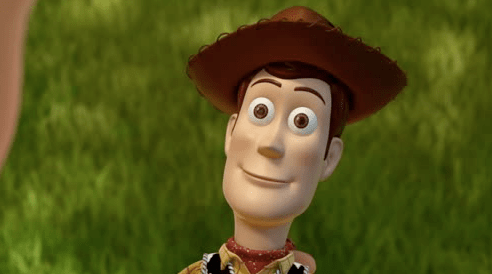
Roger Ebert recently asserted that “Pixar is the first studio that is a movie star.” While it’s possible to quibble with that “first” designation–MGM in its glory years comes to mind as a contender for that honor–the celebrity of the studio surely makes sense. Each new movie is its own box office sensation and the string of successes has inspired a unique devotion among moviegoers. They may go see the Shreks in droves, but its far less likely to hear someone declaring themselves a DreamWorks Animation fan. Still, I think Ebert’s proclamation can use a tweak. I think Pixar may be the first studio that is an auteur.
The documentary The Pixar Story shows that the process of creating one of the studio’s films is highly collaborative. There are clear leaders driving the vision, but the totality is shaped by a wide range of people working together with the shared goal of realizing a finished product that deserves to be in the company of Pixar’s best. (The documentary also gives the impression that Pixar is one of the greatest places in the world to work.) When every detail can be manipulated with a few skilled keystrokes, it’s beholden on the filmmakers to pay keen attention to every last little piece. Nothing is taken for granted. Everything is considered with great care. Everyone works together, generously and graciously, to try and make sure that the movie is exactly, perfectly right right down to the digitally drawn nooks and crannies.
Celebrating the group isn’t meant to diminish the sterling effort of director Lee Unkrich on the latest Pixar offering, Toy Story 3. Previously credited as a co-director on Toy Story 2, Monsters, Inc., and Finding Nemo, Unkrich has a resume that indicates he knows his way around a movie. Besides, there are so many ways for this one to go wrong, and he sidesteps them all. Despite the endless inspiration that apparently gets delivered to Pixar HQ along with the water jugs, this is still the third time out with these characters and the possibility for ideas to get stale or plain old fatigue to set in is high. The first Toy Story is a treasure and the sequel is miraculously strong in its own right. It’s misery to think of the toys being brought back to town without a good reason, without a worthy story to tell.
Happily, ingenuity abounds in the film. The extended stretch of time–over ten years–since the previous installment has given Unkrich and fellow credited screenwriters Michael Arndt, John Lasseter and Andrew Stanton the perfect entry into the film. Andy, possessor of the toys that have populated the Toy Storys, is about to head off for college. All his playthings are still piled in his covered wagon toy box. They’re largely ignored, leading to occasional schemes to try and get him to pull them out and play with with childlike joy once again. He’s choosing between sending them to the attic or the curb when a household mishap instead deposits the lot of them in a local day care center, under assault from the marauding toddlers that dwell there. What follows is a processional of what Pixar does best: splendid character moments, well-calibrated sentiment that never spins off into maudlin manipulation, bright comedy, and action sequences that should make most overpaid producers of the live action equivalent hang their heads in abject shame. The invention of Unkrich and his team of creators is a wonder to behold. I am certain I have never before laughed so hard at a tortilla. I’ll probably never laugh that hard at one again.
What makes the profound difference with this film is the emotions built in to it. The toys are dealing with their own obsolescence. They are unnoticed, residing in a shadow of a world that has shifted away from them. In that respect, they’re not that dissimilar from Carl Fredericksen, the hero of last year’s masterful Up. Their adventures are tinged by the disquieting notion that they are trying to escape their circumstances, and yet they have no safe home awaiting their return. It’s probably no great spoiler to note that the film finds its way to a happy ending, albeit one that is somewhat bittersweet. The emotional impact of those closing moments is powerful, although it might be more so had Andy ever become a fully developed character instead of the benevolent overlord that loomed across the universe of the three films. Then again, maybe that’s better. Maybe Andy’s relative emptiness makes it easier for those of us in the audience who want to do so to step right into his place, ponder our own connection to these toys, consider the pleasure and sorrow of saying goodbye, of moving on. That closing scene isn’t sad because of Andy’s connection to the toys, it’s sad because of ours.
Now that Pixar is in the sequel business, with Cars 2 and Monsters, Inc. 2 both on the horizon, the temptation to send Woody and Buzz and their plastic compatriots once more unto the breach may be too much to resist. Record-setting box office be damned, I hope the filmmakers can step away. This Story already has its ideal ending.
Discover more from Coffee for Two
Subscribe to get the latest posts sent to your email.
 Coffee for Two