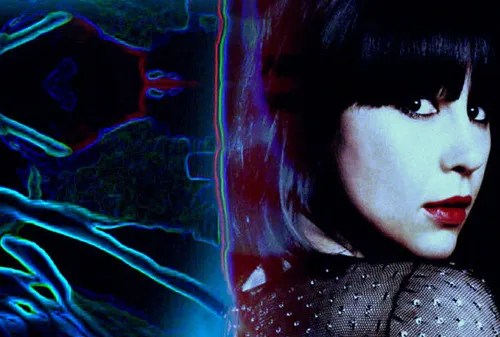
Sometime during the making of Too True, the third full-length from Dum Dum Girls, frontwoman Dee Dee (also known as Kristin Welchez) literally lost her voice. According to her, that caused a slow-down in the creative process, giving extra scrutiny to the songs she had. She decided they were not developed enough and worked on rounding them into shape, in a way an extension of the perpetual development Dee Dee has engaged in since crafting the Dum Dum Girls debut essentially solo. She made a point of recruiting a full band for sophomore effort Only in Dreams and now settles on another extension of that endeavor towards bigger and presumably better. It hardly guarantees that Too True is the fullest Dum Dum Girls album yet, though that case can be made. It does, however, offer some suggestions as to the development of the band. A buzz band that has settled to more of a hum, Dum Dum Girls are still striving for new, different sounds.
The conventional wisdom seems to indicate that Dee Dee has also lost her voice figuratively, or at least let it shift. Dum Dum Girls was grouped with the whole sixties pop revival sound, which has all but played out, Best Coast soldiering on to increasing indifference and Vivian Girls recently announcing we won’t have them to kick around any more. And while there’s a glistening, glorious appropriation of bygone sounds to be heard in their very best offerings, Dum Dum Girls have been broadening their repertoire for a while. It may be more noticeable on Too True, but it’s a progression not a upending.
Too True brings in more of the post-punk influences that wriggled their way on the band’s previous effort, with songs like opener “Cult of Love” and “Little Minx” chiming with a fine buzzy propulsion that owes something to Joy Division. Meanwhile, single “Rimbaud Eyes” and “Lost Boys and Girls Club” are notable for gloomy tones marked by an evocative, gothy froth. Dee Dee’s apparent compunction towards developing something that feels more a product of a band than an individual may be leading to her subsuming herself too much: her vocals are often nestled deeply and discreetly into the mix, and the piercing personality of previous releases has been replaced by a more controlled sound that threatens to meld into undue uniformity across the whole album. Dee Dee and her cohorts come close to overdevelopment of their sound, losing the dual blast of excitement and surprise that got them noticed in the first place. Despite these reservations, Too True is still a good album. It also feels like a pivotal one. From here, Dee Dee can lead her group into better, richer releases or collections of overpolished redundancy. Too True is fine in its own right, but the uncertainty of the future it suggests may be its most interesting feature.
Discover more from Coffee for Two
Subscribe to get the latest posts sent to your email.
 Coffee for Two