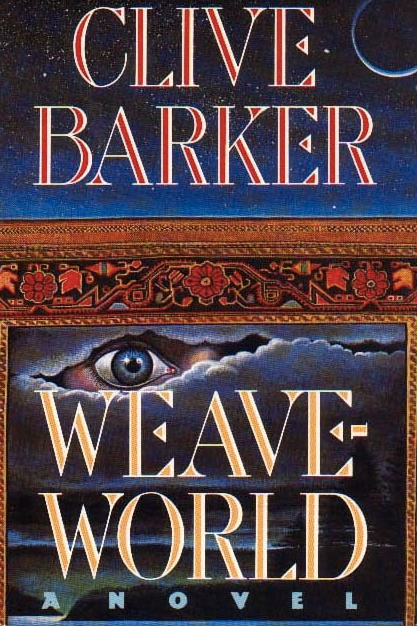
I don’t think I’ve ever been a reader who sticks firmly to one type of writing, but I did read a lot of horror fiction throughout high school. That’s partially explained by my commitment to Stephen King, who was (and is) ludicrously prolific. I think another reason is that I was so skittish about horror for such a long time, fully convinced that I didn’t have the nerve for it, which then led to spirited carousing through the genre once I realized it was actually safe for me there. Besides King, I burned through short story collections from the libraries and routinely ordered new blocky paperbacks with glossy black covers once they were raved about in various comic geek publications I read. And then there came a time when I needed to read Clive Barker.
In the mid-to-late-nineteen-eighties, Barker was the edgy horror author who served as a cool quotient counterweight for those who felt King was too mainstream (yes, the aversion to popular art was in firmly in place back then, too). Hailing from the UK, Barker had an immediate reputation of indulging in a twisty, kinky darkness that set him apart. His writing was bloodier, gorier, more depraved. Simultaneously, it possessed a precision and intricacy that made it feel more literary, even more highbrow. Barker could nickname a supernatural character the Last European — in his 1985 debut novel, The Damnation Game — and have it feel totally fitting, as if he was writing for and of all of the the continent. His writing carried that sort of cachet, that whiff of erudition that somehow sidestepped pretension. Maybe the eviscerations kept it grounded.
The vividly-described viscera didn’t leave me queasy. Thankfully, I didn’t get off on it either (there was always a sense in reading Barker that some his fans might be enjoying the material a little too much, those holding the books far scarier than anything described therein). It was the fantastical elements of his imagination rather than the gruesome conjurings that stirred me the most, maybe because I started with the comparatively tame fantasy of Weaveworld before moving on to the nastier stuff. Barker was defined for me not by the blood on the walls but by the words on the page. That seems like the best way to honor a writer.
Previously…
—An Introduction
—Margaret Atwood
—Anne Tyler
—Michael Chabon
—Ian McEwan
—Don DeLillo
—Stephen King
—John Steinbeck
—Donna Tartt
—Jonathan Lethem
—Bradley Denton
—Zadie Smith
—Nick Hornby
—Kurt Vonnegut
—Thomas Hardy
—Harlan Ellison
—Dave Eggers
—William Greider
—Alan Moore
—Terrence McNally
—Elmore Leonard
—Jonathan Franzen
—Nicole Krauss
—Mike Royko
—Simon Callow
—Steve Martin
—John Updike
—Roger Angell
—Bill Watterson
—William Shakespeare
—Sarah Vowell
—Douglas Adams
—Doris Kearns Goodwin
Discover more from Coffee for Two
Subscribe to get the latest posts sent to your email.
 Coffee for Two
2 thoughts on “My Writers: Clive Barker”