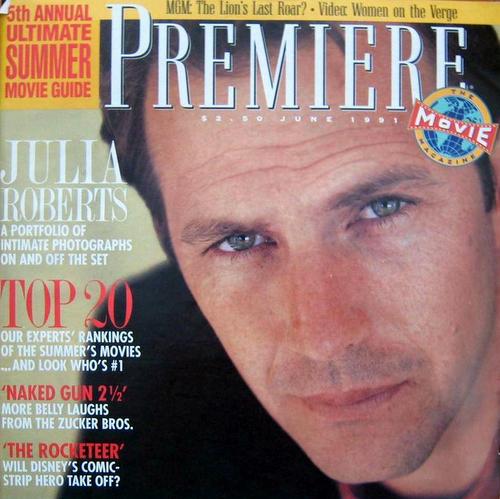
There was a time when Premiere magazine was invaluable. When the digital asphalt was still drying on the information superhighway, coverage of movies wasn’t nearly as pervasive as it is now. Besides the obvious lack of anxiously competing websites, the mainstream media was also less likely to sully their pages or airwaves with excited previews of upcoming films or, even more sordid, widespread discussion of box office expectations and results. While Premiere was hardly the sole outlet providing such information, they were generally doing it better and more inventively than anyone else. For example, when it came time to offer a preview of the summer movie season, they didn’t just list titles. Instead, they took a crack at predicting which films would comprise the twenty highest grossing summer movies and precisely where they’d rank it that tally. Sure, the conflation of art and commerce could be a little dismaying, but, hell, it was fun. As a bonus, it was amusing when they were drastically wrong. Heading into the summer of 1991, the editors and writers of Premiere lent an awful lot of credence to the blockbuster success of the prior year’s surprise summer chart-topper Ghost, and figured the era of fiscally fortuitous counter-programming was afoot. They sidestepped the major sci-fi action sequel and similarly decided the heavy calculation of a star-packed Robin Hood revival didn’t quite have the moxie to claim the summer crown. Instead, they speculated that Dying Young, a tragic drama starring Julia Roberts in her fully ascendent phase, was sure to rake in more dollars than any other movie. It didn’t. Sadly, that prediction took over the storyline surrounding the film, with multiple critics seemingly eager to tear it apart, as if attacking the hubris of the filmmakers, who, it’s worth noting, had absolutely nothing to do with the prediction. All the chatter obscured that Dying Young, on its own merits, is a solid enough film, one of the better ones in the admittedly messy filmography of director Joel Schumacher. In my recollection, we gave it a fairly lengthy segment on our radio program, but this review is actually fairly brief (this italicized intro is going to wind up longer, especially as I keep padding it with things like, say, a parenthetical aside speculating on contrasting word counts). My on-air partner and I must have had an especially lengthy discussion after I finished with the prepared script. Or I’m misremembering. That’s possible, too.
When Julia Roberts answers an ad to help take care of a twenty-eight year old going through chemotherapy for leukemia, she doesn’t know what she’s in for. The after-effects of the treatments include violent outbursts, prolonged spells of vomiting, and vicious mood swings. She also doesn’t suspect that the man suffering with a terminal disease will capture her heart and make her fall in love. So goes the tale of DYING YOUNG. The latest Julia Roberts film mixes tragedy and a bittersweet romance with results that are often surprisingly effective. Campbell Scott, from LONGTIME COMPANION and THE SHELTERING SKY, delivers a terrific performance as the young man battling the disease. He invests the role with honest characteristics and real heart and soul when he could have easily let his character be a self-pitying martyr. The relationship between the two lead characters doesn’t suddenly flourish into romance. Instead, it changes and grows throughout the film until each character has to make some difficult choices. The film isn’t perfect. The script too often has the characters falling back on their radically different class backgrounds to create conflict and can be a bit predictable. But most of the time, DYING YOUNG is a solidly entertaining movie that aims straight for the heart.
Discover more from Coffee for Two
Subscribe to get the latest posts sent to your email.
 Coffee for Two