
8. Eleventh Dream Day, “Testify”
Eleventh Dream Day was a band that seemed to come out of nowhere to storm the college charts, beginning with the release of their major label debut, Beet, in late 1989. Raved about in the pages of CMJ, the album became a sizable hit with the programmers on the left end of the dial, but was only a modest success in record stores. I helped interview the band shortly after Beet peaked at an impressive #2 on the CMJ album chart, expecting they’d be flush with their newfound success. Instead, the band members noted it was just enough notoriety to become burdensome, as the label insisted they toil on the road with modest-paying live gigs, setting aside any opportunity to earn a more substantive living at individual day jobs. At about the time I still viewed rock ‘n’ roll as a passionate calling, that discussion reminded me — in glum detail — that in the end it was a job for the people who slung guitars, and usually not a particularly secure and lucrative job at that. For that reason, Eleventh Dream Day will always represent a sort of pop culture reality check for me. “Testify” was one of the emphasis tracks off of the album.
This cut is down from 7 on the previous chart.
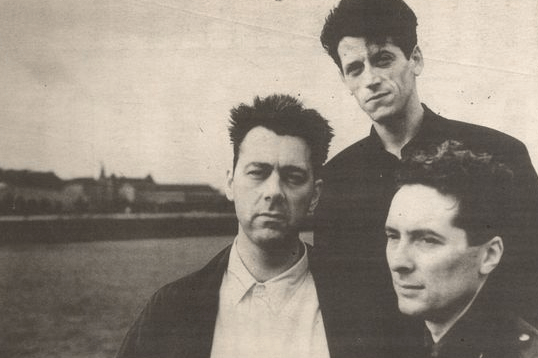
7. The Blue Nile, “The Downtown Lights”
The Scottish band the Blue Nile were the opposite of prolific. They’d enjoyed reasonable success with their debut album, A Walk Across the Rooftops, released in 1984. Their label hustled the band back into the studio, eager to get a follow-up. There was an issue, though. There were no new songs to record, and the band was struggling to come up with material, taking passes at several ideas before scrapping them. In total, the Blue Nile spent about three years in the studio, emerging with nothing. It was only a homecoming to Glasgow that allowed for a breakthrough. Even so, the band’s sound was so lush and meticulous that is still took significant time in the studio to craft the finished product. Their sophomore album, Hats, was released in the fall of 1989. “The Downtown Lights” was the lead single. According to guitarist and lead singer Paul Buchanan, the track was an appropriate reintroduction to the band’s music, but he was cautious about its reach. “We regard ‘The Downtown Lights’ as a sort of beckoning,” he said at the time. “It won’t be a hit, I don’t imagine, and in a way we don’t want it to be because then it becomes devalued. It’s important that people don’t hear the record so often before they get it home that it becomes meaningless.”
This cut is up from 11 on the previous chart.
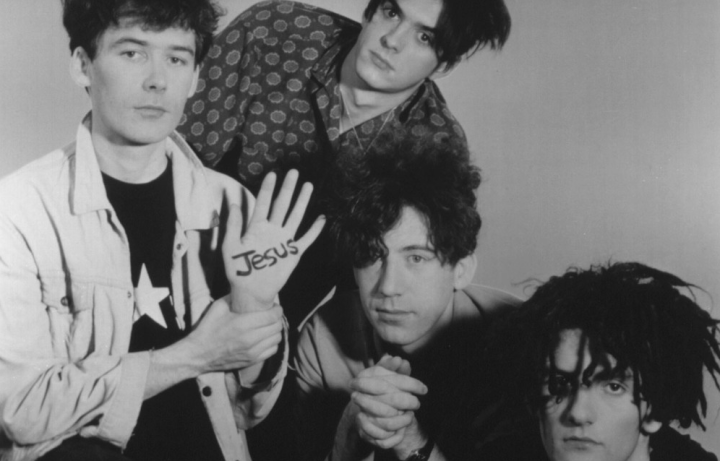
6. The Jesus and Mary Chain, “Head On”
“Head On” was the second single from Automatic, the third album from the Jesus and Mary Chain. College rock darlings on the basis of the gothy buzz of their first two albums, Psychocandy and Darklands, the Scottish group was enduring pushback from some quarters because the album traded some of guitar grind for more approachable electronic dance sounds. Still yanked through the band’s dark filter, it wasn’t exactly disco, but there was some grousing from the purists. In general, student broadcasters didn’t let their affection be dulled by the complaints. Both this single and its predecessor, “Blues from a Gun,” were major college radio hits. “Head On” had the more interesting afterlife, showing up in a cover version on the Pixies’ 1991 album, Trompe le Monde. They also opted for “Head On” as a single, winding up with one of their bigger hits.
This cut is in the same position as it was on the previous chart.

5. Mission U.K., “Deliverance”
Known as simply the Mission in their homeland, the goth rock band from leads required the clarifying geographic tag-on for their releases in the States. Carved in Sand, released in early 1990, was the band’s third full-length effort. “Deliverance” was the album’s second single and provided the name for the the subsequent tour. By most accounts, the band’s time on the road was borderline disastrous, marked by frontman Wayne Hussey’s debilitating alcohol abuse and guitarist Simon Hinkler contracting scarlet fever. Hinkler also quit the band before the dates were complete, frustrated by mounting personal conflicts with the group. “Deliverance” was a little bit of a letdown on the British charts, after its predecessor, nearly scratched into the Top 10. Stateside, though, it was probably the band’s biggest success, even crossing over to the mainstream rock charts, their only single to do so.
This cut is up from 12 on the previous chart.
I wrote about the chart we’re tracking through at the beginning of this particular Countdown. Previous entries can be found at the relevant tag.
As we go along, I’ll build a YouTube playlist of all the songs in the countdown. The hyperlinks associated with each numeric entry lead directly to the individual song on the playlist.
Discover more from Coffee for Two
Subscribe to get the latest posts sent to your email.
 Coffee for Two