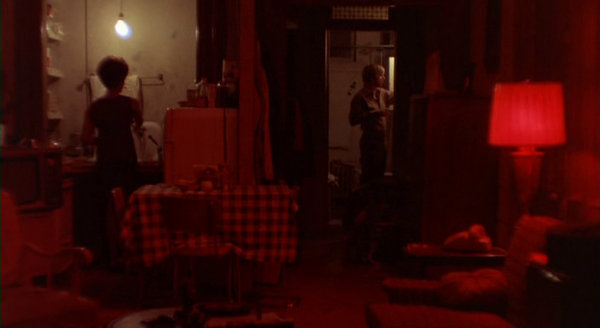
The Landlord (Hal Ashby, 1970). The feature directorial debut from Hal Ashby stars Beau Bridges as Elgar Enders, a young man from a wealth family who buys an apartment building in a poverty-stricken Brooklyn neighborhood. His initial plans involves kicking out all the tenants so he can transform the structure into a palatial personal home. Instead, he gradually gets drawn into their lives, taking the role of landlord at least somewhat seriously. Written by Kristin Hunter and Bill Nunn, the film is caustically satirical, especially in the depiction of the Enders clan. The consideration of class division and accompanying careless prejudice among the elite has only grown more pertinent. The performance by Lee Grant, as Elgar’s mother, is especially astute and sharp-edged. There are wisps of the lyricism that distinguished Ashby’s finest works, but The Landlord mostly signals that the filmmaker got his start in the editing room. The film’s bracingly kinetic visual interplay is its most striking trait.
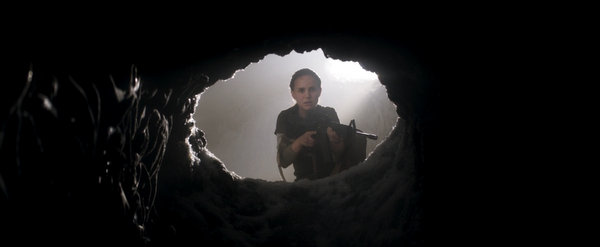
Annihilation (Alex Garland, 2018). In following up the pointed marvel Ex Machina, director Alex Garland allows himself to get even weirder and more cinematically resplendent. That Annihilation only works fitfully speaks to its ambition. Adapted by Garland from the novel by Jeff VanderMeer, the film follows a group of women — mostly scientists — who are enlisted to explore an otherworldly phenomenon dubbed “The Shimmer.” Essentially a reality-rippling field overlaying a forested, the group finds bizarre amalgamations of nature within its stranger barriers. Garland pitches the film somewhere between science fiction and horror without even fully settling on one genre, which further discombobulates an already unmoored story. A similar contradiction exists between the dreamlike imagery and the firmly grounded performances, especially by Natalie Portman, a playing a psychologist whose soldier husband (Oscar Isaac) disappeared on his own mission into the void. Annihilation is cerebral, bold, and finally a little soulless. In rendering its complicated ideas with authority, it jettisons emotion.
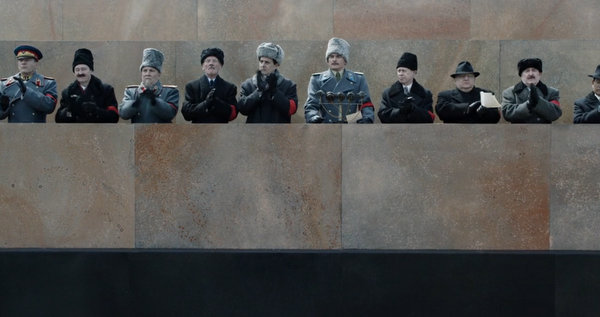
The Death of Stalin (Armando Iannucci, 2018). The bleak comic assessment of political systems that informed Armando Iannucci’s acclaimed television series The Thick of It and Veep (as well as the former’s big screen spinoff, In the Loop) is transferred to the Soviet Union in 1953, as Joseph Stalin (Adrian McLoughlin) breathes his last. The intricately profane dialogue favored by Iannucci and his collaborators arrives fully intact in this new milieu, and the humor largely derives from the incongruity of the language in the staid setting. Although entertaining, it’s a frail peg for a heavy coat. The pleasure doesn’t last, and the film becomes a bit of a grind. The freewheeling approach to the fictionalized power struggle does allow for some inspired casting, most notably Steve Buscemi, whose turn as Nikita Khrushchev is marked by a joyful looseness he hasn’t had onscreen since his days as the Coen brothers’ ace in the hole.
Discover more from Coffee for Two
Subscribe to get the latest posts sent to your email.
 Coffee for Two