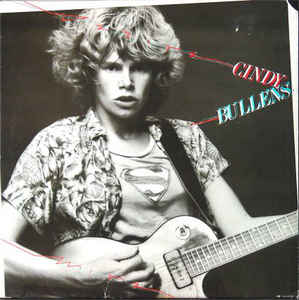
 800. Cindy Bullens, Desire Wire (1978)
There was a lot of slow build music business background preceding Desire Wire, the debut album by Cidny Bullens, then performing as “Cindy” while living apart from his true gender identity. Bullens was a well-traveled backup singer, with professional stints behind nineteen-seventies powerhouses Elton John and Rod Stewart. Several tracks recorded for the movie Grease also boast Bullens’s pipes, and the material on his debut album, Desire Wire, suggests the blockbuster soundtrack was on everyone’s minds as Bullens moved to the forefront.
“High School History” is the clearest example of Bullens delivering material that sounds like a great lost Grease showstopper. Preliminary positioned as a classic girl group teenage tragedy song, the cut pivots to something more sweet and benign (Well, the gym was getting mighty hot/ We both were giving everything we got/ You know we danced till a quarter to three/ The rest is high school history”). It’s retro rock ‘n’ roll with an extra cherry soda fizz to it. The classic 45s for a modern age vibe is also present on “Anxious Heart,” which lands somewhere between Dave Edmunds and Juice Newton.
Placing the album more squarely in its era, “Survivor” is like Laura Nyro with more of a rock undercurrent. A lot of the album falls into that mode, especially on the slightly weaker second side. It’s solidly engaging but less distinctive than the revival rock. The only time it skews into the problematic is when the music slows down, as on the ballad “Knee Deep in Love.”
Bullens released one more album in the nineteen-seventies before largely retreating to concentrate on family life. There were little stabs at returns to the field in the eighties and nineties, with a more full-scale reengagement around the turn of the millennium. He announced he was a transgender man in 2012, eventually building an acclaimed performance piece around his experience.
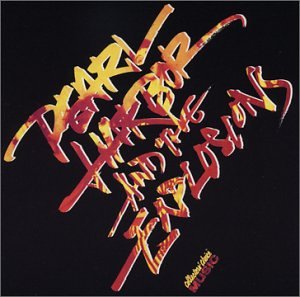
799. Pearl Harbor and the Explosions, Pearl Harbor and the Explosions (1980)
It started with a talent contest run by noted San Francisco bizarros the Tubes. They were recruiting local, amateur talent to join their riotous stage show in the mid-nineteen-seventies and a recent transplant to the Bay Area calling herself Pearl A. Gates was one of the lucky winners. Jane Dornacker was also part of the rollicking road show and moonlighting by starting up a band called Leila and the Snakes. Gates joined in, meeting other musicians in the process, including brothers Hillary and John Hanes, who, in keeping with the punk rock times, adopted the new last name Stench. With that duo and Peter Bilt, Gates formed her own band: Pearl Harbor and the Explosions. In short order, they were signed to Warner Bros. and working on their self-titled debut album
Single “Drivin'” was the true attention-getter, if only for the way it exemplified the emerging new wave sound. The entirety of Pearl Harbor and the Explosions is vibrantly well-realized, though, whether the twanging, agitated “Don’t Come Back,” prowling kiss-off “So Much for Love,” or the funky “Get a Grip on Yourself.” Maybe the clearest example of the potential held by the band is in the track “Shut Up and Dance,” which sounds like the missing link between the New York Dolls and the Divinyls.
As enjoyable as it would have been to watch the group develop further, it wasn’t meant to be. Pearl Harbor & the Explosions was the sole studio album before the band fell apart. Gates moved to London where she recorded a solo album under the name Pearl Harbour and married Paul Simonon, bassist for the Clash. Both were busts. The solo album went nowhere and the marriage ended in divorce before the decade was up.
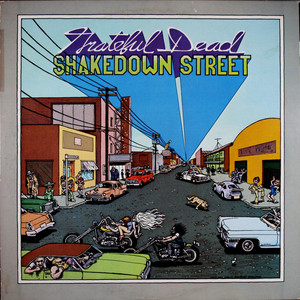
798. Grateful Dead, Shakedown Street (1978)
Derisively tagged “Disco Dead” by many stalwart fans, Shakedown Street found the San Franciscan inspirers of countless slow, wavy dances in flowing hippie garb trying out new little wrinkles to their cemented sound. Residents of the road, the Grateful Dead had taken a couple year hiatus in the middle of the decade, and the album arguably caught them as they were trying to find their collective artistic voice again. Produced by Lowell George, of Little Feat, Shakedown Street is an odd mix, spurring off in several different directions, sometimes within the same song. To a degree, they were — as charged — seeking a radio hit, one accomplishment that had almost entirely eluded them to that point in their already storied career. The shimmying title cut was the prime offender.
“We were trying to sell out: ‘Oh, let’s make a single and get on the radio,'” drummer Mickey Hart later conceded. “We failed miserably once again. I mean, we could never sell out even if we tried – and we tried.”
The commercial aspirations provide some focus, at least. So much of the album is like a distraction put down on tape. Shakedown Street opens with a cover of “Good Lovin'” that maintains the easygoing party of the famed Young Rascals recording and adds a tempered version of vintage Dead musical meandering, And it features Bob Weir pushing his thin vocals into powerful blues man territory where they don’t belong (a flaw that recurs on “I Need a Miracle” and “All New Minglewood Blues”). And the odd little instrumental “Serengetti” flits by like daydream, which is probably what should be expected when the two drummers write a song together.
There are still signs of the Grateful Dead simply locking in and doing what they do best, establishing an easygoing groove that insinuates itself like a calming inoculation. “Fire on the Mountain” practically feel it taking warm-up stretches in advance of yoga-sprawling out to at least twice its length in live performance form. And “If I Had the World to Give” is an overt attempt by guitarist Jerry Garcia and his regular writing partner, Robert Hunter, to prove they could knock out a fairly straightforward love song just like all their contemporaries. It ultimately succeeds by staying on the right side of sappy, making it a palatable version of all the many Eric Clapton blues ballads of treacly sentimentality.
The album didn’t deliver the commercial breakthrough the band sought. That was still several years away. The identity crisis told hold fully, though, persisting to at least the band’s next album, the misbegotten Go to Heaven.
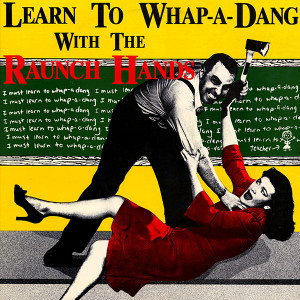
797. The Raunch Hands, Learn to Whap-a-Dang (1986)
Smashing their way out of New York City in the mid-nineteen-eighties, The Raunch Hands were part of the mini-movement that wanted to bring a little more sleaze into the retro rock boom that took the Stray Cats to the upper reaches of the charts and gave several more guitar-slingers more modest but sustainable careers. If the Cramps were the royalty of greasy revived rock ‘n’ roll, the Raunch Hands were convivial hooligans cavorting in the back of the great hall.
From blazing album opener “What Yer Doin'” on, Learn to Whap-a-Dang drops a brick on the accelerator pedal, lights up a smoke, and leans back to enjoy the ride. Listeners are advised to do the same. The album mixes covers — such as a bouncy version of “Chicken Scratch” — with originals, the level of slyness only of the only things qualities showing the seams between the two. Sneaky seediness is set aside in favor of far more urgent innuendo on tracks like “Chicken of the Sea.” That’s all right, though. The band is eager to let everyone in on the joke.
To learn more about this gigantic endeavor, head over to the introduction. Other entries can be found at the CMJ Top 1000 tag. Most of the images in these posts come straight from the invaluable Discogs.
Discover more from Coffee for Two
Subscribe to get the latest posts sent to your email.
 Coffee for Two