
772. Van Halen, Van Halen II (1979)
In the early part of their recording career, Van Halen moved quickly. The enormous sales of their self-titled debut and the similarly robust interest in the subsequent tour led the band to assess they had a hot iron in need of striking. Van Halen came off the road and headed back into the studio almost immediately, taking advantage of the outlay of songs they’d bypassed for the first record. After only three weeks of recording, the group emerged with Van Halen II.
Headlong and hedonistic, Van Halen II is an admirably accurate representation of the band. There are few more perfect concoctions of their brand of slicked-up hard rock undergirded by an easygoing pop sensibility than “Dance the Night Away.” That cut served as the first single, peaking at #15 on the Billboard chart, Van Halen’s highest placement with an original until MTV’s tight embrace a few years later would take the band to a whole other level.
The rest of Van Halen II is a hard rock utterly bereft of the self-serious posturing so typical of the era. It’s a bomb pop laced with liquor, fine for sampling, but maybe best taken in modest doses. There’s the bounding dopiness of “Bottoms Up!,” swaggering “D.O.A.” (which, ignoring convention, stands for “dead or alive”), and one of the most David Lee Roth-y songs the band ever recorded in “Beautiful Girls.” Despite the well-earned reputation for virtuoso six-string slinging by the fellow who helps give the band its name, guitarist Eddie Van Halen comes across as a true team player on the record. With rare, fleeting exceptions — such as the fiery “Light Up the Sky” — he keeps his instrument properly bound to the rigors of the song. He supports just as much as he showcases.

771. Artists United Against Apartheid, Sun City (1985)
In the mid-nineteen-eighties, there was a sudden and pronounced interest in getting a bunch of music artists in a studio together to form choirs of protest. Band Aid and USA for Africa were the behemoth realizations of this trend, but Artists United Against Apartheid was likely the bronze medalist in prominence and influence. Organized by E Street Band guitarist Steven Van Zandt (then on hiatus from the famed backing band), the assemblage offered tuneful rejections of South Africa’s despicable policy of Apartheid, settling on a performance boycott of the nation’s luxury resort Sun City as their emblematic statement.
The cause was worthy, of course, and far more politically daring than the preceding charitable songs positing that there should be a collective effort to feed people suffering through a famine. (It shouldn’t be controversial to argue that governmental policy clearly driven by bigotry is wrong, but it was and there exists a distressing amount of proof showing that it is still the case.) The music that resulted from the collaborative gang is decidedly lacking, though.
Centerpiece track “Sun City” is a decent riff delivered with jackhammer repetition and further deadened by painfully simplistic lyrics (“We’re here to talk about South Africa/ We don’t like what’s goin’ on”). The performers are a proper enough roster of the intensely left artists of the day that they could make up a complete A-to-Z listing in the “Protest Singers” portion of the rock ‘n’ roll Yellow Pages. The nature of the tracks means few make much of a impression. It’s nice that Joey Ramone is given a lyric that angrily name-checked Ronald Reagan, and it’s amusing that Bruce Springsteen and Bono evidently staged an informal competition to see who could more aggressively over-sing the lyric “We’re stabbing our brothers and sisters in the back.”
The rest of the collection is a cooler than thou potpourri. Peter Gabriel’s meandering “No More Apartheid” sounds a like it’s simply a layering of leftover audio tracks from the recording of So. “Let Me See Your I.D.” is a showcase for the rap acts, including some trademark Gil Scott-Heron riffing on television’s blindness to the need for revolution, and “The Struggle Continues” is a wisp of a song rendered by an impressive crew of jazz musicians, essentially a reunion one of Miles Davis’s classic quintets. In a late enough addition to the track list that sleeves had already been printed without its inclusion, Bono teams with Keith Richards and Ron Wood for a lean, nasty “Silver and Gold.” The song has endured more than the rest of the record’s cuts, if only because it eventually got puffed up to stadium size for Rattle and Hum.
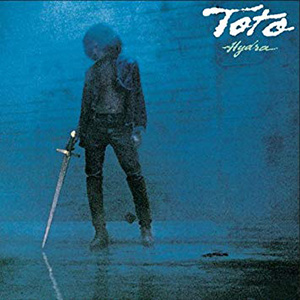
770. Toto, Hydra (1979)
Formed in Los Angeles, in 1977, Toto enjoyed enormous success almost immediately. The band’s self-titled debut made the Billboard Top 10, reached platinum status, and yielded a Top 5 single. On the strength of those achievements, Toto joined Chris Rea, the Cars, and Elvis Costello in losing the Best New Artist Grammy to A Taste of Honey. As the decade drew to a close, Toto was a band on the rise.
Hydra, the sophomore effort from the Toto, slowed the ascendency a bit. Band members later claimed they were attempting a modified their sound for the release, which might be true. Mostly, it sounds like they’re straddling every misbegotten notion of how pop music should work, emerging with a mishmash that revolts against good taste even more than, well, the average Toto track. The title cut is like REO Speedwagon’s cutesy pop-rock dressed up in prog rock armor, and drippy “99,” inspired by George Lucas’s science fiction oddity THX 1138, sounds like Christopher Cross trying his hand at jazzy art rock.
Musically, “St. George and the Dragon” lands somewhere between Billy Joel and Hall and Oates, though with lyrics lifted from Jethro Tull after an especially lazy songwriting session (“Does he know that I’m a soldier of fortune/ And not a victim of circumstance?/ We drew lots for his soft underbelly/ Now his fate is sealed with my lance”). Teeth-grindingly bad as Toto’s music is, the lyrics are yet more appalling. “All Us Boys” is one of the more laughable stabs at rebel posturing in the annals of rock (“Mothers tell your daughters/ To stay away from rock and roll/ ‘Cause it may entice them/ And mesmerize them/ Even satisfy their soul”). The slick jalopy bombast of Night Ranger is foretold by “White Sister,” but the amazingly nonsensical lyrics defy comparison (“You crucify an orphan/ With the rainbow in your eyes/ Then you send out invitations/ And address them with his cries”).
Hydra was a disappointment, at least compared with its predecessor, and Toto would continue to commercially scuffle with their next example. Eventually, though, they’d discover the pathway to the sort of hits that persist like herpes.
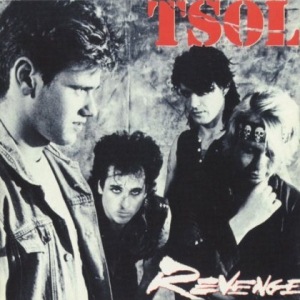
769. T.S.O.L., Revenge (1986)
By 1986, T.S.O.L. had been slugging it out on the greater Los Angeles music scene for nearly a decade, which may as well have been a century in the established life cycle of punk rock to that point. Revenge was the band’s fourth album and second following a major lineup reconfiguration, in 1983. By all evidence, they were existing in a strange musical purgatory, the atmosphere shifting between classic rock, punk, and hair metal. Accordingly, the music T.S.O.L. made at the time was a thick, sopping wad of creative confusion.
The acronym T.S.O.L. stands for True Sounds of Liberty, and Revenge‘s opening track, “No Time,” is the sort of bludgeoning protest rock the leaden band name suggests. A similar sound emanates from “Memories,” which is reminiscent of New Model Army, and the hardcore-gone-flaccid of “Change Today.” That material may be dully direct, but its relatively simplicity is welcome. It’s far more problematic when T.S.O.L. gives into an instinct to skew more grandiose. The snarling dramatic excess of “Colors (Take Me Away)” is enough of a test, but “Your Eyes” suggests Jim Morrison fronting Tesla, and it’s exactly as bad as the description makes it sound.
To learn more about this gigantic endeavor, head over to the introduction. Other entries can be found at the CMJ Top 1000 tag. Most of the images in these posts come straight from the invaluable Discogs.
Discover more from Coffee for Two
Subscribe to get the latest posts sent to your email.
 Coffee for Two