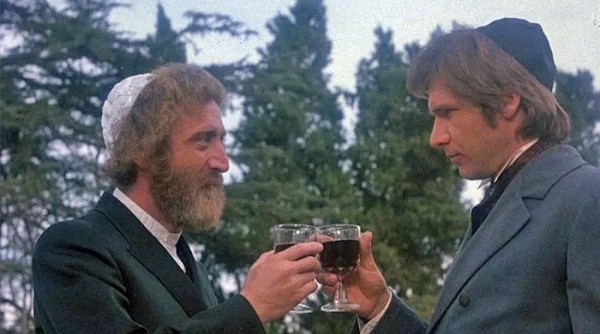
The Frisco Kid (Robert Aldrich, 1979). Although clearly designed as a star vehicle for Gene Wilder, The Frisco Kid is Ford is primarily interesting because it catches Harrison Ford in the netherworld between Star Wars and Raiders of the Lost Ark, when he was clearly still fumbling through the mine field spotted with trees bearing golden apples that was his new professional landscape. In this comedic Western, Wilder plays Avram Belinski, a Polish rabbi dispatched to America to serve a congregation in the mining boomtown of San Francisco. Robbed of his belongings just outside of Philadelphia, Avram is forced to make the perilous journey across the frontier on his own, at least until he comes under the grudging protection of Ford’s character, a bandit named Tommy. An old Hollywood hand, director Robert Aldrich knew his way around a Western and had well-loved comedies under his belt, too. He struggles with material meant to weave the two together and winds up with a consistently unsettled tone. By this point, Wilder knew exactly how to disperse his schtick on screen, so he’s reasonably effective throughout. Ford, however, is trying just about anything he can think of, including one scene in a monastery where he apes the relaxed anxiety that was Warren Beatty’s defaulted mode in comedies.

Being Mary Tyler Moore (James Adolphus, 2023). The mission of this documentary, it seems, is to remind the short-memory culture that Mary Tyler Moore was an uncommon trailblazing force in the entertainment industry, especially television. It’s reasonably successful in that regard, though much of that work is done easily enough by alternating well-chosen clips of the sitcom that bore her name with images of Moore, her costars, and her creative collaborators collecting Emmys as easily as kids scooping up seashells during low tide on a beach. Delving into Moore’s personal life is a little trickier, in part because director James Adolphus is evidently hesitant to get too deep into muckier details. Even as his reticence helps the documentary elide exploitation, it leaves the story of Moore’s life only partially told. The hardness of Moore’s shell, seen glancingly in certain footage, is worth exploring in greater detail.
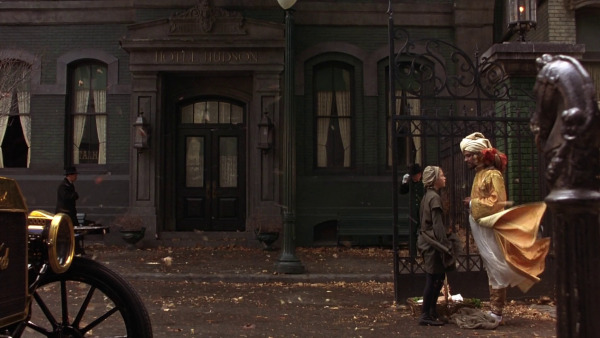
A Little Princess (Alfonso Cuarón, 1995). The second feature film and first English-language outing for director Alfonso Cuarón, A Little Princess loosely adapts the 1905 Frances Hodgson Burnett novel of the same name. Sara (Liesel Matthews) is a young girl who’s sent to her mother’s boarding school alma mater when her father (Liam Cunningham), a British military officer, is called in to fight in World War I. Sara’s kind-heartedness and determined spirit are both tested when her privileged status is diminished by family tragedy, a situation the school’s cruel headmistress (Eleanor Bron) pounces on with malice. The screenplay, co-credited to Richard LaGravenese and Elizabeth Chandler, is delicate, smart, and largely free of the freneticism that would soon overtake most films aimed at the younger set. The young cast is sometimes a little stilted as they move through the proceedings, but everyone is capable enough. The main appeal is seeing Cuarón’s hand growing steadier by the frame. His visual storytelling is remarkably astute, calling to mind the nascent cinematic creations of Steven Spielberg. Even when Cuarón is giving space for darker moments, such as a late, harrowing scene where our heroine seemingly has escape wrenched away from her by another character’s bout of amnesia, the film glows from within.
Discover more from Coffee for Two
Subscribe to get the latest posts sent to your email.
 Coffee for Two