
The degree to which any artist gets Spider-Man right is directly proportional to how well they adhere to the model of the character established by John Romita Sr. I don’t think this is a controversial assertion, even given the fact that it was Marvel Comics founding father Steve Ditko who was the original penciller for the ongoing adventures of the wall-crawling sensation. Tapped specifically for the tole by all-around Marvel Comics impresario Stan Lee, Romita replaced Ditko on Amazing Spider-Man in 1966, just about three year’s into the title’s run. Romita initially strove to emulate Ditko’s unique melting-candle figures, seeing it as his job to preserve the established style rather than bulldoze in with his own interpretation. Before long, the attempted impersonation fell away, and all the characters started to look like, well, Romita drawings, familiar to any keen-eyed readers who had come across one of the many romance comics that had his fingerprints on the panels. These were handsome beings, necessarily static on the page and yet seeming to move with grace and assurance. In his lengthy run during the period of Spider-Man’s golden age that had the brightest gleam, Romita did work that is nothing less than quintessential.
Romita was served well by those countless stories of swooning and lovelorn guys and gals that were previously his speciality. He took on the vast and varied supporting cast around Spider-Man — more importantly, around the ol’ web-head’s alter ego, Peter Parker — with tremendous precision of visual characterization. Between the thwips of our hero’s web-shooter, the stories were a vividly alive soap opera, including the most engaging love triangle to ever grace a newsstand. Romita was a deft draftsman of action, too. Even so, when I read his whole run on the title a few years back, I was struck by how often the two-fisted scraps between heroes and villains came across a diversion from watching the interpersonal relationships evolve rather than, as with so many other titles, the other way around. It’s telling that Romita’s most iconic images from those comics aren’t slam-bang tussles. Rather, they are smaller feats of storytelling: a discarded costume, the quiet closing of a door, and, most notable of all, a jackpot hit.
The significance of Romita’s contribution to the mighty Marvel universe was greater than one seminal run. Arguably, it was most significant when his own art tools didn’t touch a page. A highly trusted member of the bullpen, Romita moved into an art director role, first informally and then officially.
“I used to say that Stan would give titles instead of salary increases,” Romita joked in an interview with The Comics Journal. “He would call a person an assistant editor, but not give them a raise. He used to give us nicknames instead of raises. That’s why I got so many nicknames.”
According to Romita, his art director duties entailed providing whatever the editors needed, and he spent a lot of time helping identify artists well suited to titles, sketching up cover designs, and making quick fixes to finished pages. What’s clear is that he was an instinctual mentor, giving advice to any aspiring artist who passed through the publisher’s offices. In every recounting of those experiences, Romita is honest but warm, astutely identifying where and how a creator’s craft could be improved.
Remarkably, it seemed the only art he couldn’t accurately assess was his own. It wasn’t mere humility that prevented Romita for lauding his own accomplishments. Well past the point that his legendary status was secure, the seminal Spider-Man artist kept professing that he never really felt comfortable on the character. It wasn’t until a brief return in the early nineteen-seventies that Romita was completely satisfied with his renderings. He insisted that his favorite issues were a two-parter that included references to supporting character Flash Thompson’s time as a soldier in Vietnam. Mostly, Romita acknowledged, he was pleased he was able to finally draw a Spider-Man story in an approximation of the style of Milton Caniff, the Terry and the Pirates cartoonish who was forever Romita’s north star.
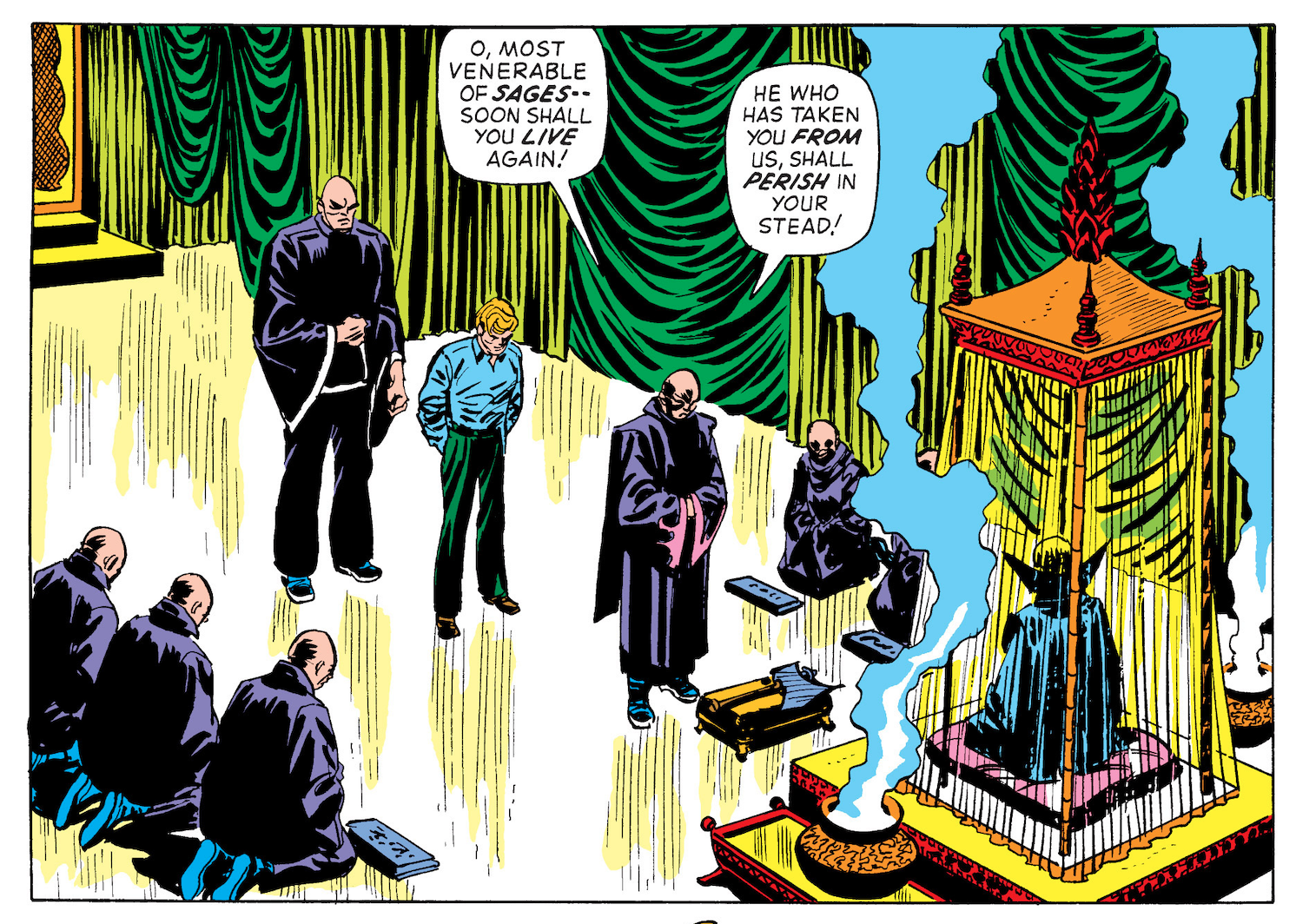
Romita shaped so much of the experience I had becoming enthralled with the expansive Marvel comic book saga. In my formative era, the nineteen-eighties, even if he wasn’t holding down art duties on ongoing titles all that much, his mark was on practically every page. When Marvel still had a house style, it was largely his. Like many others, I forever maintain that Marvel was built foremost by Stan Lee and Jack Kirby. But Romita resided there and provided the caretaking that ensured the house would stand for ages.
Discover more from Coffee for Two
Subscribe to get the latest posts sent to your email.
 Coffee for Two