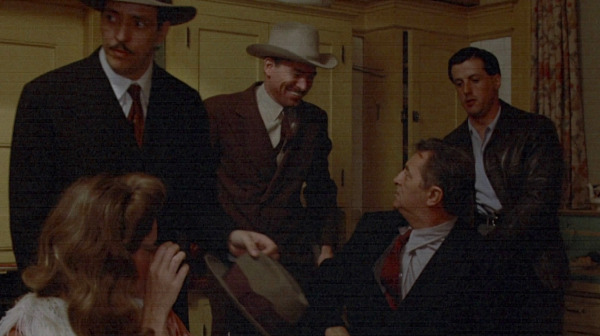
Farewell, My Lovely (Dick Richards, 1975). As nineteen-seventies New Hollywood was peaking, Robert Mitchum returned to his natural habitat. Mitchum stars as Philip Marlowe in an adaption of Raymond Chandler’s 1940 novel, Farewell, My Lovely, which had gotten a couple previous spins on the screen during the time when the Production Code tamped down some of its seediness. Director Dick Richards doesn’t go full Chinatown with the material, but there’s definitely extra level of tough-mindedness present in the finished picture. Mitchum is predictably entertaining as the weatherbeaten gumshoe, despite (or maybe because of) a tendency to occasionally throw away one of the snappy lines of dialogue with a noticeably disinterested delivery. As is often the case in film based on Chandler’s work, the plotting is teeters on the verge of becoming impenetrable, but it’s the noir showmanship that’s important anyway. In that department, Farewell, My Lovely is aces. And it comes with nifty supporting turns by Charlotte Rampling, Harry Dean Stanton, and an extra sleepy Sylvester Stallone.
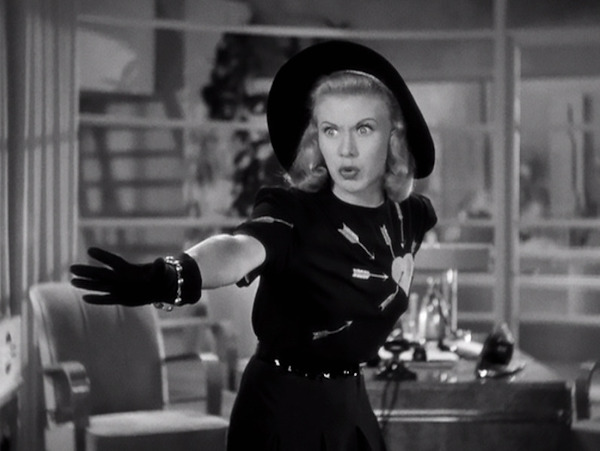
Carefree (Mark Sandrich, 1938). The penultimate pairing of Fred Astaire and Ginger Rogers during their celebrated run at RKO Studios, Carefree plays less like a musical and more like a sly, barbed romantic comedy with a few numbers plopped in. In my estimation, that’s an attribute. Rogers plays Amanda Cooper, a radio songstress in a longterm relationship with handsome, nondescript Stephen (Ralph Bellamy, of course). Impatient with reluctance to commit, Stephen cajoles her into visiting his psychiatrist pal, Tony (Astaire). The immediate friction between Amanda and Tony soon starts to generate sparks. Charming as the leads are together, Rogers routinely steal the film with her smart comic timing and eager bounding into the rip-roaringest moments. A sequence that finds an anesthetic-addled Amanda wreaking havoc at the radio studio and the surrounding neighborhood is especially smashing. Of the musical numbers, the slow-motion rendering used for the dance to “I Used to Be Color Blind” proves most striking as it showcases the grace of the seasoned partners. Mark Sandrich’s direction is deft throughout.
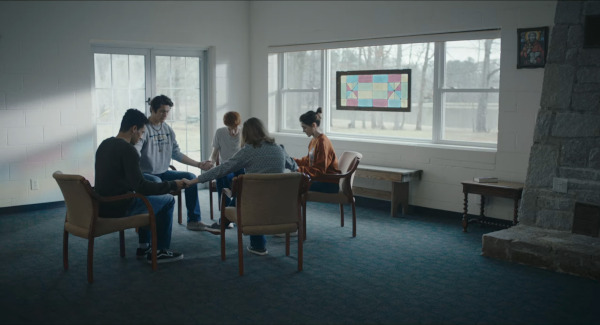
Yes, God, Yes (Karen Maine, 2019). Karen Maine’s feature directorial debut throws familiar satiric jabs at the self-defeating efforts to keep Christian youth on the right side of the godliness line. It overcomes the risk of comic cliche with just enough style, energy, and wit. It also boasts a fantastic lead performance by Natalia Dyer, who manages to play all the different levels of vulnerable anxiety her character goes through while attending a spiritual empowerment retreat for Catholic high school students. Dyer plays the comedy well while preserving the emotional integrity of the moments, which helps keep the film grounded even when Maine’s instincts veer toward broader swipes at her targets. Overall, Yes, God, Yes is tight, sharp, and, in the end, even strangely moving.
Discover more from Coffee for Two
Subscribe to get the latest posts sent to your email.
 Coffee for Two