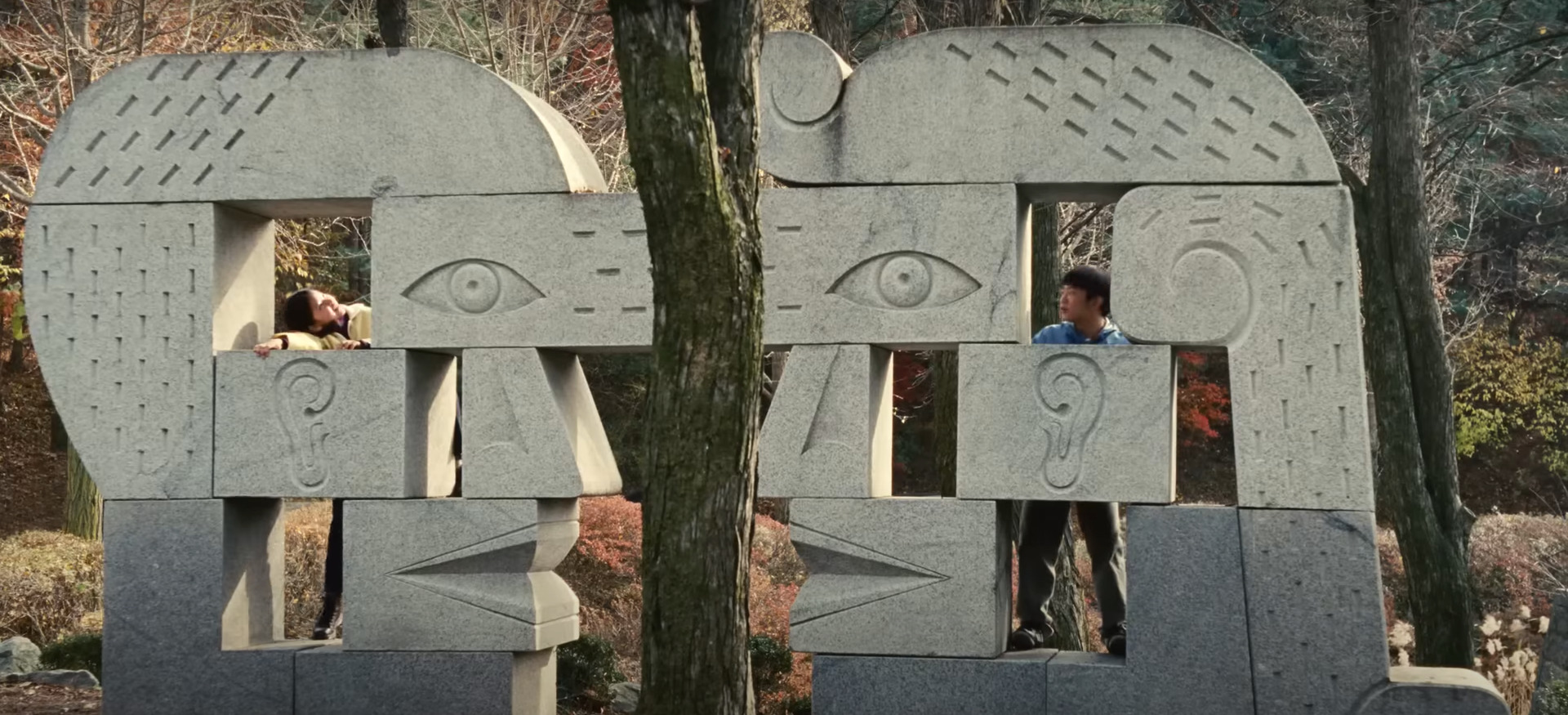
Past Lives, the feature directorial debut of Celine Song, has a unshakeable emotional elegance about it. Clearly autobiographical, the film meets the simple yet surprisingly elusive goal of speaking to universal through focusing on a highly specific story. The plot particulars can be laid out, and that will accurately answer questions of what the film is about, though only at a surface level. What Past Lives is really about, down to its core, is more profound than the triumphs and challenges its characters experience. With piercing clarity, Song shares the rueful human progress that erase prior selves.
So, what about those plot particulars. The film follows Nora (Greta Lee, and also Seung Ah Moon when the character is a child), who emigrated from Korea to Canada and then moved on to living in New York City, where in present time she makes a modest but sustainable living as a playwright. In her mid-thirties, she is happy in her marriage to Arthur (John Magaro) and connected to her personal history in only glancing ways. Part of that history is personified by Hae Sung (Teo Yoo, and also Seung Min Yim as a boy), a Korean classmate who was her closest friend and innocent crush. At different stages of their adulthood, Nora and Hae Sung reconnect. There might usually be a wide geographic gap between them, but there is also clear affection, including some romantic pining. They are clearly bound to each other, even when they are far apart.
Song pushes for deeper honesty than most films operating with these basic story details. Past Lives is not packed with high drama or sweeping emotions, score and editing and other pushy film techniques prodding the audience to feel the characters’ anguish. Song, who wrote the screenplay, wants instead to show how these sorts of encounters are more likely to play out. There are still deep, rattling feelings, but they exist in a space of quiet understanding. There are big truths in the small moments. Song is consistently intimate in her approach. She has a particular comfort with silences, which in turn allows the actors to carry scenes with the depth of their engagement to the drama. Lee and Yoo both give marvelous performances of delicate gestures that abound with information.
Although Song has a fine visual eye, the film is far from flashy. It is modest in its ambitions, recalling the independent U.S. cinema of the nineteen-eighties and nineteen-nineties, when filmmaker told human-level stories without feeling compelled to build in some tricky hook. Past Lives doesn’t need overt invention or dazzling image to command attention. It’s lovely and wise. That’s more striking and more rewarding.
Discover more from Coffee for Two
Subscribe to get the latest posts sent to your email.
 Coffee for Two