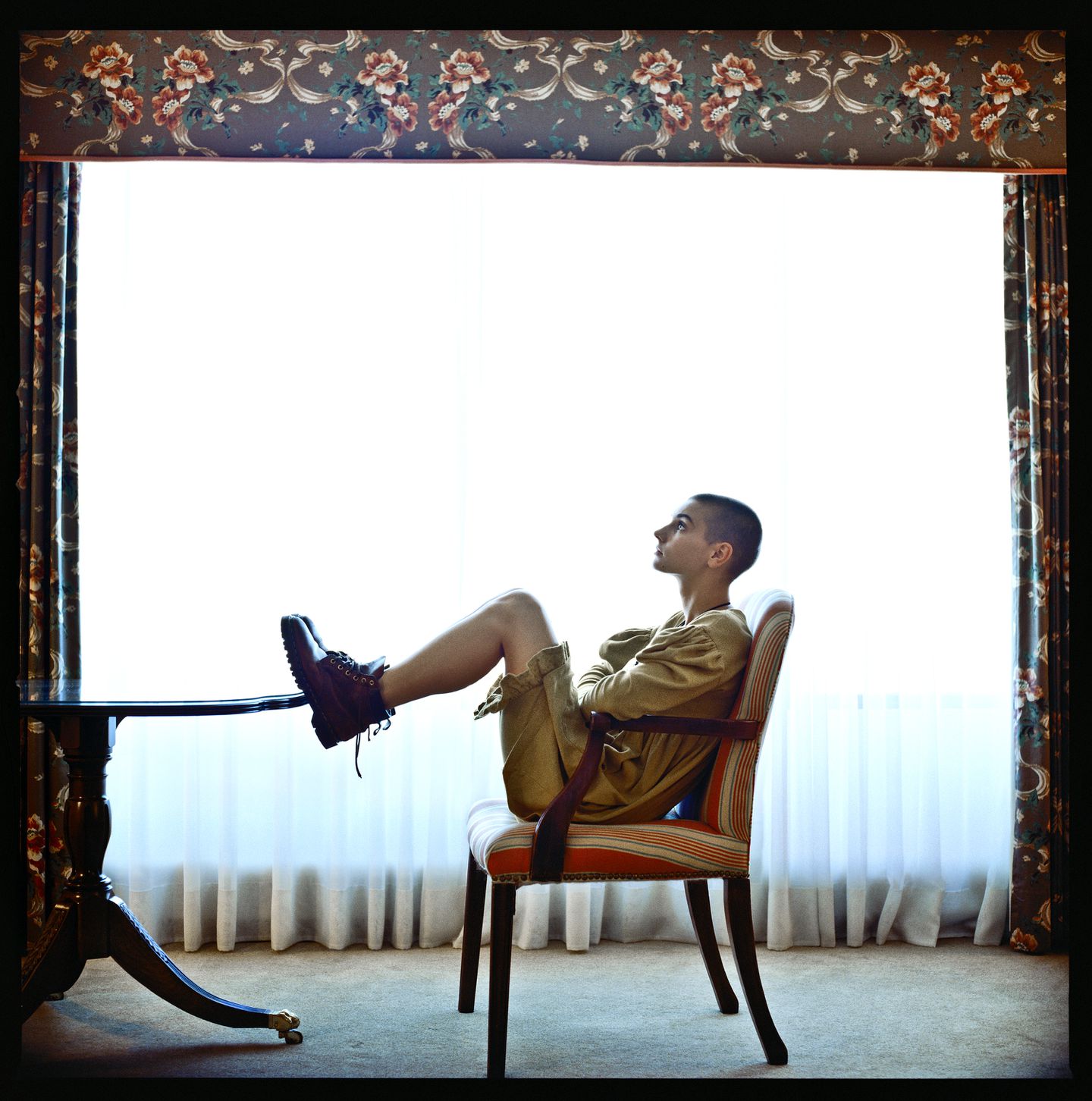
“I could just be me. Do what I love. Be imperfect. Be mad, even. I’m not a pop star. I’m just a troubled soul who needs to scream into mikes now and then.”
I don’t want to start with the hand-torn picture, but I do want to start with the above quote. It’s taken from Rememberings, the 2021 memoir by Sinéad O’Connor. By the time the book was published, she’d converted to Islam and changed her name to Shuhada Sadaqat. She still answered to Sinéad O’Connor, though. She maintained ownership of it. So many people took so many things away from her, or tried to, that she wasn’t going to cede anything, even a name she’d otherwise put aside. That name was given to her, but she made it, too. Try as I might, I can’t think of her as anything else. It’s actually just the one name, as if she rose to fame billed with a mononym. She’s just Sinéad. The only Sinéad, even as she explained that the name is quite common in Ireland, something she needed to do for North American journalists who couldn’t wrap their heads and tongues around those two syllables when she exploded into the public consciousness with her astounding 1987 debut album, The Lion and the Cobra. “If you stood in the street and screamed, ‘Sinead!,’ you’d be killed in the rush,” she once said. She was funny. And charming. She didn’t get credit for that, but she was.
“I could just be me. Do what I love.”
Sinéad was writing about the wreckage of her career after she appeared on Saturday Night Live. It was her second time on the late night program, and the third time she’d been booked. She’d withdrawn the first time she was offered a place on the show, for good reason. She appeared on the following season’s premiere episode instead. She played “Three Babies” and “The Last Day of Our Acquaintance,” two standouts from her masterful 1990 album I Do Not Want What I Haven’t Got. That gig in Studio 8H doesn’t get talked about much. When she was back two years later, she performed Bob Marley’s song “War” in a manner that was characteristically powerful. She performed it a cappella, staring straight into the camera with the piercing gaze that was extremely familiar to a populace that watched the video for “Nothing Compares 2 U” play so often on MTV that it sometimes seemed the cable network had misplaced all their other tapes. As she concluded the song, she declared to millions of viewers that the Catholic Church was the “real enemy” and ripped apart a picture of that organization’s global leader. She was protesting systems of abuse allowed, perpetuating, and disguised by the Church. She was right. Of course she was right. She was pilloried for it, she suffered because of it. But she was right.
In her book, in her rememberings, Sinéad acknowledged the years that followed were often difficult. There was outright cruelty and a dearth of allies in her chosen profession. At some point, she saw the backlash as freeing. It took her away from the brutal churn of expectation and imperious manipulation that sent her stomping off to demand a barber shave her head bald after a record company executive said she needed to make herself look prettier to help move product. No one really believed she was going to sell records by the truckload again. It didn’t matter if it stemmed from exasperation, no one was going to bother telling her she could be herself anymore.
“Be imperfect. Be mad, even.”
That doesn’t mean she was free from the trauma she carried. Sinéad lived a complicated, messy life. Not acknowledging that because remembrance invites elision of. the uncomfortable parts of a person would be a betrayal. After all, she was a truth-teller. Whatever those faults or failings, she was clearly devoted to those she cared for and inspired devotion in return. More than a decade after he was the one person to support Sinéad when she was booed mercilessly at a Bob Dylan tribute concert, Kris Kristofferson recorded a song he wrote in tribute to her and invited her to perform with him on television shows that otherwise wouldn’t have spared a moment’s airtime for her.
Sinéad’s talent was astounding. Her songwriting was raw, and her singing was a supernova. Twenty-five years ago this summer, I attended the Guinness Fleadh Festival in Chicago, and she was one of the headliners. In truth, we weren’t planning to watch her. It felt like a lifetime had passed since her most triumphant albums, and there were other stages to get to. But she started her set while we were in earshot, and the effect was immediate. Every note was sung with inconceivable power and clarity. Sinéad was mesmerizing. We were nowhere near the stage, but it seemed like she was right next to us in a way that wasn’t explained by the amplification. Without a doubt, it was because of her. With that microphone in front of her, I believed she could send the whole world reeling.
“I’m just a troubled soul who needs to scream into mikes now and then.”
Discover more from Coffee for Two
Subscribe to get the latest posts sent to your email.
 Coffee for Two