A couple weeks ago, I discovered I made a mistake on the current iteration of the College Countdown, which is tracking through the top one thousand albums on the college radio charts between 1979 and 1989. For all sorts of reasons, including preserving my own sense of surprise over the course of the long process of counting down this particular chart, I rarely looked all that far ahead when preparing the weekly posts. This meant I wasn’t always verifying that I’d selected the right album to write about when there was a redundancy in an artist’s naming conventions. All those self-titled Peter Gabriel records were a stressor in this regard, and so were a few of the major college rock acts who had a tendency to plop out self-titled EPs or other trickily redundant overstuffed singles that could generate enough airplay to earn a place on our tally.
When I got to #346 on the chart, I saw a self-titled effort from Echo & the Bunnymen and assumed it was their LP from 1987. The placement seemed a little low, but I remembered the album as inspiring some disgruntled assessments from fans who believed their beloved band had sold out. And it was right in between Guadalcanal Diary and the XTC side project the Dukes of Stratosphear, company that was impressive enough to make the numeric landing spot seem entirely feasible. Around two years of backwards counting later, I realized how wrong I was when Echo & the Bunnymen appeared at a lofty #20, edging out no less than U2’s The Joshua Tree. The release at #346 was actually an EP than is alternatively titled Never Stop or The Sound of Echo.
In the interest of fixing my mistake, I intended to revise the earlier post so that the correct Echo & the Bunnymen release is covered there. The replacement write-up follows.

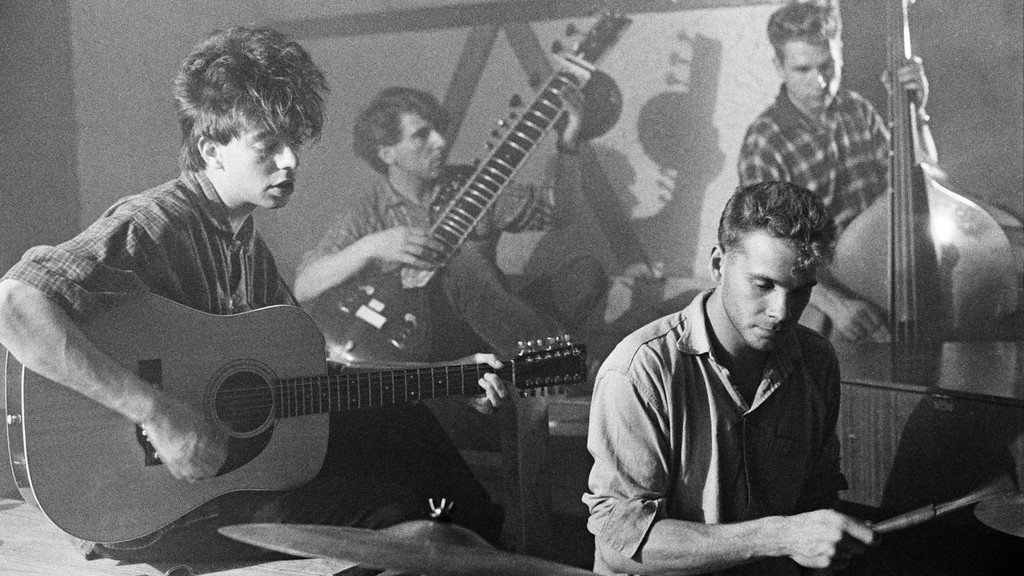
346. Echo & the Bunnymen, Echo & the Bunnymen (EP) (1984)
“It was a record company idea, really,” Ian McCulloch, the lead singer of Echo & the Bunnymen told a reporter who asked about the self-titled EP the band released a few months before their fourth studio album, Ocean Rain. “I suppose it makes sense, because we get misinterpreted so much, misrepresented.”
The crossed-up calculations McCulloch referred to were about the band’s general outlook. Maybe because their general style — led by McCulloch’s bushy mop-top — drew knee-jerk comparisons to more gothy brethren, such as the Cure, there was a perception that Echo & the Bunnymen regularly mired themselves in material that had a gloomy outlook. Their emotional register ran more of a gamut than that. Selections for the EP deliberately skews towards more upbeat fare.
The EP is also dominated by material that had already been released. “Rescue” is nicked from the 1980 album Crocodiles, and both “The Cutter” and “The Back of Love” previously appeared on the 1983 studio effort Porcupine. The main newcomer on Echo & the Bunnymen is “Never Stop,” a tense single from the previous summer presented here in a slightly extended version referred to as the “Discotheque” mix. The EP’s closer is of greater interest, in part because it makes the most persuasive case that Echo & the Bunnymen could deliver a very different vibe than swooning moroseness. The disc ends with a live version of “Do It Clean” that brings a bracing garage rock sound to the song and includes McCulloch riffing through a medley of other songs, including the Beatles’ “All You Need Is Love” and James Brown’s “Get Up (I Feel Like Being a) Sex Machine.” The toughed-up playfulness makes a better case that the band is fun than anything that came before it.
In his contemporaneous accounting of the EP, McCulloch indicated that it was just a survey of the different dimensions of Echo & the Bunnymen. It was also a preview and a promise of what was to come when Ocean Rain saw its official release in a few weeks. The band was determined to convince listeners that they had a sunshiny side.
“More uplifting,” McCulloch responded when asked to describe the forthcoming album. “There’s quite a bit of happiness in it.”
And to preserve what was there before, here’s the mistaken entry for #346:

Echo & the Bunnymen, Echo & the Bunnymen (1987)
Echo & the Bunnymen were coming off a messy stretch when they worked on the album that would be their 1987 self-titled effort. Following the critically lauded Ocean Rain, released in 1984, the group went through all sorts of tumult, including the departure of drummer Pete De Freitas, who was replaced with different musicians that didn’t quite work out. The band’s output dwindled, even as interest in them remained high. Boosted by its inclusion on the Pretty in Pink soundtrack, the single “Bring on the Dancing Horses,” initially grafted onto the 1986 compilation Songs to Learn & Sing, was a hit in the U.K. and on U.S. college radio. The band went into the studio with producer Gil Norton, who they clicked with on Ocean Rain, and they were entirely dissatisfied with the results.
With no small amount of nervousness about the mental health issues he struggled with, Echo & the Bunnyment invited De Freitas to play with them again, though he was technically hired as a session musician rather than put properly on the band roster. They also circled back to producer Laurie Latham, who oversaw “Bring on the Dancing Horses.” The drab ballad “All My Life” was the only track retained from the sessions with Norton (and it was plopped unceremoniously as the last cut on the album, almost as an afterthought). Echo & the Bunnymen started over.
In addition to the other concerns, the band’s record label was leaning on them to develop a more commercial sound, reportedly even playing a copy of Peter Gabriel’s smash So and suggesting its overwhelming sheen as an aspirational goal. Echo & the Bunnymen is definitely slickly produced, and it sometimes serves the material. The burbling “Bedbugs and Ballyhoo” and lush, soaring “Lips Like Sugar,” both attention-getting singles from the album, flirt with the true pop perfection that the band was capable of at their very best. Most of the album, though, is far from that invigorating peak. “The Game,” another single, is oddly flaccid, and “Blue Blue Ocean” has a whiff of retread to it. “New Direction” piles up cliches in the lyrics (“Out on a limb/ Did you see what the cat dragged in/ Take it on the chin”) and has music that’s similarly uninspired.
Regardless of what the label heads wanted, there are no “Sledgehammer” swings on the record. Echo & the Bunnymen do occasionally seem to be toying with sonic angles that gained some of their contemporaries traction on the charts. “Satellite” comes across like a INXS reject, and “All in Your Mind” is dismaying close to the eager preening of ABC. It’s unlikely there there was an overt attempt to ape other hitmakers — and there were certainly acts that were nicking ideas from Echo & the Bunnymen by then — but it definitely feels like the band is shifting with the pop-chart winds.
Practically every band member disparaged the album later, heaping scorn on the heavily produced sound. The more immediate problem was a rift growing within the band largely because lead singer Ian McCulloch was beginning to get — and enjoy and further cultivate — the kind of attention afforded big rock stars. Understandably, that didn’t sit well with his bandmates.
“Mac had distanced himself from everyone else and he was getting different treatment from the rest of us,” guitarist Will Sergeant later noted. “Not the we wanted the treatment he was getting. We just found it all ridiculous. He had people running around him, basically wiping his arse. He had started to act like a turd.”
The following year, McCulloch announced he was leaving the band to launch a solo career. The remaining Bunnymen intended to continue on and quickly found it wasn’t going to be easy. The difficultly in securing a new lead singer was bad enough, and then real tragedy struck when De Freitas died in a motorcycle accident. A reconstituted Echo & the Bunnymen released an album entitled Reverberation, in 1990, to massive indifference. Not long after, they were dropped by their record label. There were reunions, and plenty more music, to come, but it’s fair and accurate to say that the original run of Echo & the Bunnymen ended with Echo & the Bunnymen.
Discover more from Coffee for Two
Subscribe to get the latest posts sent to your email.
 Coffee for Two