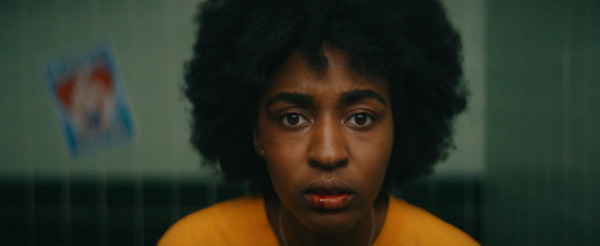
Bottoms (Emma Seligman, 2023). In a manner that recalls the structural alchemy of her ingenious feature directorial debut, Shiva Baby, which took an uncomfortable experience at a mournful gathering and rendered it with the white-knuckle intensity of the greatest cinematic thrillers, Emma Seligman warps a high school–set, coming-of-age comedy to deliriously jarring effect with her follow-up. Bottoms follows PJ (Shiva Baby star Rachel Sennott, who also co-wrote the screenplay with Seligman) and Josie (Ayo Edebiri), lifelong friends who make a pact to finally hook up with their girls of their respective dreams during senior year, a goal complicated by their low placement on the popularity pecking order. After a rumor spreads that had a summertime stint in juvie, PJ and Josie exploit their newly intimidating reputations by starting a female empowerment fight club to meet cute girls. Seligman approaches the absurdities of the premise with a gonzo bravado that makes the whole endeavor raucously compelling and, in a surprising way, emotionally astute. The film is maybe the first legitimate successor to Heathers ever made, bolstered by the added kick of Seligman’s vivid visual sense. If the film is occasionally a little messy, that starts to feel only proper. Every last actor is admirably game, but Edebiri steals the film with a performance that is inventive, sweetly vulnerable, and relentlessly funny.

The Window (Ted Tetzlaff, 1949). The Window is basically “The Boy Who Cried Wolf” all duded up in film noir trappings. Indeed, the film is based on a Cornell Woolrich short story that was originally titled “The Boy Who Cried Murder.” Tommy Woodry (Bobby Driscoll) is a boy whose well-established fabulist tendencies make everyone reluctant to believe him when he urgently tells various authority figures that he witnessed a murder perpetrated in an upstairs apartment. The screenplay, written by Mel Dinelli, cleverly gets Tommy in deeper trouble with the criminals through the inept maneuvering of the adults who are supposed to look out for him, whether his well-meaning mother (Barbara Hale) marching him upstairs to apologize to the culprits for his supposed lies or the police officers who assume the kidnapped lap is simply a bratty youth acting up and deserving of the corporal punishment coming his way. Ted Tetzlaff directs with efficient panache and an impressive willingness to dig into the grimmer ramifications of a child in danger.

Pushover (Richard Quine, 1954). The pitch-black film noir centers on a dirty cop named Paul Sheridan (Fred MacMurray). He’s assigned to cozy up to Lona McLane (Kim Novak, in her first credited role), the girlfriend of a criminal (Paul Richards) who recently made off with a quarter million dollars in a bank robbery. Paul is more interested in cash then justice, so he concocts a twisty scheme to get the money and maybe the dame, though his devotion to her is more suspect. As directed by Richard Quine, Pushover doesn’t always hang together. It gallivants through its various plot twists with a haste seemingly meant to distract from implausibility. It sure does stick to its nasty worldview, though. The best bits are those a little more on the fringes, such as the terse, colorful seduction dialogue so vivid that it almost plays like a sly parody of film noir banter (Roy Huggins is credited on the screenplay, which was adapted from two separate novels) and the subplot involving Paul’s partner on a stakeout, a cop named Rick McAllister (Phillip Carey), developing a sort of parasocial relationship with an energetic nurse (Dorothy Malone) who lives in an apartment near the intended subject of surveillance.
Discover more from Coffee for Two
Subscribe to get the latest posts sent to your email.
 Coffee for Two