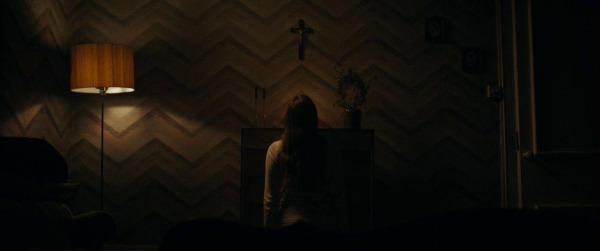
Saint Maud (Rose Glass, 2019). The feature debut of writer-director Rose Glass is a spare psychological horror film about young palliative care nurse (Morfydd Clark) who is deeply religious, seemingly because of a traumatic incident with a previous patient. She is hired to look after a tough retired dancer (Jennifer Ehle) dying of lymphoma who has a bit a cruel streak, a situation that exposes cracks of fragility. Glass favors the gradual accumulation of unsettling detail over jolting scares, and she knows how to structure and frame an image so that it’s lovely and disturbing at the same time. The restraint of Saint Maud is laudable and yet results in a movie that’s fairly boring, even as it impresses with the depth and intricacy of its core character study. There’s a broader thematic points about broken people’s susceptibility to zealous belief systems that eventually subsume them. That message doesn’t take hold with any force, leading to an arty movie that risks getting as lost as its lead character.
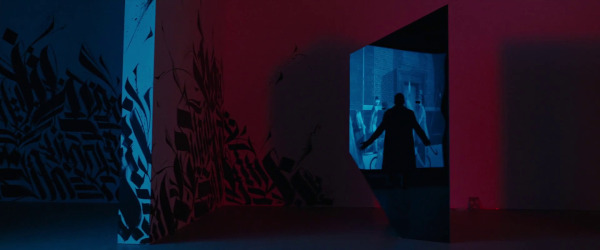
Candyman (Nia DaCosta, 2021). Candyman revives the film series that started with a 1992 screen adaptation of a Clive Barker short story and spawned two sequels before petering out. Jordan Peele produces and is co-credited on the screenplay, and it’s not difficult to discern his interest in the project. Set in Chicago’s downtrodden Cabrini-Green housing projects, the original Candyman combined horror elements with social commentary about race-based prejudice in the U.S. Directed by Nia DaCosta, the update follows Anthony McCoy (Yahya Abdul-Mateen II), an artist whose dormant creative juices are set to boiling when he learns about the urban legend of a hook-handed killer who is summoned by his victims if they say his name five times while looking at their own reflection. DaCosta has style to burn, and the film is packed with bits of striking invention, such as the spooky cutout renderings that help along the plentiful passages of exposition. There’s also meat and meaning to the story, particularly in the considerations of how Black trauma is exploited and monetized by the culture. Abdul-Mateen gives a strong performance, as does Teyonah Parris, playing the lead character’s curator girlfriend. The film falls apart in its final scenes, though. DaCosta’s sharp control is overwhelmed by the chaos of a cacophonous finale meant to more specifically connect to the original films and other failings in the script that drive the plot into a place of semi-coherence.
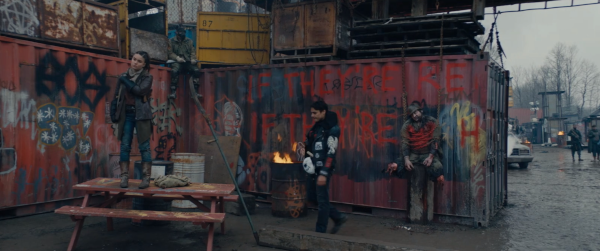
Blood Quantum (Jeff Barnaby, 2019). There’s a clever twist embedded in this zombie movie set in Canada. All the familiar rules of zombies apply, except that people of indigenous heritage are immune to the transformative powers of the shuffling, flesh-cravers’ bites. Accordingly, several months after the emergence of the zombies, the Red Crow Indian Reservation has become a heavily fortified compound designed to keep other populations, all highly susceptible, on the other side of the wall. Naturally, order breaks down at a certain point, leading to all sorts of carnage. Writer-director Jeff Barnaby lets the metaphors around historic persecution of First Nations people get hopelessly muddled, and the acting varies widely in quality. It’s obvious that his primary commitment is to getting the gore right. Blood Quantum boast the sorts of gooey, bloody scenes that were more commonplace in the nineteen-eighties, when horror movie directors were in a battle of oneupmanship to determine who could most inventively slather the screen with human insides. If that approach doesn’t exactly inspire a deep reading of the film’s subtextual complexities, I have to admit that the scale and relentlessness of the sloppy stuff is formidable.
Discover more from Coffee for Two
Subscribe to get the latest posts sent to your email.
 Coffee for Two