David Grann’s book Killers of the Flower Moon: The Osage Murders and the Birth of the FBI is the rare example of a bestseller that inspires outrage, at least if read properly. Although I suspect a significant number of copies were moved because of Grann’s skillful true-crime storytelling, the nonfiction work has greater value because of its excavation of pervasive crimes against the Osage people that had previously been all but entirely erased from the collective memory by systems designed to forever burnish the historical reputation of white oppressors. Simply by stating the basics truths — that after members of the Osage nation grew wealthy off of land brimming with oil, greedy fiends stole that land through murderous schemes — Grann indicts an entire power structure that allowed such treachery to take place without the barest hints of justice for the victims.
This story’s bleak examination of human cruelty is right in the established bailiwick of Martin Scorsese. He’s spent a nearly unparalleled career as a filmmaker treading into territory or ethical compromise and collapse, unafraid to turn his camera on figures with deeply stained souls. Scorsese is rarely explicit in condemning the villains in these works, perhaps because he understands that unflinching depictions of the worst actions give the audience a pathway of their own to exact their own harsh, appropriate judgement. With his film version of Killers of the Flower Moon, based on an adapted screenplay he co-wrote with Eric Roth, Scorsese crafts an American epic of moral rot.
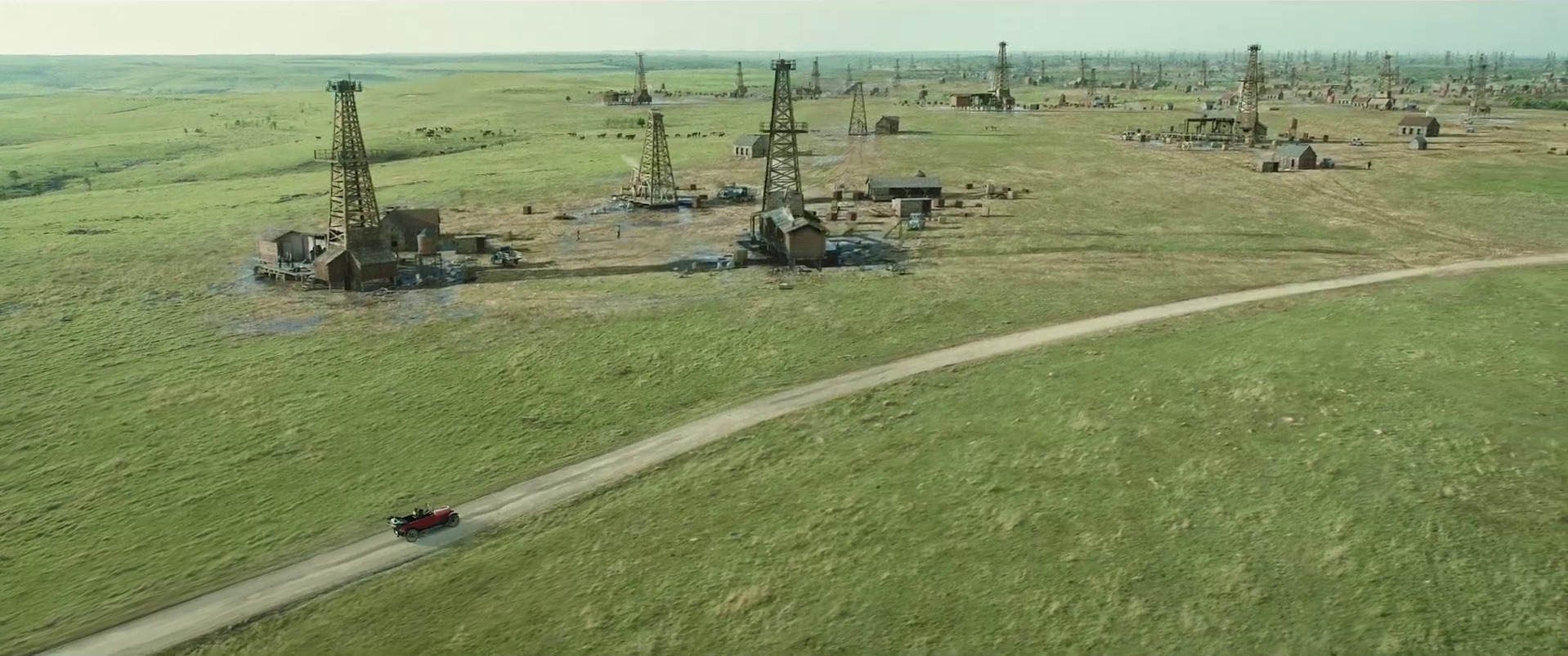
The official behind-the-scenes story being put forward about Killers of the Flower Moon is that Scorsese took advantage of COVID-related production delays to reframe the script to be less about the crusading agents of the newly formed FBI that came to Oklahoma to investigate the shocking number of deaths occurring. The idea was to bring the cruelly mistreated Osage people more to the film’s center. In truth, they’re still not quite there. By any reasonable assessment, the film’s main character is Ernest Burkhart (Leonardo DiCaprio), a veteran of World War I who comes to the Osage’s territory to live under the tutelage of his rich rancher uncle, William King Hale (Robert De Niro). Ernest is coaxed by his uncle to marry Mollie (Lily Gladstone), one of four sisters in a family that has controlled access to a tremendous amount of oil money. In the film’s rendering of the drama, Ernest has genuine affection for Mollie, but the gravest betrayal is also always part of the endgame.
In Killers of the Flower Moon, criminal conspiracy of the nastiest sort is presented as the most casual pastime of its perpetrators. It is a way of life and the most unruffled assertion of privilege. De Niro gives his strongest performance in ages in large part because he embodies this idea that hideous evil is most unsettling when it comes in a outwardly gracious, kind-hearted package. He brings a welcome subtlety to his acting that is matched by Gladstone, who is required to be very internal with Mollie’s wariness, gradual shift to delicate trust, and summoning of wounded fortitude. The two characters and performances reside on opposite ends of the narrative’s spectrum of decency. The rest of the film balances precariously on the tightrope between them.
Even as the film stretches well past the three-hour mark, Scorsese makes everything on screen essential. As always, the focused editing of his regular collaborator Thelma Schoonmaker helps immensely in maintaining a strong pace for the narrative, but there’s more to it than that with Killers of the Flower Moon. The film aches with Scorsese’s conviction to do right by the story he’s telling and especially the persecuted individuals who suffered through it. Any scene that might be removed to trim the length would feel like a betrayal. There’s a lot of damning evidence, and it all deserves to be within the frame. It’s long past time the nation starts witnessing this history.
Discover more from Coffee for Two
Subscribe to get the latest posts sent to your email.
 Coffee for Two