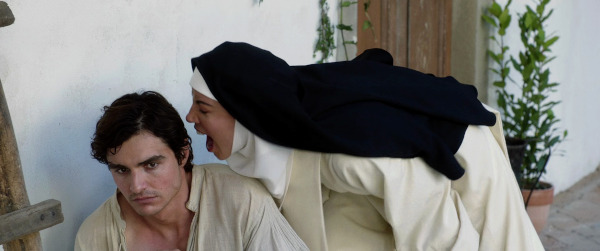
The Little Hours (Jeff Baena, 2017). Writer-director Jeff Baena’s comedy gets its initial zing from the anachronistic interplay of Alison Brie, Kate Miccucci, and Aubrey Plaza as nuns in fourteenth century Italy who rail against the people who irritate them with very modern demeanors and free-flowing vulgarities. Much as the gimmick is bound to wane in appeal far before the length of a feature film elapses, Baena manages to keep things entertaining, if only just, by escalating and complicating the storytelling around the sisters’ curiosity at a supposed deaf-mute (Dave Franco) who’s been brought to the church to help tend the grounds and more surreptitiously serve as a drinking buddy to the head priest (John C. Reilly). The Little Hours boats a devilish brio that makes some of the messiness a little easier to forgive. The three leads are brashly fearless in their riotous comedy stylings, but Reilly and Molly Shannon (playing a more veteran nun) demonstrate that bringing a little more care, delicacy, and balance to the acting goes a long way in this sort of goofball endeavor.
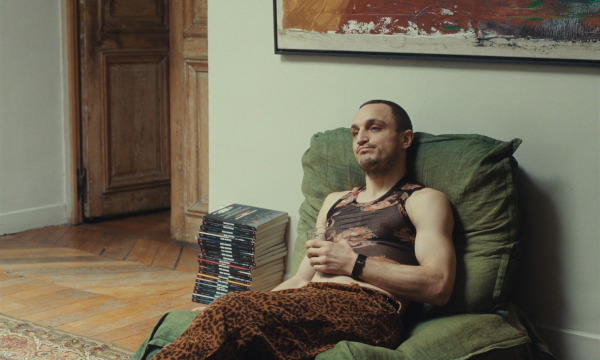
Passages (Ira Sachs, 2023). In its plot, Passages is a love triangle involving a domineering film director named Tomas (Franz Rogowski) who throws away his marriage to Martin (Ben Whishaw) when he tumbles into an affair with a young woman named Agathe (Adèle Exarchopoulos). If the plot’s intertwining emotional intrigues don’t always convince, the performances sure do. Even so, the characters of Martin and Agathe are so thinly written that the film becomes more of a character study, and Rogowski gives his all to that character. He shows the destructive nature of Tomas with uncompromising intensity, even as he offers just enough glimpses of the wounded charisma and enticing neediness that keeps drawing people to him against their better judgement. Both Whishaw and Exarchopoulos are effective from scene to scene, even when the through line of their characters is more difficult to spot. Ira Sachs directs with care, if maybe a touch more understatement than is ideal. The film is as flawed as it is fascinating.
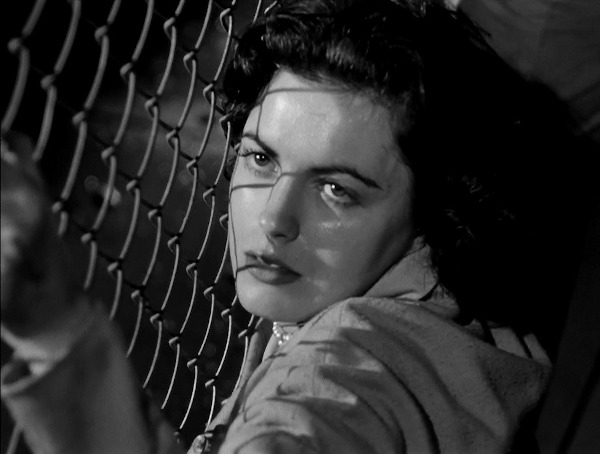
Where Danger Lives (John Farrow, 1950). There is no clearer example of an actor in their natural habitat than Robert Mitchum simmering his way through a film noir, preferably batted around a bit by a feisty femme fatale. Faith Domergue handles those dangerous dame duties in Where Danger Lives and does so with a feverish zest that grows in appeal as her character gets more and more unhinged. Mitchum plays a a physician who gets drawn in by this woman and soon finds himself tethered to her as they flee from the police following the untimely, suspicious death of her husband (played with dandy panache by Claude Rains). Director John Farrow lends the film a thrumming tension that effectively heightens the impact when Domergue’s character really starts careening through maniacal choices. Because he so often plays the coolest of customers, it’s tremendously fun to watch Mitchum gets flustered by this raging handful he’s gotten himself mixed up with.
Discover more from Coffee for Two
Subscribe to get the latest posts sent to your email.
 Coffee for Two