This series of posts covers my long, beloved history interacting with the medium of radio, including the music that flowed through the airwaves.
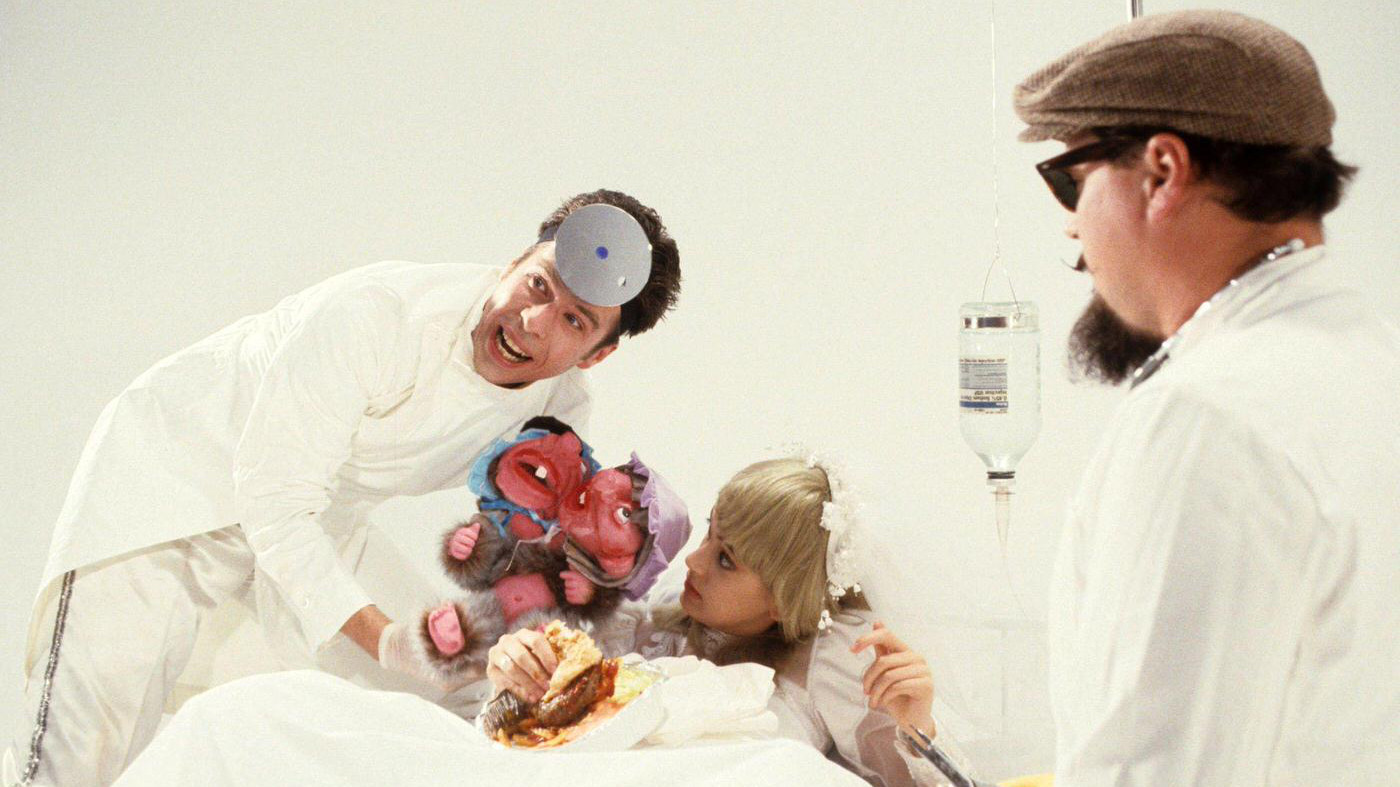
I have enormous, undying affection for the albums that moved their way through rotation during my first year as a college radio DJ, spanning the 1988-1989 academic calendar. There was nothing quite like those earliest months, when every placement of the needle felt like a declaration of my own identity. After years — a whole lifetime to that point, really — of feeling lost and nondescript, I was finally finding a version of myself with something to express, even if I was mostly doing it through the eager sharing of other people’s art. Lest that all seem too high-falutin’, let me undercut the pomposity by noting that one of the tracks that exemplified my existential breakthrough was “Debbie Gibson Is Pregnant with My Two-Headed Love Child.”
So much of the music library of the college radio station was undiscovered territory for me, but I knew about Mojo Nixon and Skid Roper. The duo had a novelty hit with the rollicking 1987 single “Elvis Is Everywhere” (which Nixon further parlayed into plentiful MTV appearances), and I somehow managed to feast my ears on a few other semi-infamous cuts before I first crossed underneath the “On Air” light. So I was fully prepped to grab ahold of their album Root Hog or Die when it hit our heavy rotation in the spring of 1989. For understandable strategic reasons, the album’s first single was another paean to Elvis Presley, the easygoing rockabilly number “(619) 239-KING.” It didn’t take long at all, however, for all of us at the station to instead gravitate to the new release’s opening track. Of course we romped straight to the song that imagined a salacious scandal involving the pop princess of the moment, who was at that very time enjoying a multi-week run atop the charts with her latest ballad. For me and a couple of my equally crushstruck cohorts, it didn’t hurt that the soon-to-arrive music video featured Winona Ryder donning a blonde wig to playact as Gibson.
Although Nixon name-checked a batch of pop culture targets in the lyrics, the main thrust of the song was a satiric takedown of tabloid gossip-mongering, the very trash that often posited that the King of Rock ‘n’ Roll had faked his death and was living a mundane existence somewhere out in the American heartland. The snark against celebrities, the rascally, ribald sense of humor, and the cultural commentary added up to the exact dose of rebel cool I wanted to add to my playlists. I was never going to be dangerous, but I could briefly adopt that guise for the few minutes that the record was spinning. To this day, I’m grateful that I was able to borrow some of Nixon’s mojo.
Previous entries in this series can be found by clicking on the “Radio Days” tag.
Discover more from Coffee for Two
Subscribe to get the latest posts sent to your email.
 Coffee for Two