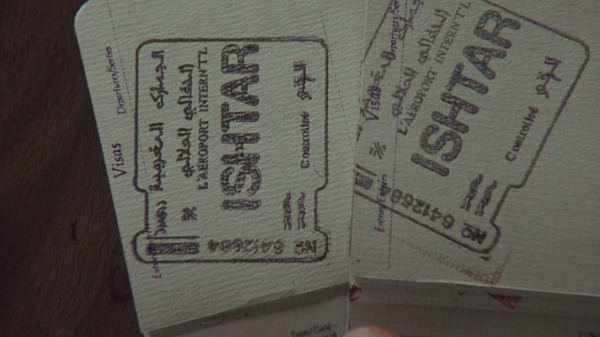
Ishtar (Elaine May, 1987). This misfit comedy was savaged by critics and adamantly rejected by ticket buyers, effectively ending Elaine May’s directorial career. The punishment was undeserved. The adventures of woefully inept songwriters Chuck (Dustin Hoffman) and Lyle (Warren Beatty) are presented with an occasional indifference to narrative sleekness and there are moments of lamentable cultural smugness when the action moves to North Africa. There are also plentiful instances where May’s crackling wit comes through, and the film is buoyed by game performances by the the two leads and the always welcome comic seething of Charles Grodin (playing a CIA agent who recruits Chuck into a geopolitical boondoggle). Much as May wanted Ishtar to be a modern version of the comedies that sent Bob Hope and Bing Crosby traipsing around the world, her film is best when focused on the misguided showbiz aspirations of Chuck and Lyle. That’s especially true any time the spotlight turns to their spectacularly, hilariously bad songs, primarily written by Paul Williams with lyrical assists by May.
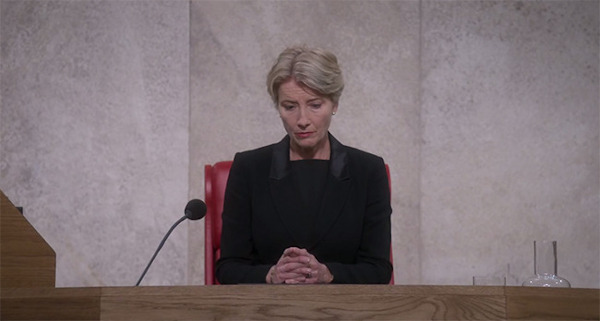
The Children Act (Richard Eyre, 2018). Adapted from Ian McEwan’s 2014 novel of the same name, The Children Act is a fine acting showcase for Emma Thompson and not much else. As if maintaining some sort of cosmic balance, every performer other than Thompson flounders. As her philandering husband, Stanley Tucci is particularly — shockingly! — bad, playing scenes with a detachment that borders on sociopathy. The plot is solid enough, using a tricky case of family law as the axis around which the stresses of a judge, played by Thompson, spin furiously. The film never builds to any emotional impact, though, mostly because Richard Eyre directs with the same upstanding inertness he brought to his previous features, such as Iris and Notes on a Scandal. Thompson is carefully intense and radiates intelligence, but her exemplary construction of character is practically done in a dramatic void.
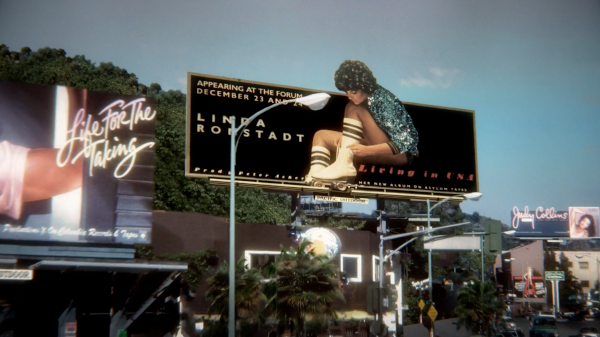
Linda Ronstadt: The Sound of My Voice (Rob Epstein and Jeffrey Friedman, 2019). This is a solid music documentary that, if anything, understates just how huge of a star Linda Ronstadt was in the nineteen-seventies. Directors Rob Epstein and Jeffrey Friedman dutifully trace Ronstadt’s ascendency and secure the requisite rock stars and admirers to speak directly to the camera about her talent and achievements, and yet they still can’t capture how thoroughly she set the zeitgeist for a fleeting moment in pop music. What the film does sell effectively is Ronstadt’s amazing range as a performer. In showing her range across country, pop, operetta, standards, canciones, and more, mastering them all, the film makes a compelling argument that she just might be the greatest vocalist of her time. The solidity of that thesis means it all the more poignant when Linda Ronstadt: The Sound of My Voice reaches its coda that shows how Parkinson’s disease has left her basically unable to sing. That heartbreaking fate could have easily been shared in a manner that comes across as exploitative. Instead, much to their credit, the directors bring the proper level of grace and care to the moment.
Discover more from Coffee for Two
Subscribe to get the latest posts sent to your email.
 Coffee for Two
I saw that Ronstadt doc a few years ago. I thought it was good, though did check off all the rock doc cliches as you mentioned. It is sad that, as big as she was in the 70’s, she’s almost forgotten about now. (Misogyny is a part of that, though it didn’t help that she didn’t write her own songs.)
The part that disappointed me was the glossing over of Linda’s concerts in Sun City. If I remember correctly there was just one soundbite (her defending herself in a TV interview) with no context. It’s better than no mention at all (the Bohemian Rapsody biopic doesn’t mention Queen’s concerts there) but not by much. The whole Sun City story is an important one to tell, a story that seems to be forgotten these days.
I think you’re right that it’s mentioned very briefly. In feeble defense of the film, Epstein and Friedman are just racing through everything at that point. Huge albums Simple Dreams and Living in the USA and the record-setting success they brought aren’t discussed in any detail, and I don’t believe her strong involvement in No Nukes concerts during the early nineteen-eighties is mentioned at all. After filling in a lot of the background of Ronstadt’s rise to fame, the directors are clearly most interested in showing how adeptly she moved across genres.
Sun City probably merits its own documentary. That could be an amazing subject for a tough-minded director.
True that. This is a big issue with most bio docs in general–a slow, methodical retelling of an artist’s early years, and then when they get to middle age or past their prime, a quick fly-by of later events. But Sun City is an important part of the story. Her decision to perform there had real repercussions–a lot of critics and some fans gave up on her, she got put on a UN “black list”, and was going to be name-checked in Steven Van Zandt’s “Sun City” song until Paul Simon (still one of Linda’s close friends) stopped him from doing so. Not to mention how stubborn she was in defending herself in her decision to perform there–all she needed to do was say she was sorry and say she wouldn’t do it again to get off the black list, and she flatly refused to for YEARS. (She quietly did do this, years after it mattered anymore.) Performing in Sun City was bad enough, but her “defense” made the situation even worse.
Yes, a Sun City doc is probably overdue. A lot of people performed there, some of them who you’d think would have no qualms about playing in an Apartheid country, and some artists that I’m still surprised who did.