I read a lot of comic books as a kid. This series of posts is about the comics I read, and, occasionally, the comics that I should have read.
At the height of my comic book reading, the coming of the summer months meant the magnificent mavens of Marvel Comics were ready to unfurl their biggest stories of the year. Knowing that the kids who patrolled spinner racks had more time for reading and probably more spending money when the school year let out and the weather turned sweltering, Marvel supplemented their usual publication schedule with double-sized special issues, dubbed Annuals, of their most popular titles. For the extra coin required to procure a copy, the story inside needed to be spectacular.
Because these were a lot of extra pages to produce on top of regular assignments, the responsibility for crafting these overstuffed comics often fell to writers and artists different than whoever was holding down the same duties on the monthly mag. That’s exactly what happened when Marvel ordered up a new Thor Annual early in Walt Simonson’s properly revered run with the thunder god. There was no way Simonson could make time for the Annual, so Marvel looked to a couple of collaborators who had already established they knew their way around epic storytelling. For Thor Annual #13, Alan Zelenetz writes and no less than John Buscema, one of the legends of Marvel, provides the art. Like any wise writer, Zelenetz realized that having Buscema drawing the comic meant it was a good idea to make Mephisto the villain.
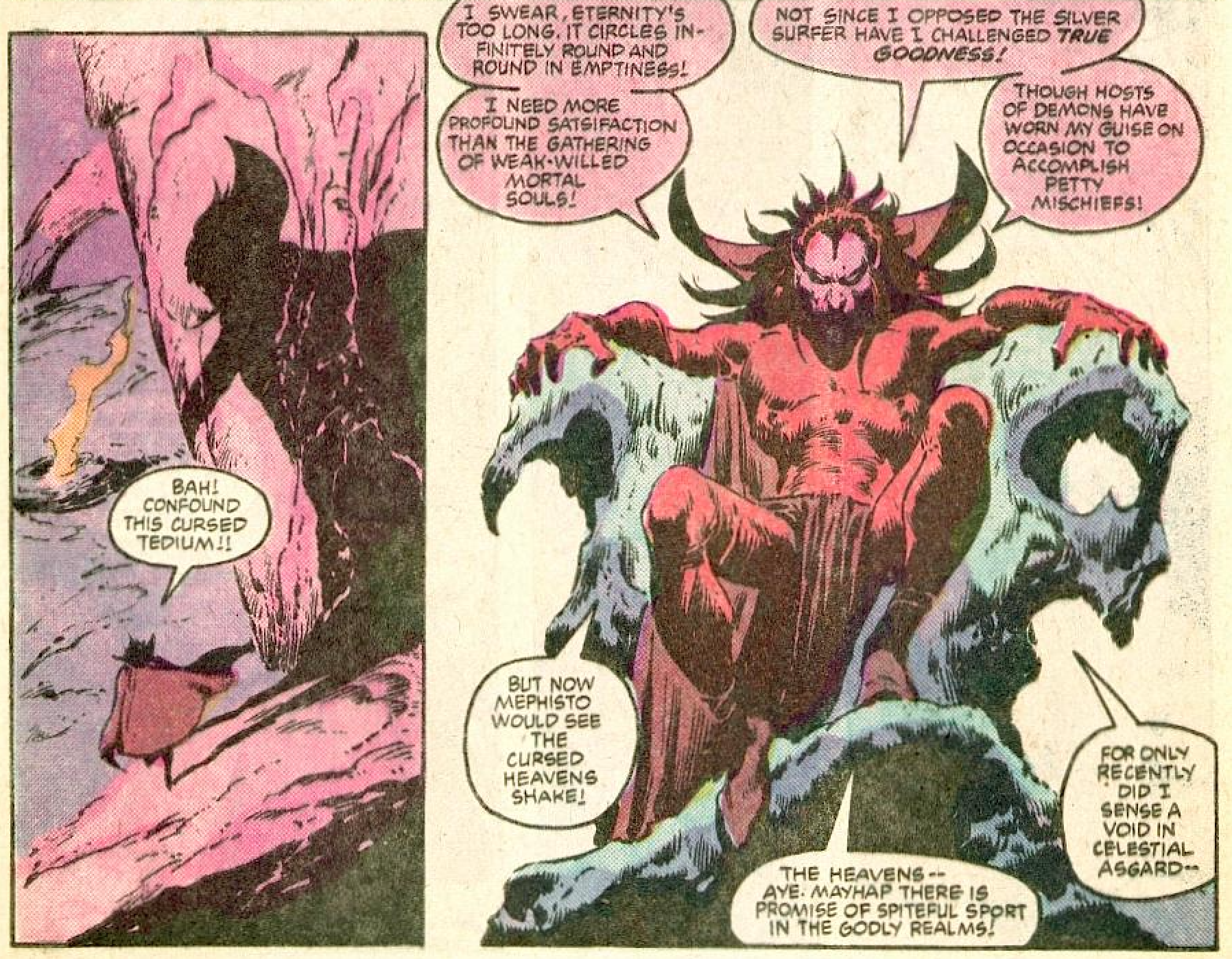
Introduced in the pages of the first Silver Surfer series, which Stan Lee wrote and Buscema drew, Mephisto was Marvel’s version of the Devil. Accordingly, he was supposed to be the baddest of the bad, but the demands of filling out an ambitious monthly schedule of titles sometimes meant Mephisto was dragged into more rinky-dink stories. As if reclaiming Mephisto, Zelenetz includes the aside that he hasn’t really done battle with any heroes other than Silver Surfer; all other appearances were far more feeble demons skulking round in phony Mephisto garb.
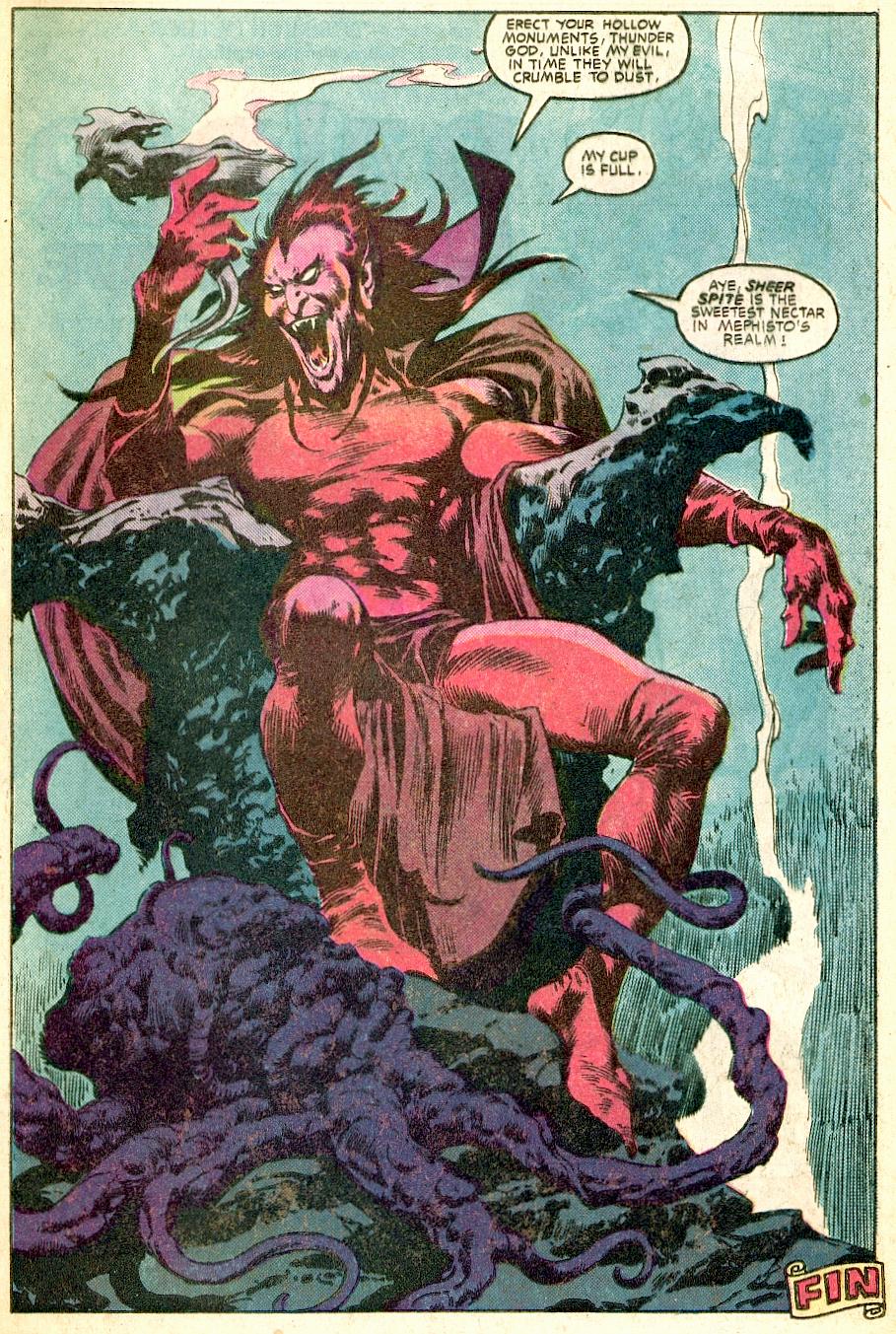
Never the most enthusiastic drafter of superhero adventures, Buscema clearly loved putting his pencil and pen to work on Mephisto. Every fold of fabric and bend of sinewy muscle is rendered with such vivid intensity. Zelenetz shapes the narrative to give Buscema ample opportunity to present Mephisto in all his imperious malevolence.
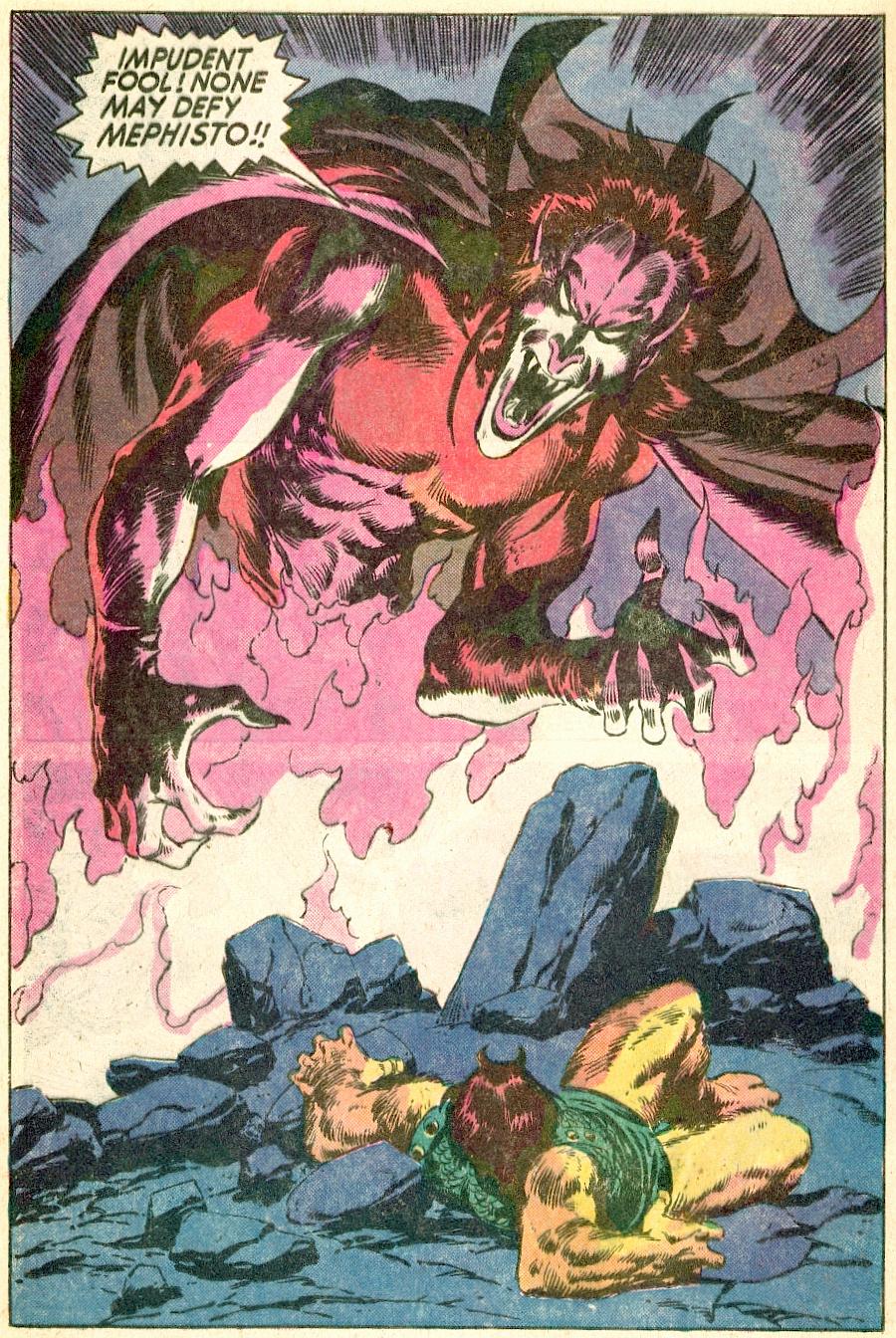
Feeling bored and unchallenged in his smoldering underworld, Mephisto decides it would be a nice diversion to go toe to toe with Thor, figuring only a Norse God will be a formidable enough foe. Mephisto sees that Thor is a sulky mood, brought on by the recent death of his father, Odin. Mephisto wants the thunder god worn down a bit before he lures him into a direct fight, so he forcibly enlists Ulik, a mighty rock troll, to step in for the undercard bout.
There is a lot of angst to go around in this story, and Zelenetz brings the correct amount of faux Shakespearean heft to his scribe duties. Really, though, the main appeal of this comic is seeing Buscema’s bulky battlers hurling one another around.
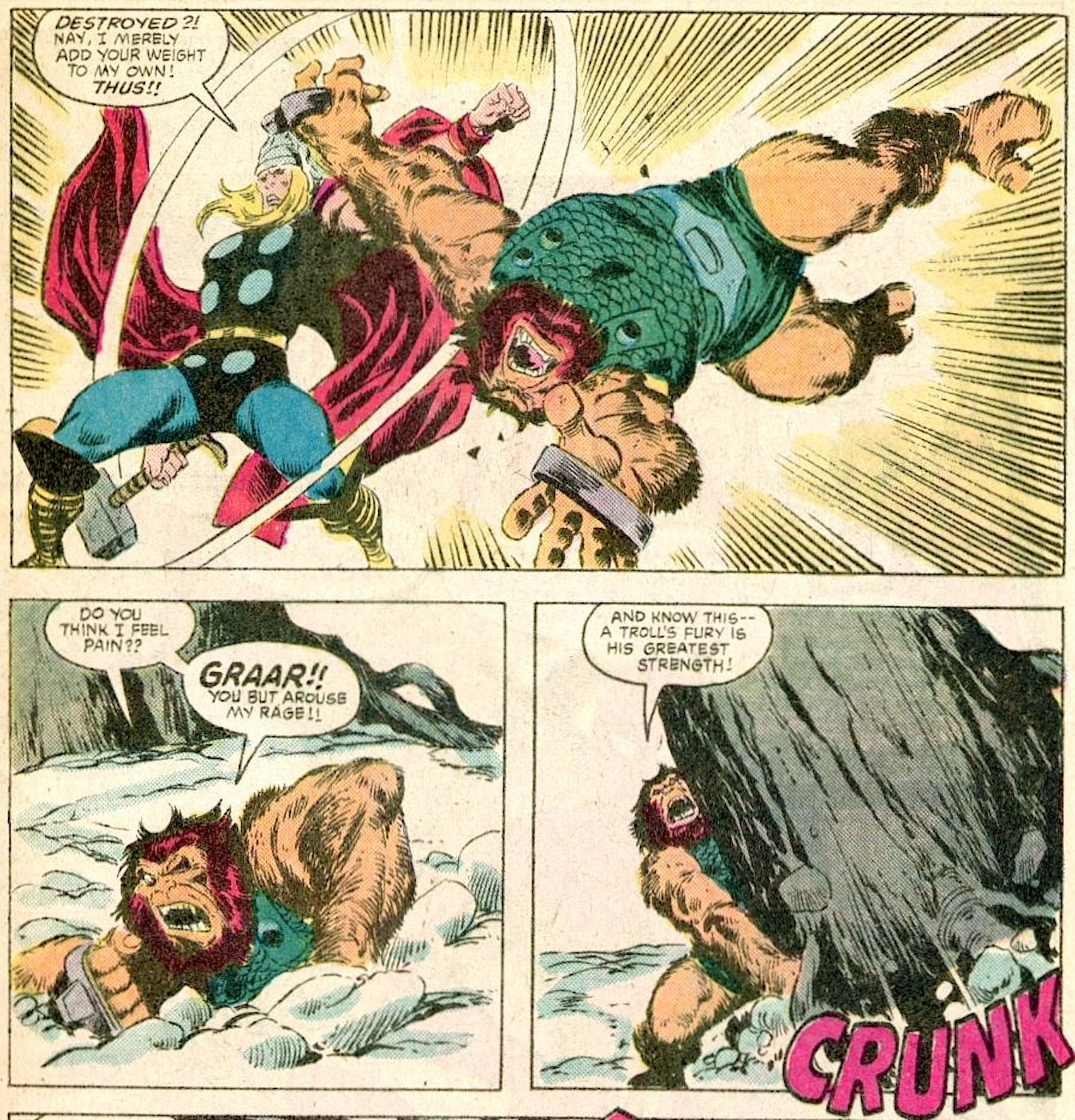
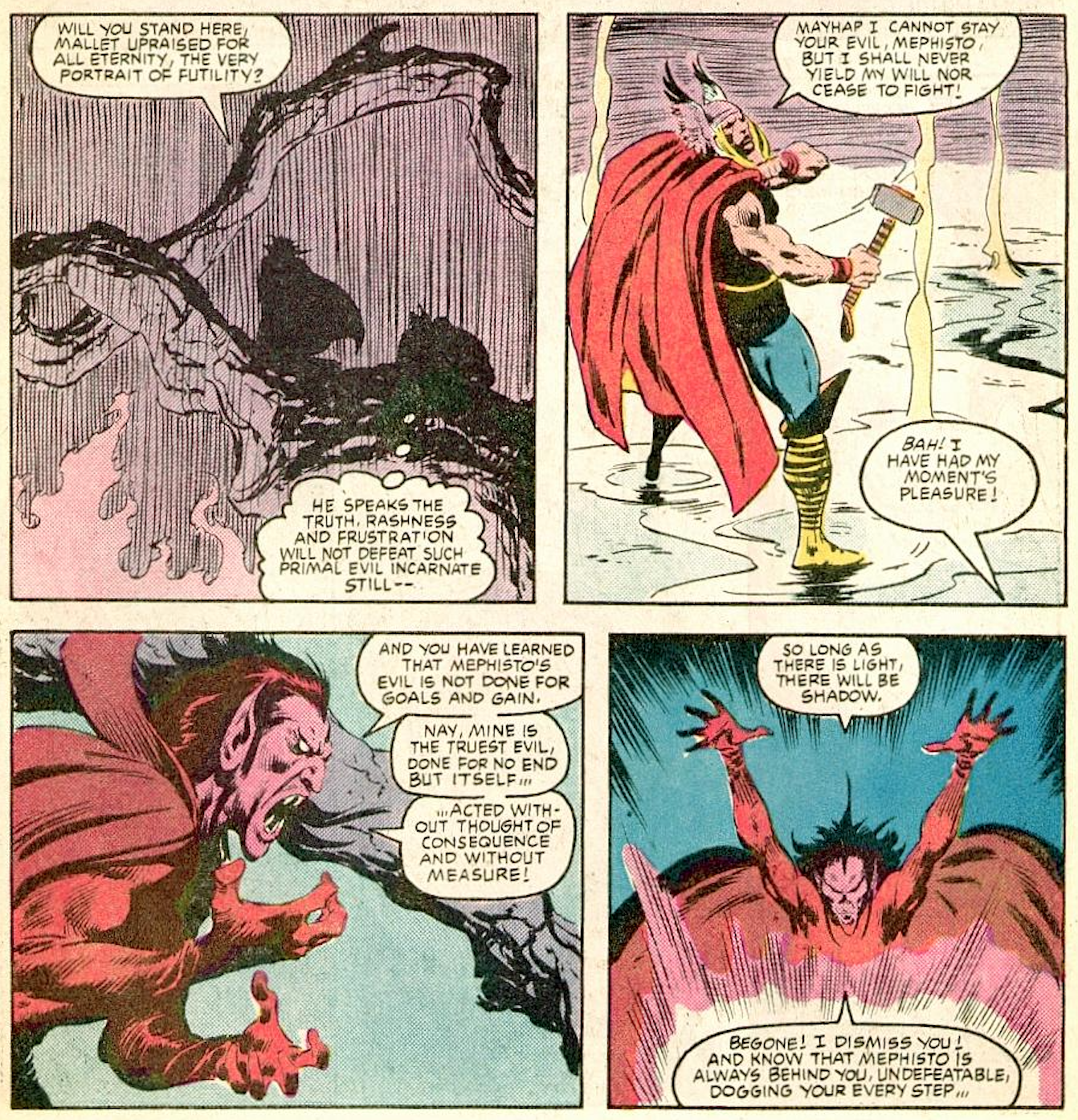
Even when Thor is sullen and depleted, Ulik is no match for him. Before long, Thor has moved on to the master manipulator behind the whole affair. The scope of the story grows vast as Thor confronts another godlike figure in his mythic realm. When titans at this level clash, the outcome is all but assured. Thor calls down torrential rains in Hell, Mephisto wields his evil magic, and it all ends in a stalemate.
That’s a comic worth the buck-twenty-five required to claim it off the newsstand in 1985. And, to cap it all off, the issue ends with a splash page that just might be the single greatest piece of art Buscema saw published by Marvel during his long tenure there. That category, I should note, is populated with a slew of contenders. Even so, Mephisto and his full cup makes for a comic-art masterpiece.
Previous entries in this series (and there are a LOT of them) can be found by clicking on the “My Misspent Youth” tag.
Discover more from Coffee for Two
Subscribe to get the latest posts sent to your email.
 Coffee for Two
Properly, a splash page is located only at a story’s beginning, for the reader to “splash” into the story. Every full-page panel is not a splash page.