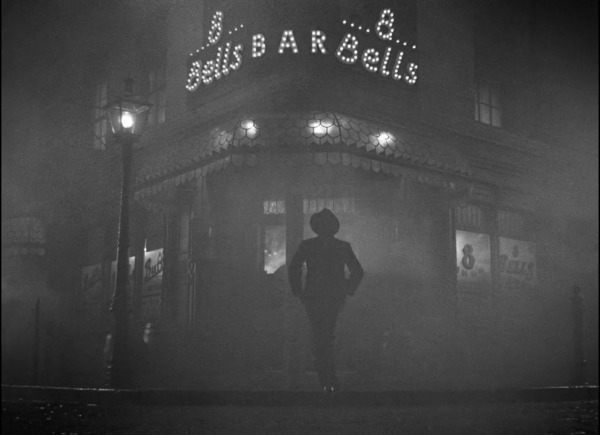
The Sea Wolf (Michael Curtiz, 1941). Adapted from a Jack London, The Sea Wolf spins a gnarled tale of the happenings on a ship presided over by despotic captain (Edward G. Robinson). Because the conditions on the vessel are especially harsh — and the captain is pursuing an illicit mission in the guise of seal hunting that never seems to take place — the crew is populated by shady actors, including George Leach (John Garfield), a man running from the law. Yet another fugitive comes on board when the ship rescues survivors of a crash, and one of them is prison escapee Ruth Webster (Ida Lupino). Director Michael Curtiz accentuates the florid machinations of the script with headlong energy and gloomy imagery, the latter largely dependent on the expert cinematography of Sol Polito. The narrative sometimes seems a little too overladen, and the snobby fiction writer (Alexander Knox) who winds up on the ship and comes under heavy persecution from the assembled ruffians proves to be one character too many. Still, The Sea Wolf is often thrilling in its dark, cynical sensibility.

Twisters (Lee Isaac Chung, 2024). Weirdly, Lee Isaac Chung’s tilt at blockbuster filmmaking gets less entertaining as it moves from its chockablock, dunderheaded setup to modest attempts at narrative subversiveness. Maybe it’s a nicely upending touch to have the hotshot, hambone tornado chaser (Glen Powell) introduced as an exemplary of capitalism-caddish villainy turn out to be more thoughtful and ethical than first imagined, but the attempts to add a little weight are so halfhearted that they come across as buzzkill rather than depth. In the lead role of Kate Carter, a preternaturally gifted analyzer of shifting winds, Daisy Edgar-Jones can barely get a handhold on the character, playing her genius, trauma, crusading empathy, and bravado with the same tepid fretfulness. Chung does solid enough work with the disaster-fetish action sequences and even seems a little jazzed to present the thrill-ride counterpart to the ruminative study of rural life in his exemplary, Oscar-honored breakthrough, Minari. (I helf-expected to see Will Patton trudge into a scene dragging a cross behind him.) No matter how much CGI weather swirls across the screen, the film’s most impressive special effect is Maura Tierney, playing Kate’s no-nonsense mother. In a handful of perfunctory scenes, Tierney invests her character with crackling, magnetic personality.
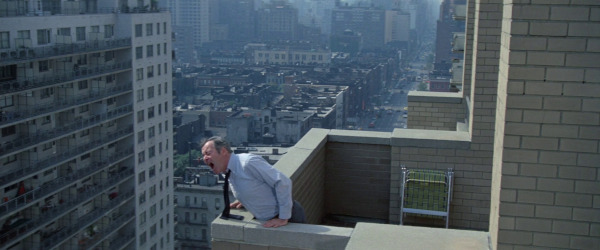
The Prisoner of Second Avenue (Melvin Frank, 1975). Jack Lemmon plays Mel Edison, an advertising executive who is professionally cast aside in middle age. It’s an indignity that compounds the stressed dissatisfaction he already feels in a city that increasingly feels like a noisy, heartless nuisance to him. The situation grows worse when he can’t find a job, and his wife (Anne Bancroft) needs to go back to work, shifting the dynamics of their relationship. Neil Simon adapted his 1971 Broadway hit (which first starred Peter Falk and Lee Grant, a pairing with this material that I’d love to see), and it certainly reverberates with the precise comic laments of a certain class of New Yorker that was the acclaimed playwright’s primary mode until his later turn towards autobiographical nostalgia. Lemmon and Bancroft give it their all, but director Melvin Frank never finds the right rhythm to make the gags connect. The Prisoner of Second Avenue winds up a time capsule rather than an enduring comedy.
Discover more from Coffee for Two
Subscribe to get the latest posts sent to your email.
 Coffee for Two
Neil Simon definitely influenced my perception of New York when I was growing up. It seemed like there’d be some movie either written by him or influenced by him playing on Sunday afternoon television in the 80’s. Plus The Odd Couple TV series would be on constantly.
I think of Barefoot in the Park as another very big statement of This Is What New York City Is.
And note how he shifted from “this crazy city” in a more playful and joyful way to what he did with Prisoner of Second Avenue. Or The Out of Towners before it, where all the cliches/stereotypes of “bad, dysfunctional” NYC circa 1968 are displayed.