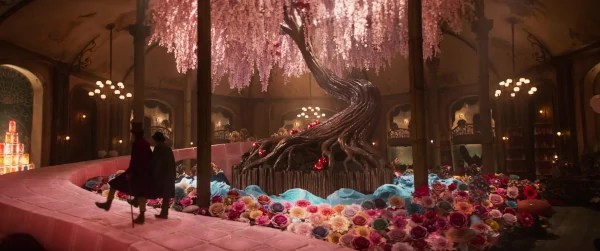
Wonka (Paul King, 2023). Following two shockingly good features that graced the big screen with the adapted adventures of a certain marmalade-loving bear named after a mass transit hub, Paul King turns his attention to another classic of British kids’ lit. Wonka is a prequel that traces the arrival of eccentric chocolatier Willy Wonka (Timothée Chalamet) in the evidently cutthroat business of peddling sweets. King’s vivid imagination is only fitfully present in the film’s visual stagings. It’s too often crowded out by the tangled burdens of world building and franchise management. The filmmakers signal their desperate fealty to director Mel Stuart’s superlative Willy Wonka & the Chocolate Factory throughout, an understandable yet deadening impulse. I’m not sure if Chalamet’s performance is good exactly, but he sure does barrel roll into the proceedings reverberating with every ounce of theater-kid adrenalin he can muster. The songs are forgettable, and most of the performances of the supporting cast are unbearably hammy. The mild exception on the latter part is Olivia Colman as a villainous landlady, and that’s mainly attributable to the clear joy she has in returning to the sort of unabashed broad comedy where she got her start.
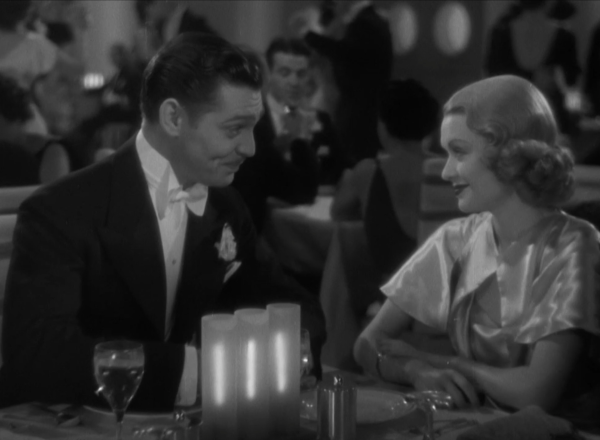
After Office Hours (Robert Z. Leonard, 1935). This tale of a newspaperman chasing down a story involving murderous doings among the city’s moneyed elites has the headlong pace and dialogue snapping like a roaring camping that were practically requirements for the era’s screen depictions of print journalism. In After Office Hours, Clark Gable plays Jim Branch, who routinely irks his bosses by targeted their privileged pals in his writing. His immediate dislike for a society page reporter named Sharon Norwood (Constance Bennett) is set aside when he realizes she has access to the wealthy cads he wants to expose. His initially feigned romantic overtures towards her grow into actual swooning love at a record pace that only happens in the movies. Gable is entirely within his element here, and his scenes with Bennett have real sizzle. Robert Z. Leonard’s direction rarely rises above serviceable, but staying out of the way of Herman J. Mankiewicz’s densely packed script is probably the shrewdest strategy here.
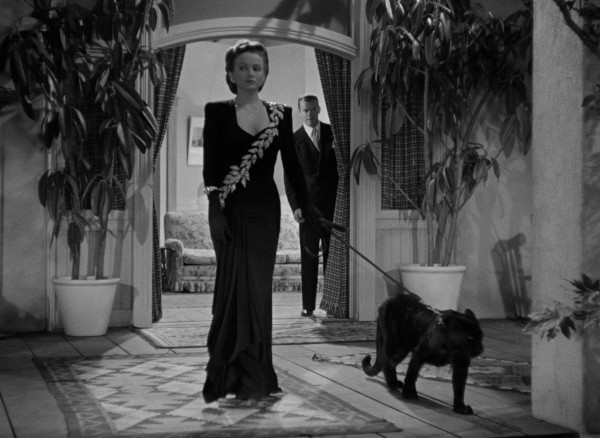
The Leopard Man (Jacques Tourneur, 1943). One year after delivering a hit with the horror flick Cat People, producer Val Lewton and director Jacques Tourneur gave big, menacing felines more screen time. Jerry Manning (Dennis O’Keefe) rents a black leopard so nightclub singer Kiki Walker (Jean Brooks) can make a splashy entrance when she strides into her workplace. The leopard almost immediately breaks free, and reports soon come in about people getting mauled to death. The free-roving leopard takes the blame, of course. Jerry, partially to escape his sense of culpability, pursues the idea that there’s some other nasty business afoot. Working with cinematographer Robert De Grasse, Tourneur drenches the film in shadows, but The Leopard Man lacks the artful mood-setting and narrative cunning of his other collaborations with Lewton. Dennis O’Keefe is terribly wooden in the lead role, and many of the supporting actors match his stiffness. A notable exception is the Mexican actress Margo, who brings verve and personality to her performance as Kiki’s professional rival.
Discover more from Coffee for Two
Subscribe to get the latest posts sent to your email.
 Coffee for Two