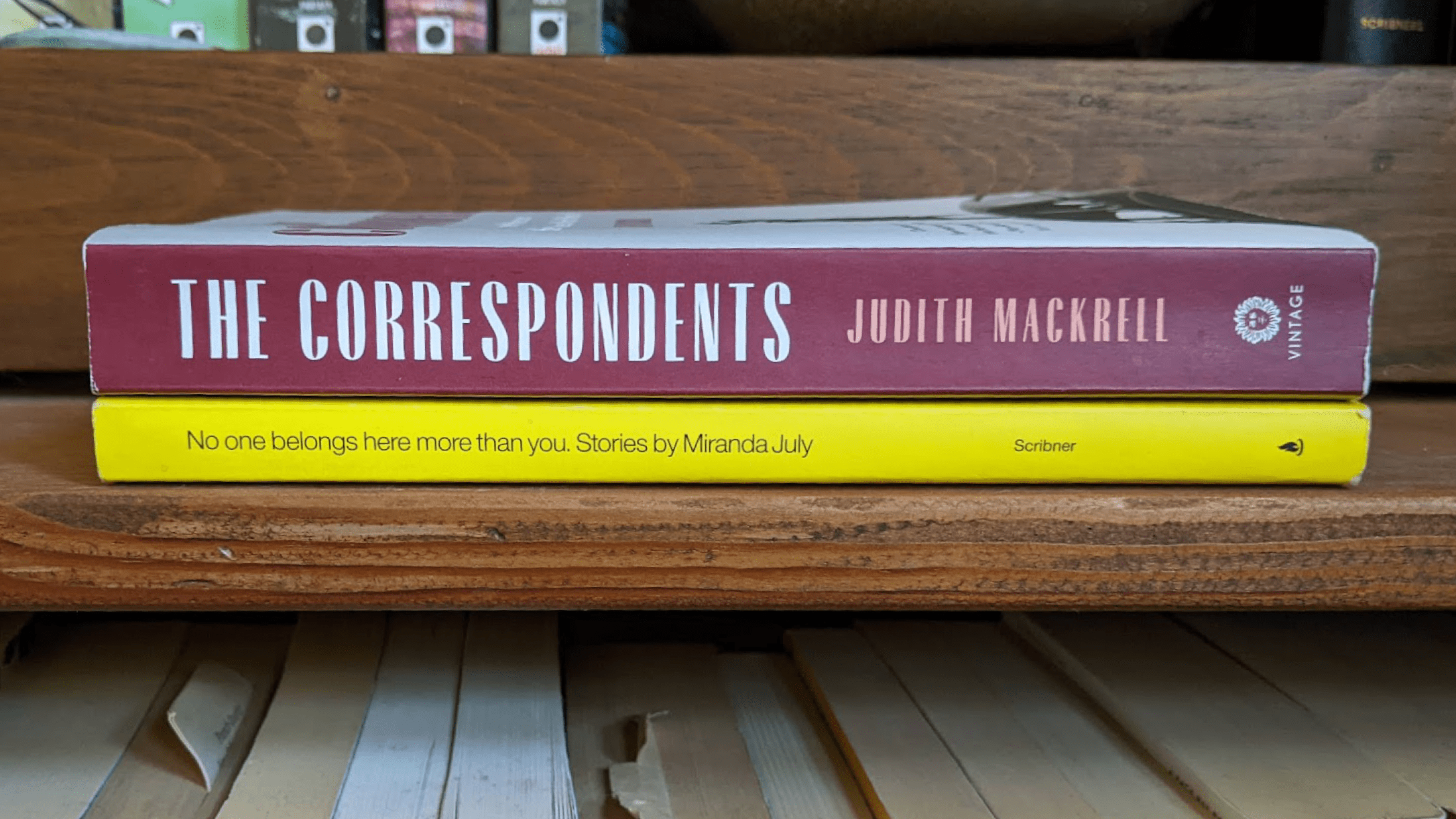
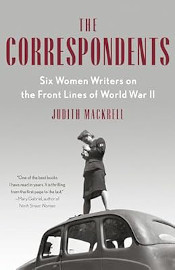
The Correspondents by Judith Mackrell
Nonfiction, 2021
This was one of a thousand small tragedies that Virginia glimpsed, but she and Healy were fortunate in being able to divert, eventually, onto a quieter route. As an accredited war journalist, Tom was allowed onto road that were reserved for military use, and, navigating along small country lanes, they were able to reach Tours by lunchtime the following day. It was Friday 14 June, and when Virginia bumped into Knick, coming out of his hotel, he told her that the Germans had already entered Paris and that it was a miracle she got out in time. “My God, how did you get here?” he enquired, and Virginia, who was nearly dead from fatigue, acerbically replied, “You’re always asking me that.”
Tracing the paths of six women who laced up their boots and reported from the dangerous terrains of World War II, Judith Mackrell delivers a book that’s both a multi-pronged biography and a brisk history of the global conflict that defined a century. Mackrell accomplishes the history piece in part by featuring just enough of the her subject journalists’ reporting to make one long for a companion collection. There is also clear-eyed recounting on Mackrell’s part of the various twists in the multi-year war, a needed tactic to keep track of all the comings and going of the intrepid women.
For all Mackrell’s admirable efforts, I’ll admit that I sometimes had difficulty keeping track. Understandably, the book zooms and zips all over the planet, and the reporters’ experiences are often similar enough to make it tricky to remember whose done what prior to the moment playing out on the the page. Of course, that quality also emphasizes the similar chauvinism the women endured even as they were operating in a manner that absolutely proved their equality with their male peers.
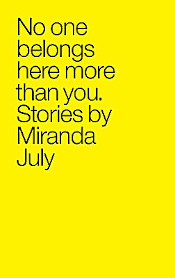
No One Belongs Here More Than You by Miranda July
Fiction, 2007
She had a needlepoint pillow that read: MAKING LOVE IN 2002. On the other side of the couch there was MAKING LOVE IN 1997, in blue, with a ruffle around the edge. I guessed there were more, but I tried not to look for them. I didn’t want to see the one with the current year on it. Or, if there wasn’t one, I didn’t want to know why. She asked me polite questions, and we waited for her husband.
This slender collection of short stories is imbued with exactly the sort of wry whimsy I would expect from Miranda July. The fiction moves with a feather-like, at least if the feather in question could occasionally alter its mass with alarming speed to hit like a heavyweight’s roundhouse. Reflecting July’s experience as a director of vividly alert films, many of the stories play out like carefully constructed cinematic scenes meant to develop characters through dialogue and the things left unsaid. If the stories sometimes feel like wisps of ideas that July hasn’t quite managed to expand fully, the level of craft she brings to the material is always exquisite. The book is lovely.
Discover more from Coffee for Two
Subscribe to get the latest posts sent to your email.
 Coffee for Two