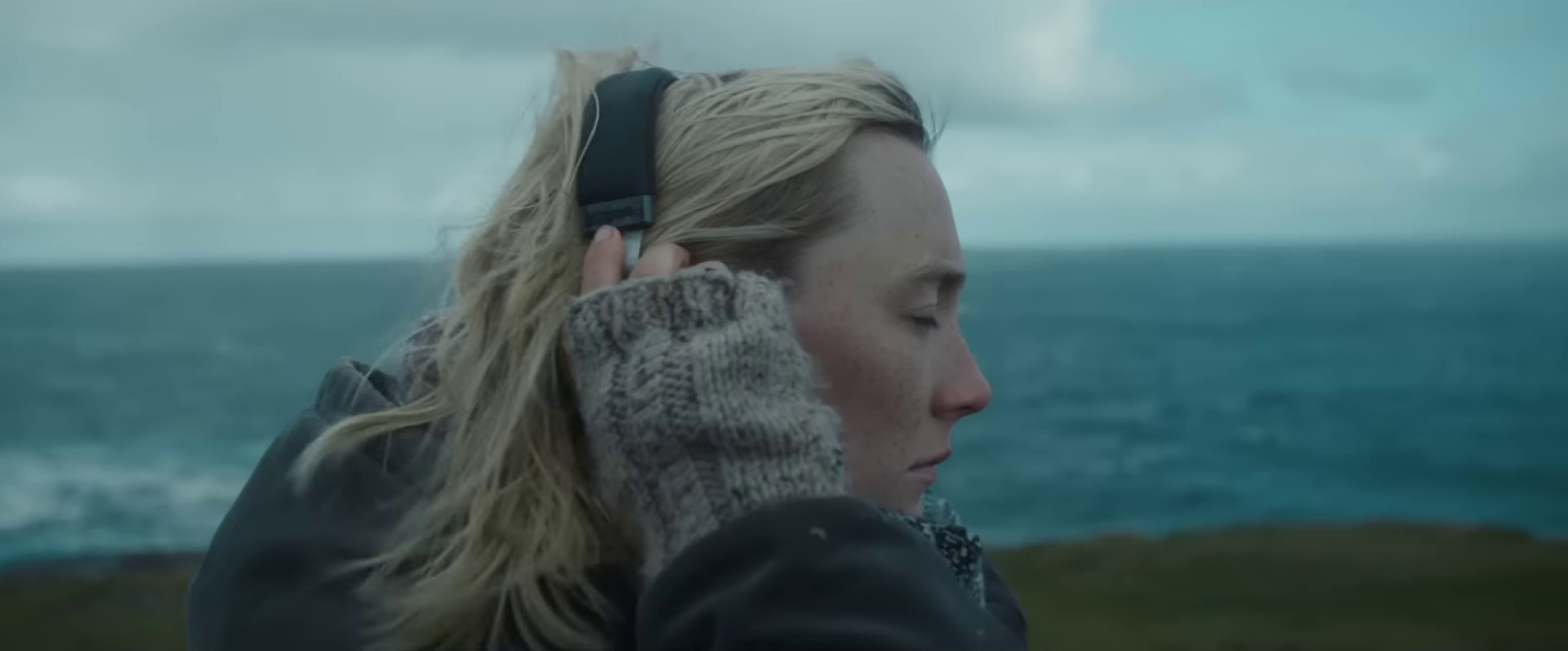
In The Outrun, Saoirse Ronan plays Rona, a woman reaching the end of her twenties in a state of personal disrepair. The most obvious expression of her problematic state is a pronounced drinking problem that results in a lot of physical and relationship damage. The film unfolds in fragments, moving back and forth through time to show the repercussions of Rona’s alcohol dependency as well as the fraught circumstances, mostly within her immediate family, that brought her to a self-medicated low point. Writer-director Nora Fingscheidt arranges the film with the sporadic clarity of memory, one impression leading to another rather than a story proceeding in a straight line. Much as it’s a sound strategy for getting at the fullness of character, making her more than the literal wounds she sports after another blackout drunk, the method also becomes a sort of trap, piling in more and more incidents after the point has been decisively made.
The film is based on the memoir of the same name that was written by Amy Liptrot, who also collaborated on the screenplay. The autobiography buys some forgiveness when the plot makes its most predictable pivots. More importantly, the apparent determination to honor the honesty of Liptrot original confessional nonfiction spills across the film, lending it greater authenticity than it might have had. The fits and starts of Rona’s escape from her own worst tendencies comes across as a devilishly difficult act of problem solving that is made all the more vexing by the complicated relationships with her mother, Annie (Sakia Reeves), and father, Andrew (Stephen Dillane).
Ronan’s performance ultimately gives The Outrun it’s most vital dose of undeniable truth. Rona is exactly the sort of part that actors have made meals out of for decades, reeling from woozy chasms to ascents of determined healing. There are familiar beats to Ronan’s work; barring a feint towards some weird actorly abstraction, there’s almost no way there couldn’t be. Amid the sloping physicality and glass-eyed rages, Ronan properly bears down on Rona’s misery, the real culprit in her spirit-saturated travails. Ronan drains basic well-being from her character so effectively that it becomes a triumph when personal self-assurance creeps back in, when Rona begins to find her way to feeling free without assistance measured in proof level. Fingscheidt uses narration generously throughout the film, but it’s entirely unnecessary at the end. It’s Ronan’s performance that conveys whether Rona’s healing is going to stick.
Discover more from Coffee for Two
Subscribe to get the latest posts sent to your email.
 Coffee for Two