
The Idea of You (Michael Showalter, 2024). This soft-touch romantic comedy casts Anne Hathaway as Solène Marchand, an art gallery owner in a funk following a divorce from her unfaithful husband (Reid Scott). When her caddish ex flakes on a planned bonding trip to Coachella with their daughter (Ella Rubin), Solène reluctantly steps in. While there, she stumbles into the trailer of Hayes Campbell (Nicholas Galitzine), one of the dreamboats in the boy band August Moon. The two strike up an unlikely romance, and the film follows the ups and down of their May-December-ish coupling. As usual, Hathaway gives it her all, which in this instance requires pumping personality and charm into a character that’s as thin as piano wire. The core relationship isn’t compelling, and the conflicts that arise are contrived. The main flaw is Michael Showalter’s direction. He consistently makes the blandest choices possible when the film needs someone to give it a whole lot of fizz.
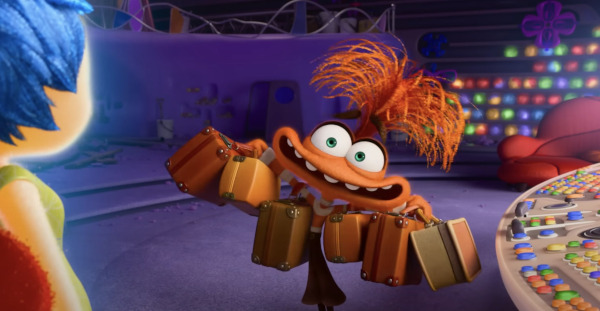
Inside Out 2 (Kelsey Mann, 2024). I see the appeal of updating Inside Out, the 2015 Pixar offering that stands as the animation’s studio last truly great movie. Aging hockey-loving Minnesota transplant Riley (voiced by Kensington Tallman) to thirteen opens up a myriad of possibilities as her feeling-populated brain is compelled to welcome several new, complicated emotions. Kelsey Mann, A Pixar veteran making her feature directorial debut, is highly capable in moving between several threads of action, keeping the action clear and the pace sprightly. Even so, the themes don’t hold together as effectively as they did previously. Joy (Amy Poehler) learns a lesson that’s frustratingly similar to the one that shifted her perspective in the first film, and the overall messages are muddled. Inside Out 2 does continue its predecessors marvelous inventiveness in fanciful, anthropomorphic representations of how the human brain works, even if it invariably suffers from a sequel’s lack of surprise. Maya Hawke gives a dandy voice performance as noggin newcomer Anxiety.
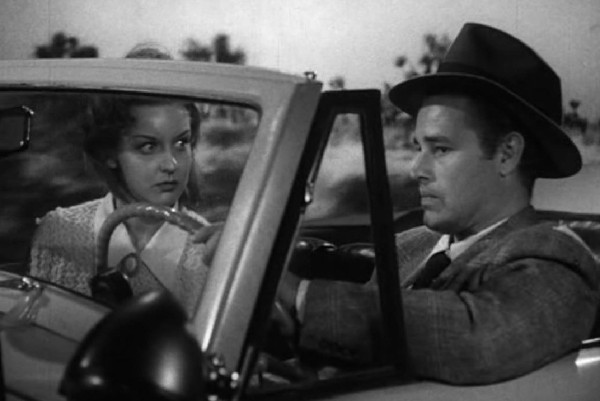
Detour (Edgar G. Ulmer, 1945). Judging solely by Detour, no Hollywood actress ever carried a more apt stage name than Ann Savage. As Vera, the femme fatale who arrives at the film’s midway point, Savage is sniper of seething animosity. She’s cunning enough in the performance to make the character’s furor comes across as a reasonable response to a society that’s rigged up to always do wrong by her. Directed with maximum seediness by Edgar G. Ulmer, the film follows Al Roberts (Tom Neal), a defeatist piano player who hitchhikes across the U.S. to meet up with his singer girlfriend (Claudia Drake) in California. Along the way, a couple spots of bad fortune leave Al worried that the law is going to seek him out for a crime he didn’t commit. Or at least that’s how he tells it. The main story is presented in flashback with Al’s narration, and there are sly hints that he might not be the most reliable of narrators. The film is riveting and entertaining, crackling with the grim energy that marks all the best Hollywood film noirs. Detour is as compact and steely as a bullet.
Discover more from Coffee for Two
Subscribe to get the latest posts sent to your email.
 Coffee for Two