
Between the Temples (Nathan Silver, 2024). Ben Gottlieb (Jason Schwartzman) is a cantor who can no longer sing, which is pretty much at the top of his list of professional duties. He’s been in this state since the sudden death of his wife one year earlier, which has prompted him to carry his grief like a millstone around his neck. While seeking solace in a bar, Ben has a chance encounter with Carla Kessler (Carol Kane), his elementary school music teacher, who is dealing with her own loneliness and dismay. Carla decides she would like to finally have the bat mitzvah that her leftist parent denied her some sixty years earlier, and she begins working with Ben on private lessons, forming a bond of mutual vulnerability that grows more intimate as they work together. Director Nathan Silver (who is co-credited on the screenplay with C. Mason Wells) approaches the story with a deadpan wit that recalls nineteen-seventies Hollywood offerings, and he works with cinematographer Sean Price Williams to give the film a nicely aligned scrubby, lo-fi look. For all the film’s earnest conviction, the storytelling is imperfect; there’s a moment late in the film when the text establishes that only three weeks have passed, and it was jarring to me to realize how incongruous that accelerated timeline was with the progression of the characters’ relationship. Despite this, Between the Temples is a resounding success as a dual character study. Kane is predictably wonderful, and Schwartzman keeps pace with remarkable depth of feeling. There’s also a stealthy, sharp supporting performance by Madeline Weinstein, playing a socially awkward young woman who woos Ben.
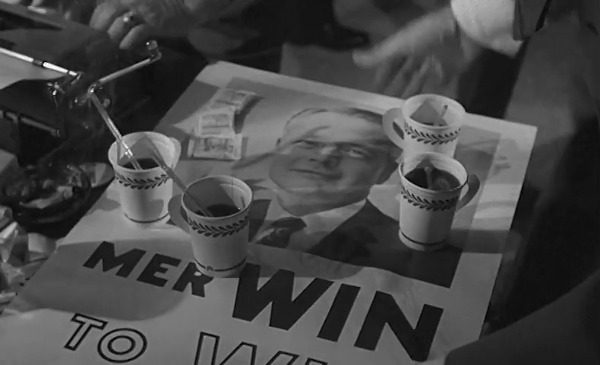
The Best Man (Franklin J. Schaffner, 1964). Gore Vidal adapted his 1960 stage play into this snappy political drama. Taking place at a party’s political convention where the candidate chosen to be the political nominee is far from decided, The Best Man follows the conflict between William Russell (Henry Fonda), a fundamentally decent man and the sitting secretary of state, and Joe Cantwell (Cliff Robertson), a U.S. senator with ruthless instincts and an intense need to climb the ladder. Vidal’s screenplay is an artful evisceration of political posturing, showing how callously superficial the process of picking a leader can be, and Franklin J Schaffner directs with the certainty and attention to detail that would characterize Alan J. Pakula’s later work with films similarly caught up in the cold mechanisms of power. The cast in sensationally good across the board. Fonda is ideally cast as the more sterling and seasoned of the candidates, and he brings flinty personality to every scene. I’m not Robertson ever got anywhere near this good in another film performance. He gives the greedy menace of the character real heft, especially in the moments when he easily flips from gregarious glad-handling to dead-eyed threat. Their strong work is met with excellent supporting turns by Lee Tracy, Kevin McCarthy, Ann Sothern, Edie Adams, and, most surprising of all, comic Shelley Berman, as a squirrelly figure from Joe Cantwell’s past.
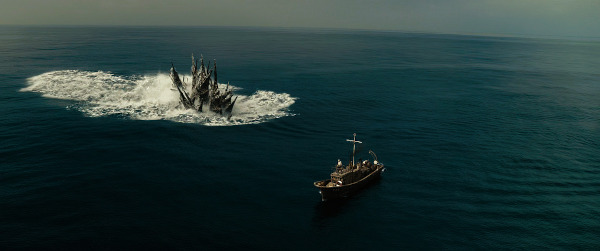
Godzilla Minus One (Takashi Yamazaki, 2023). Japan calls Godzilla home from recent mucking about in clamorous Hollywood productions and thank the hazy heavens for that. Written and directed by Takashi Yamazaki, Godzilla Minus One proceeds for a good chunk of its running time as an affecting post-war drama that just so happens to have a monster pop up every now and again. Kōichi (Ryunosuke Kamiki) is a World War II veteran who wasn’t supposed to come home. He served as a kamikaze pilot, but ditched his mission in the closing days of the war by claiming engine trouble. There are no clean getaways, though; the island base he lands in for the unneeded repairs is attacked by a towering, scaly monster that wipes out the troops stationed there. After he returns to a ravaged Tokyo, Kōichi fights through Godzilla-boosted PTSD while building a modest life with other survivors of the war: a young woman named Noriko (Minami Hamabe) and a orphan named Akiko (Sae Nagatani). The film’s plot eventually gives way to a big, spectacle attempt to stop Godzilla from laying waste to Japan, and that’s all staged smoothly and inventively, even as many of the specific story beats are entirely predictable. What truly sets the films apart is the determined investment in developing the characters beforehand. The mayhem, the metaphors, and the pointed themes about the war citizens are treated as discardable during wartime have far more meaning because of it.
Discover more from Coffee for Two
Subscribe to get the latest posts sent to your email.
 Coffee for Two