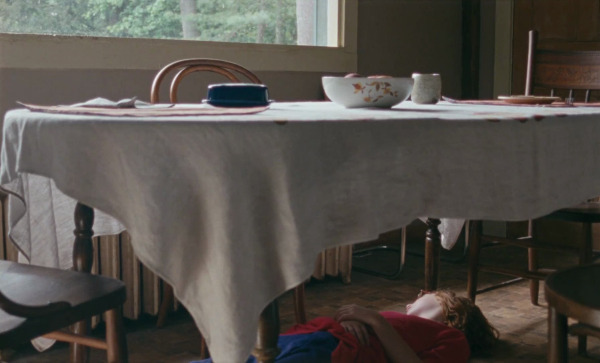
Janet Planet (Annie Baker, 2024). Renowned playwright Annie Baker’s feature debut as a writer-director shows that she’s impressively thought out the unique strengths of the medium. There are a lot of ways to tell a coming-of-age story, but telling this story in precisely the way it plays out in Janet Planet could only be done in a movie. Baker favors faint impressions and telling silences as she follows eleven-year-old Lacy (Zoe Ziegler) through a a hazy summer under the distractible, caring eye of her hippie-ish single mother (Julianne Nicholson). Although the plotting is clear and assured, Baker is more concerned with the way the lead character senses the world she’s moving through, whether reacting to her mother’s flitting from one paramour to another or simply the way it feels to hear muffled downstairs conversations between adult while drifting off to sleep at night. The intimacy of cinema makes Baker’s approach emotionally prosperous. The movie hits harder because of how it presses in on experience. There are nice performances all around; I’m especially fond of the murmuring intensity Elias Koteas brings to the role of the leader of a theater troupe that doubles as a sketchy commune.
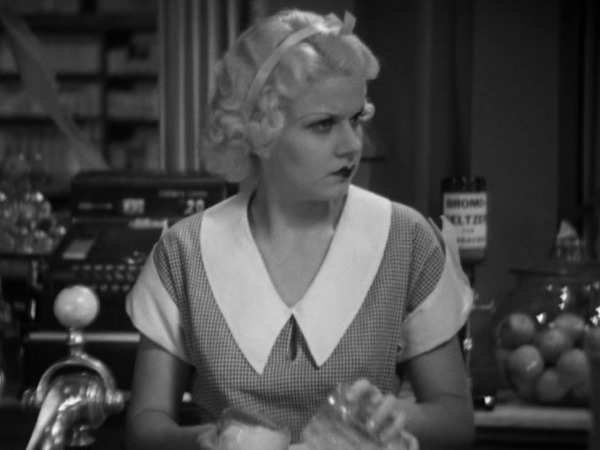
Three Wise Girls (William Beaudine, 1932). Jean Harlow plays Cassie Barnes, a young woman who flees her small town in pursuit of big-city dreams only to find similar indignities in her new home. The setbacks are just delivered with a little more flash. Three Wise Girls was released just a couple of years before the Motion Picture Production Code clamped down on content, and this film demonstrates just how randy Hollywood wanted to get. There’s all sorts of extramarital shenanigans happenings between the various characters, and director William Beaudine regularly implies that the women on the screen are about the slip casually into a state of undress (several scenes take place in a dressing room packed tightly with models). Aside from that novelty factor, the film is entertaining for the brusque way the women respond to a society that objectifies them and pits them against one another. Harlow comes up with dozens of finely calibrated expressions that convey contempt for the pathetic men around her, and Marie Prevost expertly snaps off wry lines as Cassie’s lonely typist roommate.
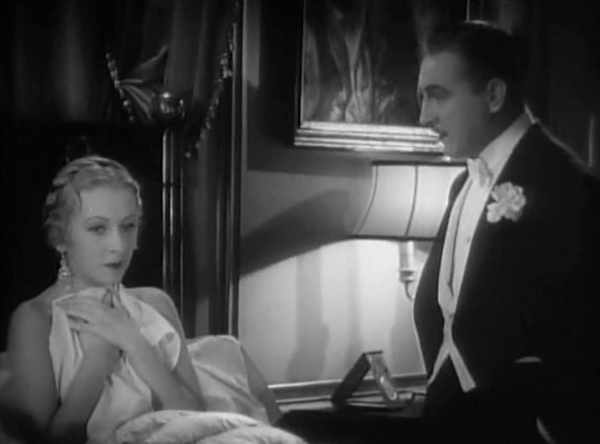
Arsène Lupin (Jack Conway, 1932). In this playful crime comedy that brings a gentlemen thief character created by French writer Maurice Leblanc to the screen, film director Jack Conway takes great delight in playing with the conventions of his chosen art form. Two separate scenes take place in near-complete darkness, one involving the pilfering of party guests’ valuable belongings and another that lets two characters get down to some salacious business in a bedroom after one of them is discovered lounging naked in the bed while her ripped dress in mended. In addition to that nudging of boundaries, Arsène Lupin is uncommonly complex in its plotting full of double-crosses and concealed identities. The film lacks the panache that would distinguish the soon-to-come and tonally similar Thin Man movies, but it does have John Barrymore seemingly having a grand time with all the theatrically abundant performance opportunities afforded by his lead role.
Discover more from Coffee for Two
Subscribe to get the latest posts sent to your email.
 Coffee for Two