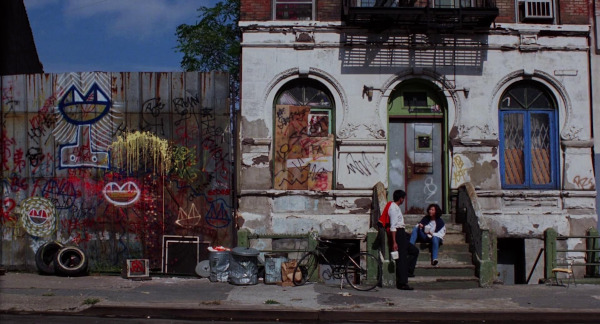
An Autumn’s Tale (Mabel Cheung, 1987). Because Chow Yun-fat is so locked into my brain as a either a John Woo tough guy or a regal figure in a period piece, it’s a kick to see him playing a smitten goof in this romcom. Mabel Cheung directs An Autumn’s Tale with a keen eye to the disparate tones of New York City in the nineteen-eighties, when metropolitan charm and decrepitude right out of a post-apocalyptic fable existed within blocks of each other. The film follows Jennifer Lee (Cherie Chung), a young woman who leaves Hong Kong for America in order to reunite with the boyfriend (Danny Chan) who preceded her there. It turns out that he’s something of a cad, and Jennifer has to make her way in the big city with a little assistance from her distant relative Samuel (Chow), who’s a bit of a scruffy layabout. An Autumn’s Tale is an effective light-touch depiction of the immigrant experience that also stands as an endearing snapshot of New York in the waning days of its broken-down beauty. Chung is a charmer in the lead role, conveying Jennifer’s innocence and quick-developing wherewithal.
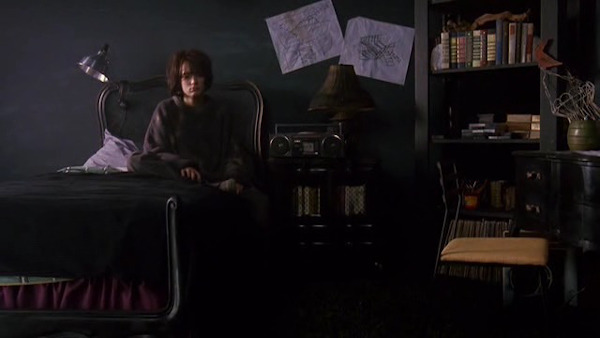
Welcome Home, Roxy Carmichael (Jim Abrahams, 1990). In Welcome Home, Roxy Carmichael, Winona Ryder plays Dinky Bossetti, a high school outcast in her small town. Dinky is so fixated on her community’s most famous former resident, a major celebrity named Roxy Carmichael (played by Ava Fabian in a few gauzy scenes), that she eventually convinces herself that the famous figure is her secret mother. As the town preps for an expected homecoming, Dinky and others, including the big star’s former boyfriend (Jeff Daniels), spiral emotionally. Embedded deep, deep within this dramedy is an interesting movie about how pining for alternate pasts holds people back from accepting their present and building a better future. That interesting movie never emerges, mostly because director Jim Abrahams is unable to handle the complex tones of the storytelling required. The movie veers wildly between soft quirk and heated domestic drama, neither mode working all that well. Ryder is typically strong in the lead role, though she did far more interesting and deep work with similar characters at around the same time.

Between the Lines (Joan Micklin Silver, 1977). Watching convivial misfits scuffle along at an alternative weekly newspaper in the mid-nineteen-seventies is very much my thing. Joan Micklin Silver directs deftly, especially because the screenplay (co-credited to Fred Barron and David M. Helpern Jr.) often feels like it wants to stretch into a television series rather than settle in as a movie. The plot is loose as unstapled pages. There’s a worry about new ownership of the paper that runs through the film, but Between the Lines is mostly about watching these iconoclastic journalists hang out together, whether pitching stories, maneuvering low-scale office politics, reporting on the seedier sides of their city, or going out to a Southside Johnny and the Asbury Jukes concert. John Heard is terrific as an acclaimed but challenging reporter, and the supporting cast, including Lindsay Crouse and Bruno Kirby, delivers fun, inventive work across the board. It’s a particular kick to see Jeff Goldblum’s screen persona already in full bloom as a smarmy rock critic.
Discover more from Coffee for Two
Subscribe to get the latest posts sent to your email.
 Coffee for Two