I read a lot of comic books as a kid. This series of posts is about the comics I read, and, occasionally, the comics that I should have read.
For most of my comic book reading life, the world of superheroes and supervillains was guided by largely unstated yet iron-clad norms. Good guys were good guys and bad guys were bad guys, and the everyone large stayed in their place. On occasion, the bad guys even straight out put the word evil in their public-facing monikers to help make it easier to distinguish where they resided on the spectrum of moral behavior. A big part of the truly inspired series Thunderbolts is the way those norms are exploited and upended.
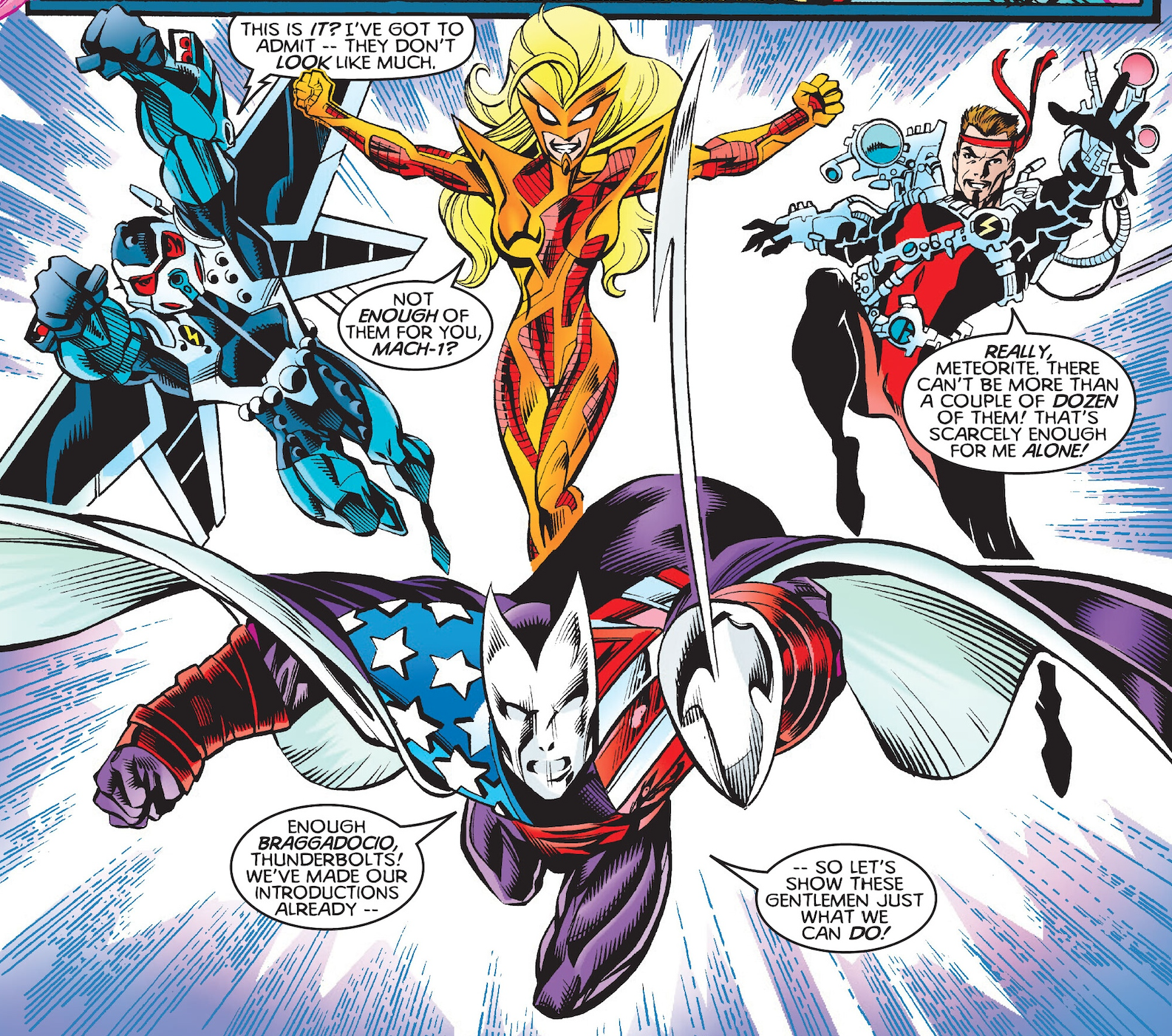
Written by Kurt Busiek and drawn by Mark Bagley, Thunderbolts debuted in the mid-to-late nineteen-nineties at an especially weird time for Marvel Comics. Several key characters were swept in in the Heroes Reborn initiative, which swept them away from the universe that was in canon continuity to cavort in alternative reality adventures overseen by fan-favorite creators Jim Lee and Rob Liefeld. Because the likes of the Fantastic Four and the Avengers were no longer available to face down superpowered foes, there was space for new heroes to emerge. With a touch of meta, a cohort of new champions swept in to fill the void. They called their team Thunderbolts, and they operated with what seemed an intensely earnest do-gooder mentality.
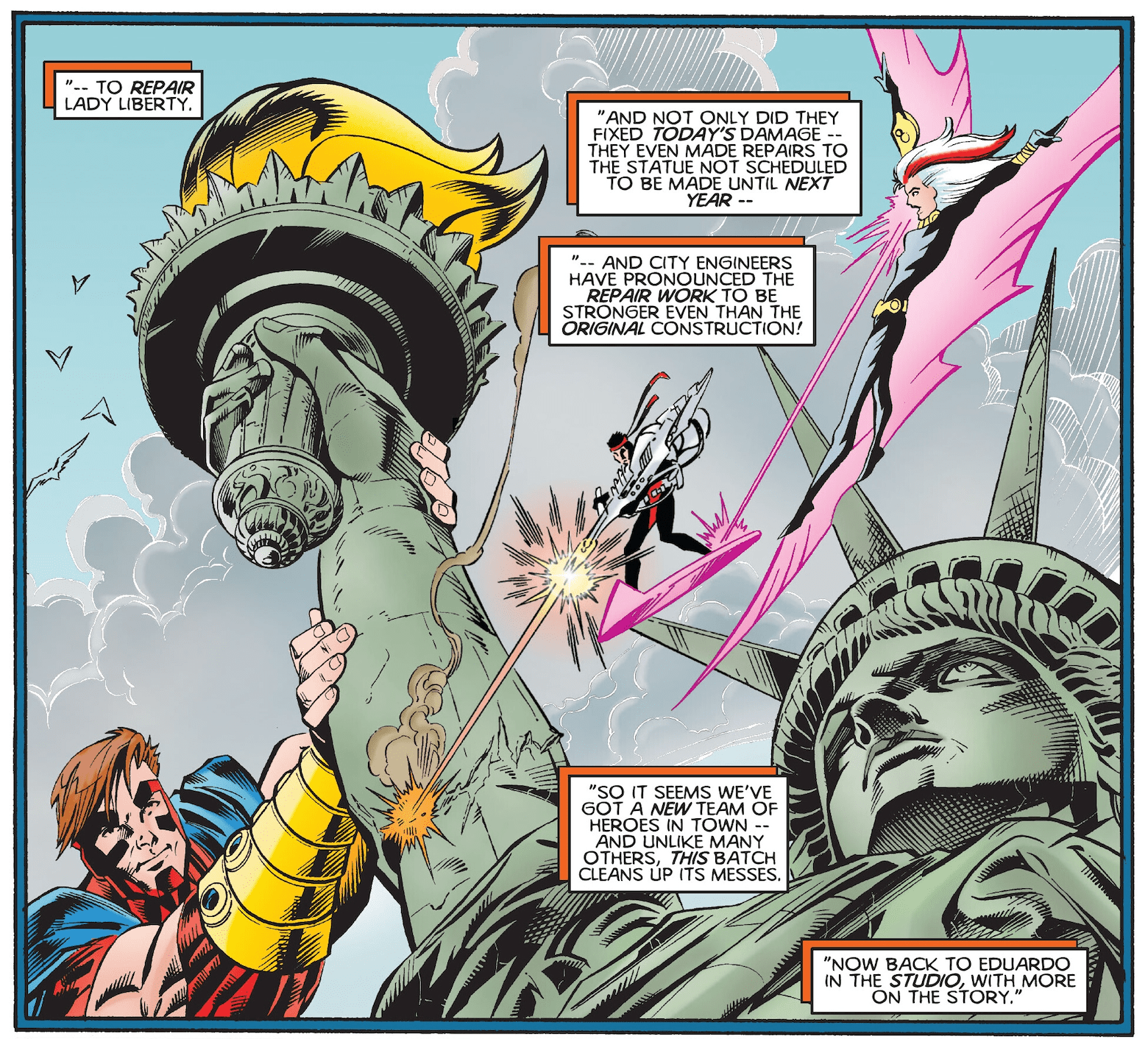
Busiek and Bagley structure the first issue of Thunderbolts like a classic Marvel debut. The new heroes save the day, and their powers and personalities are introduced with a vibrant energy. A reader who was aware of the continuity-rattling initiative would naturally assume that this band of brave warriors was simply there to freshen up the publisher’s line, no different that countless other attempts to introduce a sensational new star to the Marvel galaxy over the years. Why would these masked stalwarts be any different than all the New Mutants and Power Packs that came before?
There was a trick waiting to be played, though. The closing pages of that collector’s item first issue held the sort of wild twist and devilish storytelling hook that was surprisingly rare in mainstream superhero comics to that point. These weren’t all-new characters. Instead, these Thunderbolts were longtime supervillains who’d donned sheep’s uniforms.
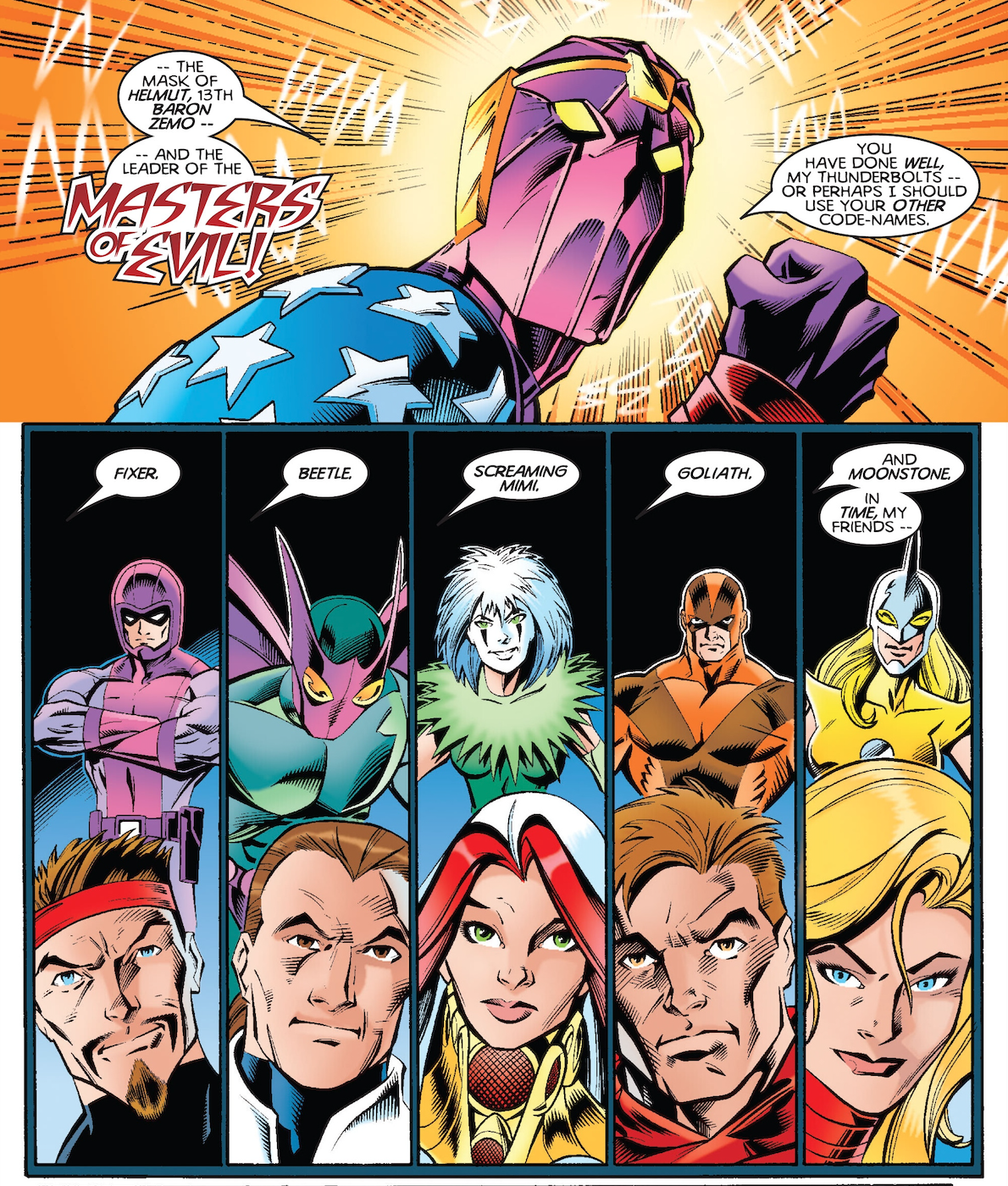
These nefarious figures were masquerading as superheroes to win the public’s trust as part of a scheme to eventually deploy a master plan to more easily make ill-gotten gains. Busiek’s notion was simple and ingenious. It was as easy as changing costumes and re-introducing themselves with different names and performative heroism. Supervillains could immediately escape justice and earn plaudits from the masses.
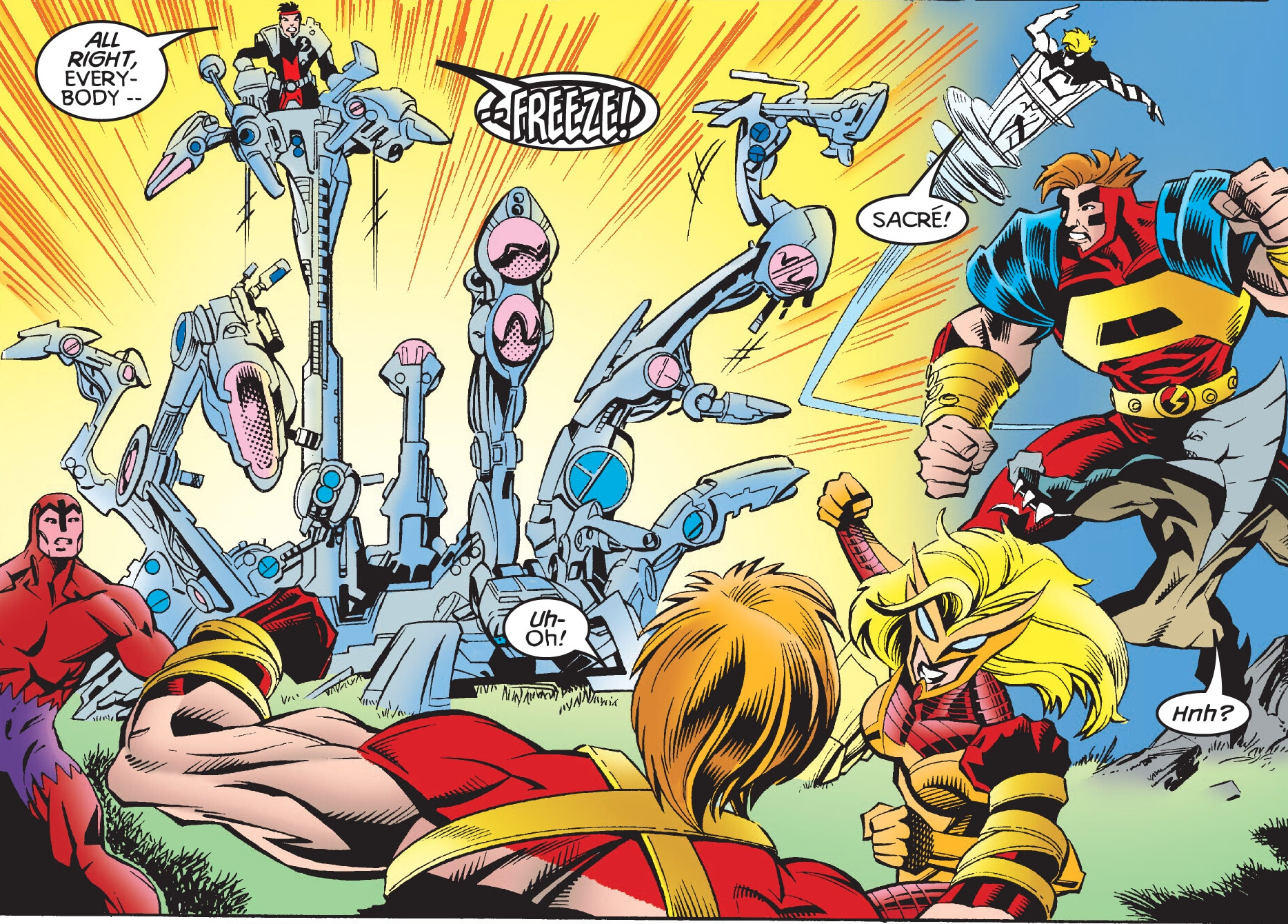
In short order, Busiek starting to complicate matters. The different Masters of Evil had different perspectives on this strange mission they’d mounted. For example, maybe being adored by the citizenry was better than whatever minor treasures could be gained by plotting their downfall. Instead of stealing, it turned out earning admiration could lead to civic leaders gifting lavish headquarters and formidable equipment. While still having pages loaded with action sequences and colorful guest stars, Thunderbolts took time to explore its main characters and depict nuanced reactions to this wild world they existed in. Sturdy and familiar as it was in many respects, Thunderbolts was also cleverly surprising. Its house was overloaded with ideas.
Previous entries in this series (and there are a LOT of them) can be found by clicking on the “My Misspent Youth” tag.
Discover more from Coffee for Two
Subscribe to get the latest posts sent to your email.
 Coffee for Two
I’m not familiar with Thunderbolts, as my mainstream (read Marvel/DC/Image superheroes) comics phase only overlapped with my high-school years (1989-93). I am familiar with Mark Bagley, who I always felt was a competent if uninspiring, workmanlike artist. (Though reading his Wikipedia page, his background is pretty interesting.) I did enjoy his previous series New Warriors (which I felt like it never got its fair shake) though Fabian Nicieza had the tendency to over-write, a trait shared by many Marvel writers of this era. I will admit that I was too enamored with artists like Jim Lee to pay much attention to Bagley’s work, which I guess happened to a lot of boys my age during that era.
These comics came out during an era when I was significantly scaling back, especially on Marvel stuff, so I didn’t read them at the time. I caught up later, in part because I remembered one of my comics pals telling me this was the one series he always read right away in the car before driving home from the shop.