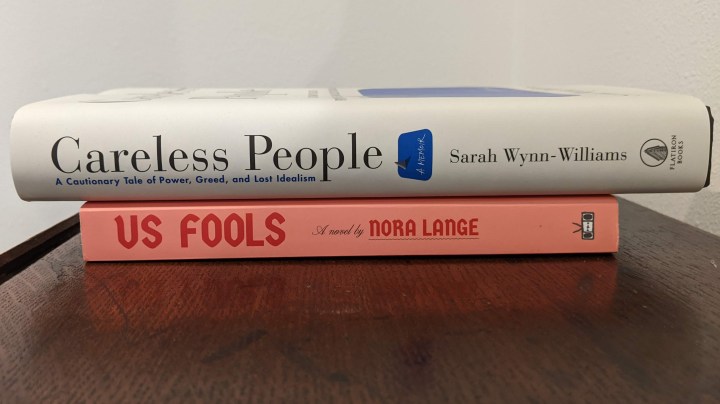
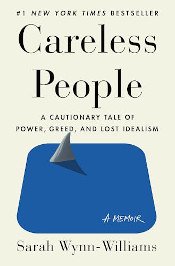
Careless People by Sarah Wynn-Williams
Nonfiction, 2025
Parscale’s team also ran voter suppression campaigns. They were targeted at three different groups of Democrats: young women, white liberals who might like Bernie Sanders, and Black voters. These voters got so-called dark posts—nonpublic posts that only they would see. They’d be invisible to researchers or anyone else looking at their feed. The idea was: feed them stuff that’ll discourage them for voting for Hillary. One made for Black audiences was a cartoon built around her sound bite that “African Americans are super predators.” In the end, Black voters didn’t turn out in the numbers that Democrats expected. In an election that came down to a small number of votes in key swing states, these things mattered.
Mark quietly takes it all in. At first, he’s skeptical and pushing back, but gradually that turns into curiosity. He starts to ask questions, trying to understand the mechanics of it all. He doesn’t seem upset that the platform would be used in this way, not in the slightest. If anything, there’s admiration for the ingenuity of it. Like, these tools were there all the time for anyone to use this way. How smart that they figured it out.
The bigwigs at Meta are angry this book exists and have put their considerable resources into preventing Sarah Wynn-Williams from making the customary promotional rounds for it. That was incentive enough for me to make sure I secured a copy for my bookshelf. I wasn’t the only one. Those dolts from tech world managed to Streisand Effect the book all the way to the top of the New York Times bestseller list.
Careless People is a memoir of Wynn-Williams’s time working at Facebook, where she witnessed colossal growth for the company and a commensurate corrosion of the already faulty moral compass was in place. Wynn-Williams effectively originated company efforts to engage with governments around the world. According to Wynn-Williams, she went into this with the best of intentions, seeing social media as a potential force for positive social change, as evidenced by use of the internet to forge connections between activists during the Arab Spring uprising. Her efforts are initially met with indifference or grudging acceptance of their necessity for a long time, especially from Mark Zuckerberg, but they still earned her close proximity to the top entrants in the org chart. She sees firsthand how wealth and power detaches these people from any belief system other than how they fortify their wealth and power and basically abuse anyone around them who doesn’t have it.
There’s nothing special about the mechanics of Wynn-William’s writing, but her assemblage of damning personal testimony and clear-eyed assessment of he coworkers’ collective failing still make for a riveting read. She also shares with laudable openness, willingly exposing her own personal failings as she lets the corporate culture of constant effort do damage to her relationships and her own basic well-being. If our societal systems of accountability were in proper working order, this book would have a real-world impact on social media regulation akin to the way Silent Spring led to mandated improvements to the how the environmental protections.
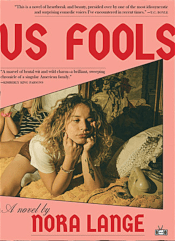
Us Fools by Nora Lange
Fiction, 2024
Henry and Sylvia loved us. Though sometimes I believed they would have preferred us to be moved elsewhere, out of sight like a sin, like detritus. They treated each of us accordingly. According to our natures, our separate and uniquely distinct natures. My older sister was one such extreme, disagreeable in a indefatigable way. Jo had emerged from the womb an instigator, recalcitrant fire-breather, resolute skeptic, confident loner. I, on the other hand, was another very unique pole, gentler, softer, and inarguably agreeable. But I was weak by comparison. And I was condemned to live a life with Joanne. Our parents had confirmed as much. From birth, I was predisposed to believe in art, a massive undertaking, and thus I would go on to be undervalued. Almost everyone on Earth can agree on this. I was destined to become first an afterschool theater teacher, to now an underpaid adjunct of some near extinct subject matter because it was just the sort of cynical nightmare I was made for.
This dense, deviously clever novel follows two Midwestern sisters, Jo and Bernie, as they contend with chancy family dynamics and the long fallout of their fraught early days. In its base particulars, Us Fools has parallels to any number of stories that test Leo Tolstoy’s hypothesis about unhappy families. Author Nora Lange deepens the novel by burrowing in deep to the main setting of a family farm in the nineteen-eighties. The book is rich with details of how the U.S. culture was unsettled during those years and the myriad of ways that rural communities and those working in agriculture were among the first to be ground up by the revving gears of heartless capitalism. The troubles endured by the character are a reflection of the irreparrable ruptures in a nation that has given itself over entirely to greed and other base desires.
Lange’s writing is lively and consistently engaging. She is both fleet and methodical in her storytelling, and a wry sense of humor consistently comes through. The book is scrappy and vibrant, living with the character more than depicting them. Most thrillingly, it’s a piece of fiction that can be proffered as an example a strong authorial voice.
Discover more from Coffee for Two
Subscribe to get the latest posts sent to your email.
 Coffee for Two