I read a lot of comic books as a kid. This series of posts is about the comics I read, and, occasionally, the comics that I should have read.
Years ago, while deep in my vociferous consumption of comic book scholarship, I encountered a contention that I’ve since decided was completely true. The author in question asserted that the greatest stretch of superhero stories in the history of the medium were printed in the thirty to forty issues that surrounded Fantastic Four #50. Artist Jack Kirby and writer Stan Lee launched the Marvel Age of Comics with the publication of the first issue of Fantastic Four in 1961. Within a few years, as the titanic quartet were joined by a fleet of other wonders and Marvel was approaching the level of genuine sensation, Kirby and Lee were emboldened to put every one of their boldest, brashest ideas into the pages of the publisher’s flagship title. Among many mighty contenders — the Inhumans and Black Panther among them — nothing is quite as astonishing as the coming of Galactus.
The storyline that introduced the towering cosmic menace with a hunger for planets ran from Fantastic Four #48 to #50. In an act of pure audacity, the tale can be reasonable interpreted as Lee and Kirby, having already tested their foursome of adventurers with a multitude of increasingly awesome adversaries, decided to answer the question “What would happen if the Fantastic Four had to fight God?” Given this, maybe the most amazing part of the story is that it doesn’t even fill the three issues allotted to it. A good chunk of issue #48 is given over to resolving the previous issue’s entanglement with the Inhumans. Only as the Fantastic Four wearily begin their journey back to their home base of the Baxter Building does the new challenge soar into view.
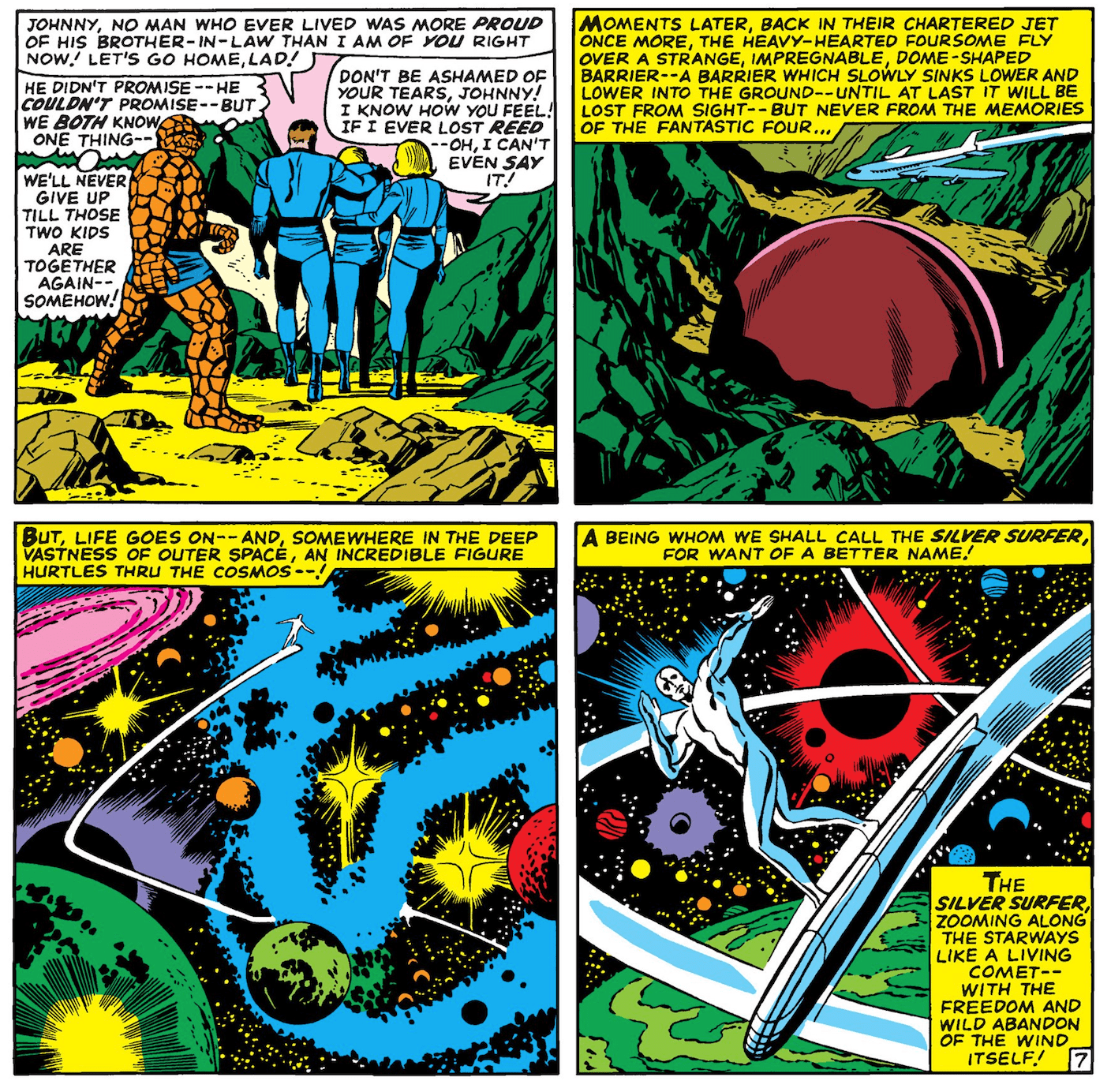
It is a famous piece of Marvel lore that the Silver Surfer wasn’t included in the plot that Lee originally turned over to Kirby. As was customary of their storied partnership, Lee gave Kirby a synopsis of what should happen in the issue, and Kirby put his mighty imagination to conceiving how the story would play out from panel to panel. When Kirby gave the finished pages to Lee to add his punchy words, there was a chrome-clad being cutting across the page. Kirby decided a figure as formidable as Galactus would have a herald who preceded him, an offhand determination that resulted in one of the great characters in the Marvel mythos.
In the story, Galactus comes to Earth intending to siphon off all its energy off to satisfy his all-consuming hunger. It will result in the destruction of the planet and all who reside on it, but Galactus is a being beyond such mundane concerns as the eradication of billions of living creatures.
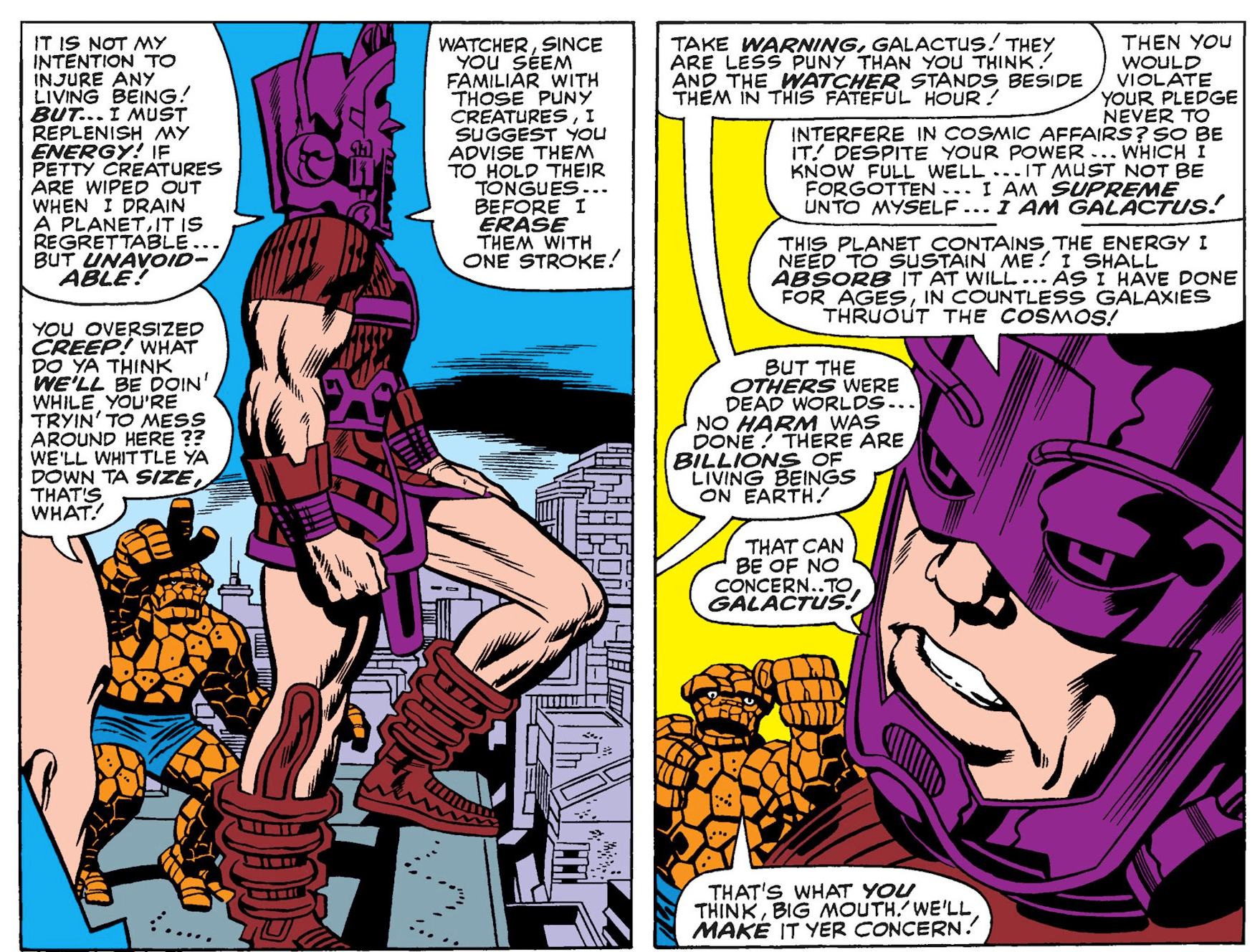
Tested like never before, the Fantastic Four engage in a mad scramble to determine how they can possibly defeat Galactus, encountering all manner of additional trials along the way. Those challenges include the Silver Surfer, who is himself imbued with a level of power nearly the equal as that of Galactus. Even so, he’s as susceptible to clobberin’ as anyone else, and a roundhouse from the Fantastic Four’s resident strongman, the ever-lovin’, blue-eyed Thing, sends the Silver Surfer across the city. As luck would have it, he lands on the skylight of Alicia Masters, the blind sculptress who dates the Thing.
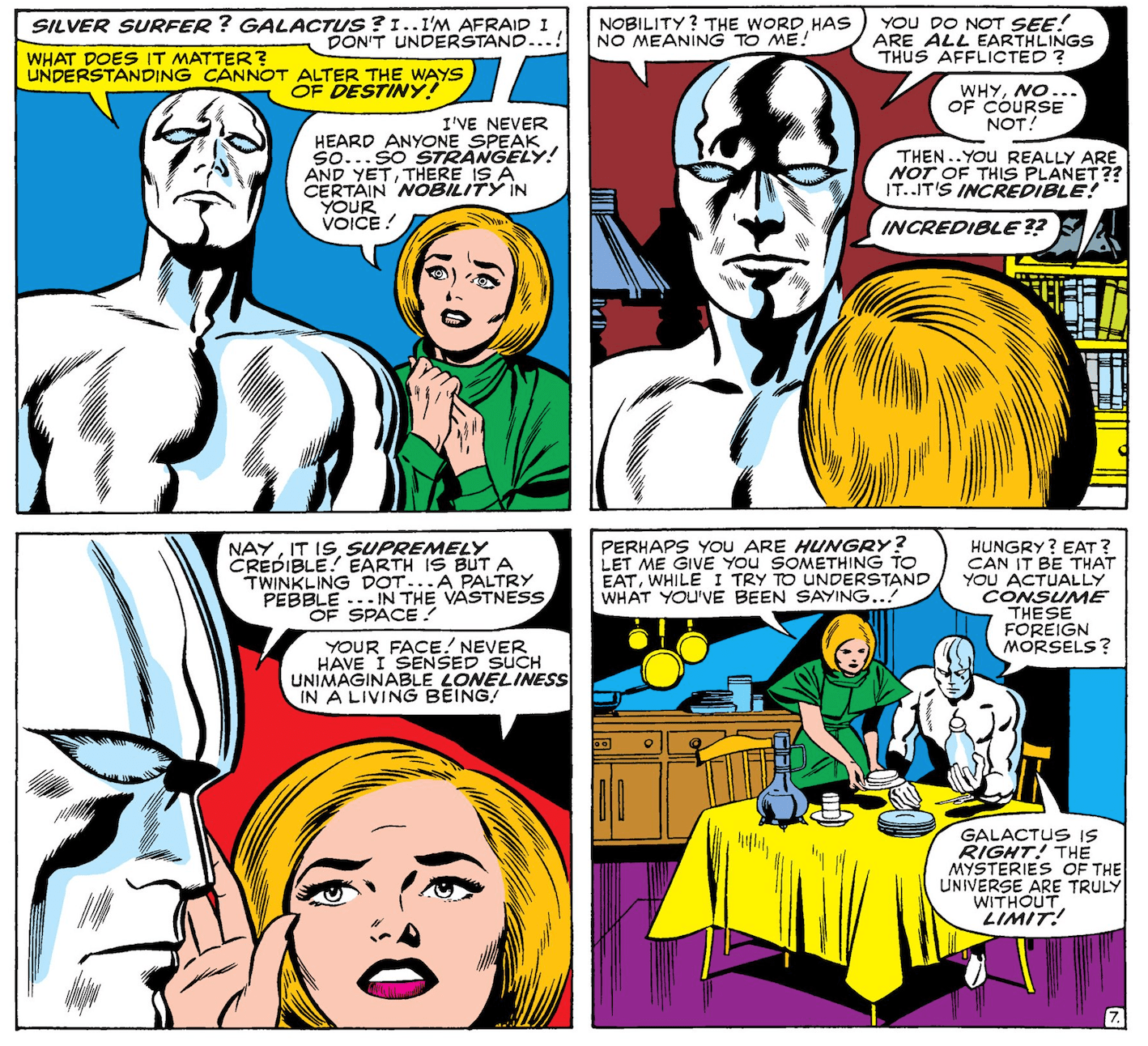
Pure of heart and unafraid, Alicia meets the Silver Surfer with deep wells of empathy, teaching him about humanity in the process. Moved by the encounter, the Silver Surfer turns on Galactus. Although the Fantastic Four have stalled Galactus with their efforts, it is only the intervention of another being who wields the Power Cosmic that can truly save the day.
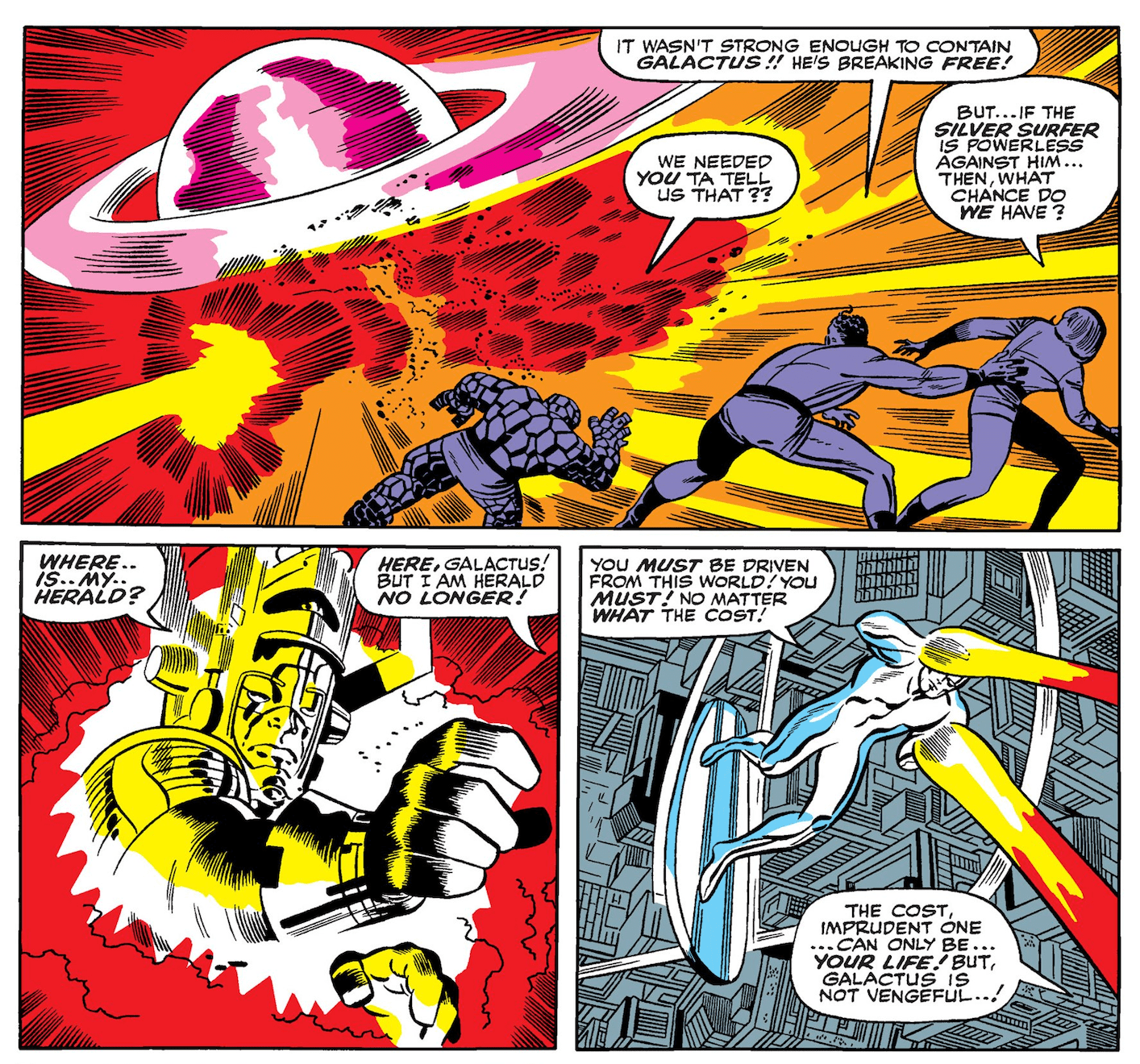
The Silver Surfer and the Fantastic Four succeed in preventing Galactus from eradicating Earth. When it seems the tale is resolved, Lee and Kirby have one last grand dramatic turn left. To punish the servant who turned against him, Galactus uses his nearly infinite abilities to confine the Silver Surfer to the planet he just saved.
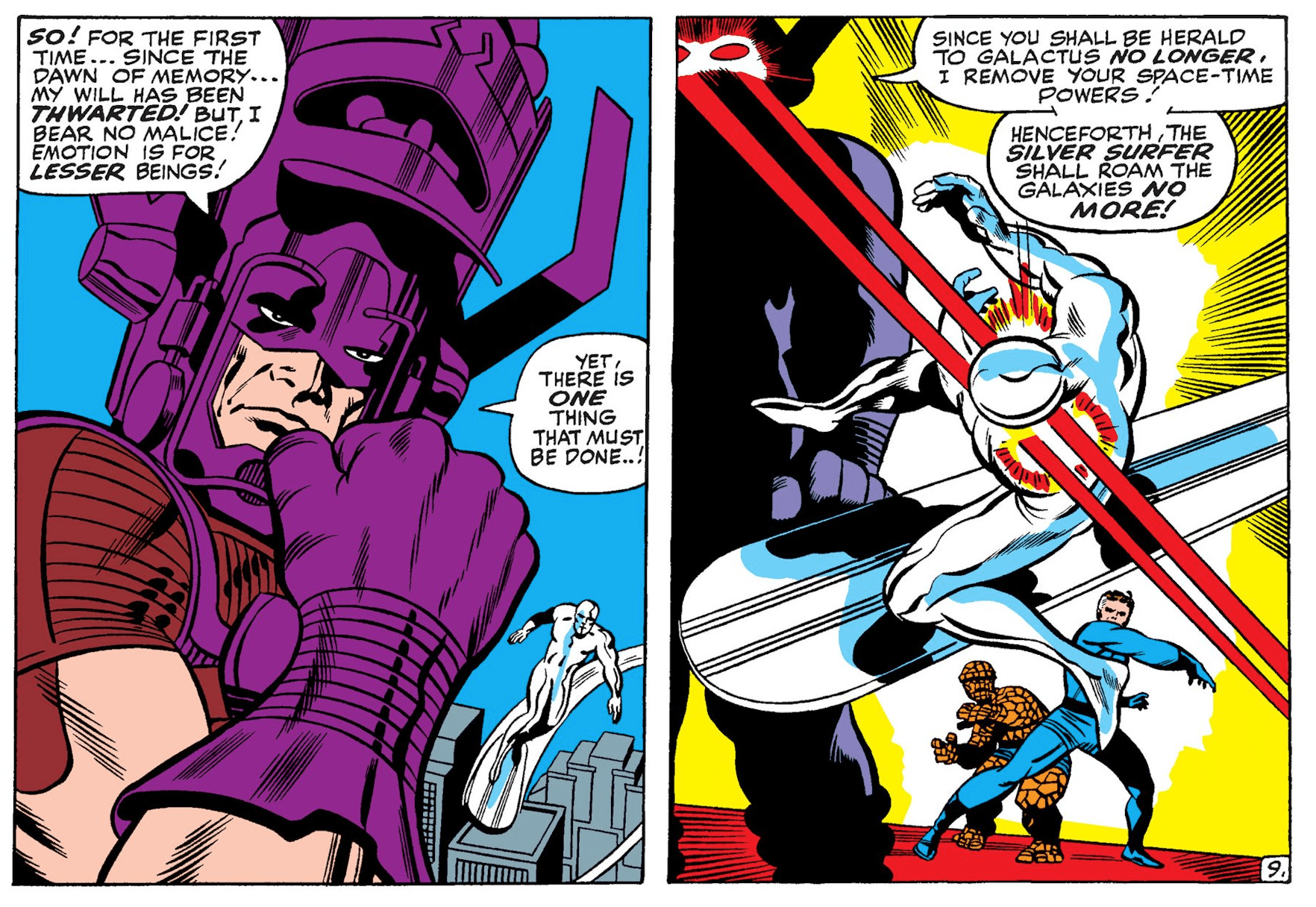
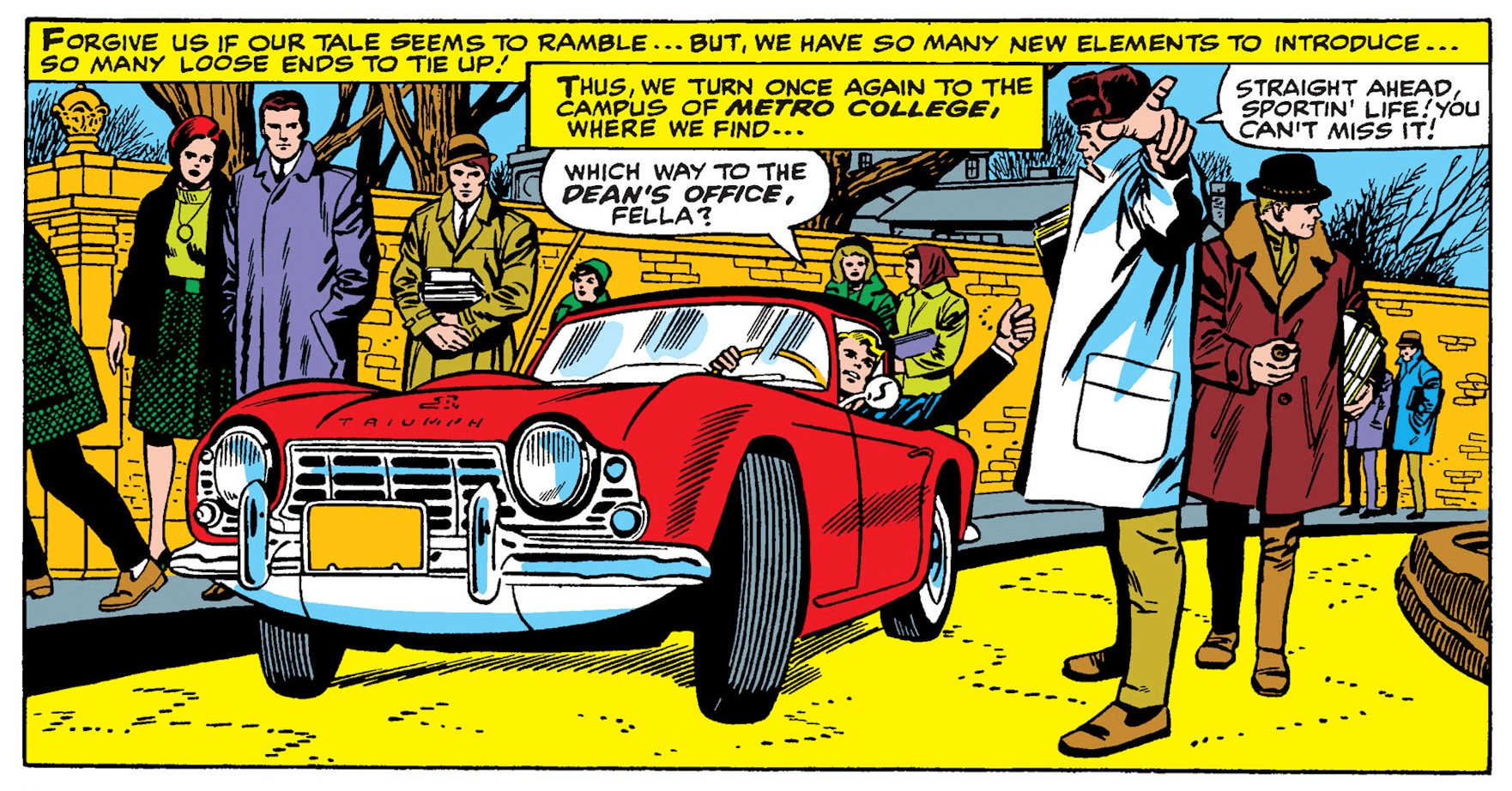
Just as it started, the story that introduces Galactus doesn’t take up an entire issue in its concluding chapter. Galactus and the Silver Surfer both exit the stage midway through Fantastic Four #50, and the creative team spend the remaining pages catching the reader up on more mundane happenings with the title team. Reed and Sue squabble, Ben sulks about his girlfriend’s interest in the Silver Surfer, and Johnny enrolls in college. Kirby and Lee have just dropped their most epic superhero story to date, and they told it economically enough that there are still plenty of panels to spare. In modern comics, a similar story would go on at tedious length, probably roping in a bushel of crossover titles. In the classic Fantastic Four, it’s just another couple months on the spinner rack.
Therein lies the pure wonderment of what Kirby and Lee accomplished on Fantastic Four. The comic was absolutely packed with ideas, so many that it often seemed the creators themselves couldn’t wait to get to the next issue. Without sacrificing detail or nuance of character, the series moved at a breakneck speed with an infectious eagerness for discovery. From the very beginning, Marvel’s comic magazines were bursting with colorful invention with no discernible limits of imagination. Kirby and Lee’s Fantastic Four was the center of that spectacular universe.
Previous entries in this series (and there are a LOT of them) can be found by clicking on the “My Misspent Youth” tag.
Discover more from Coffee for Two
Subscribe to get the latest posts sent to your email.
 Coffee for Two