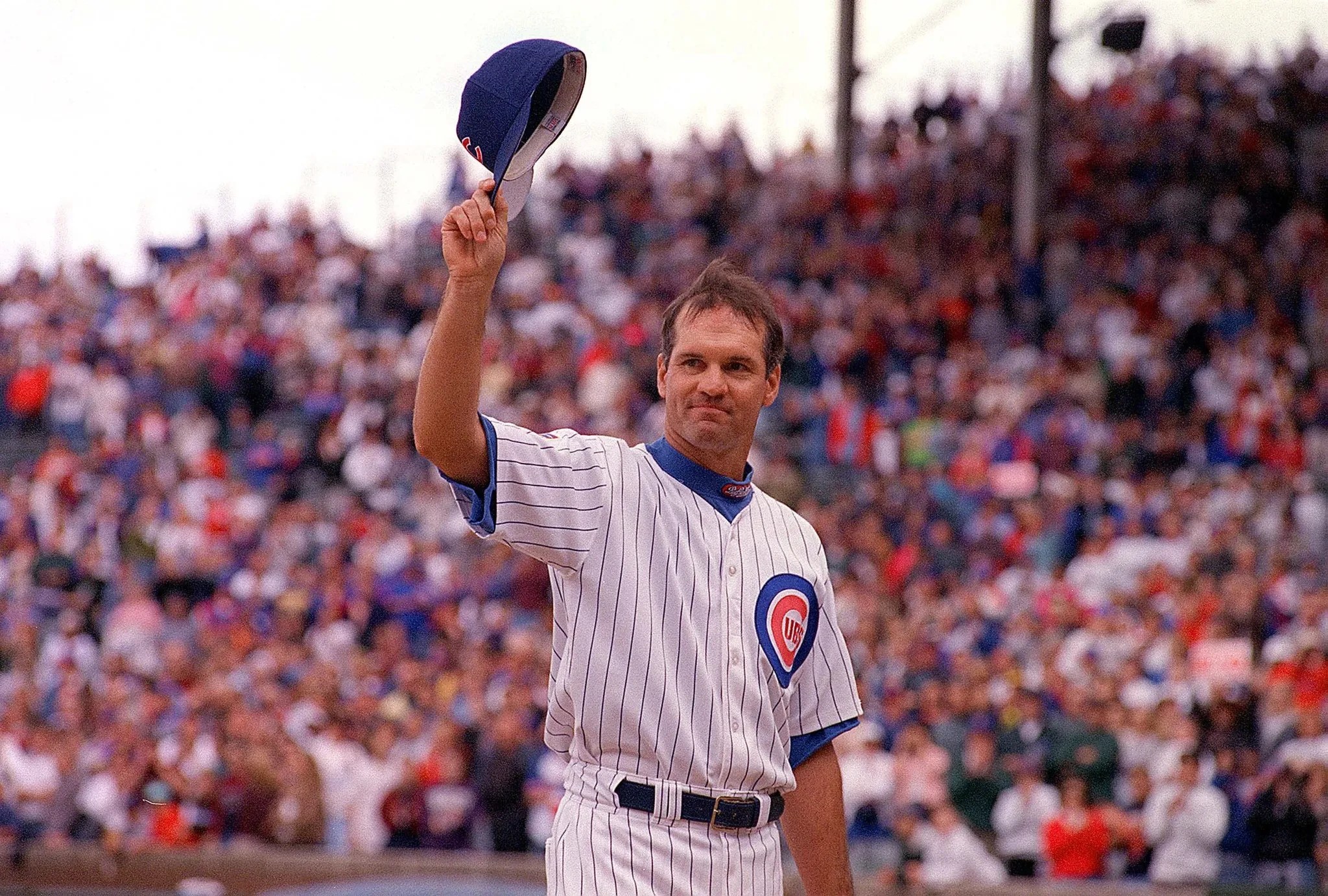
I know that I was watching baseball on the afternoon of June 23, 1984. That was hardly a rarity for me during that summer. My favorite team, the Chicago Cubs, were on television practically every day, their full schedule played before the camera of WGN, and because their home ballpark, the cathedral that is Wrigley Field, still didn’t have the outdoor lighting required for night games, opening pitches usually happened shortly after the lunchtime dishes were cleared. On that June Saturday, however, the match-up between the Cubs and the Cardinals, probably their most hated rivals, had been claimed for NBC’s Game of the Week. Bob Costas was the play-by-play man for the broadcast, and he would routinely cite the game as the best he had ever seen.
Uncharacteristically, the Cubs were a game and a half out of first. The Cubs were a venerable ball club that had long stewed in futility. They weren’t supposed to still be in contention as the season approached its midpoint, and yet there they were. Baseball invites thoughts of lore and mysticism, and it did seem like there was a welling magic within this team. At the player whose bat was most likely to be mistaken for a magic wand was Ryne Sandberg.
Sandberg was on a tear coming into the day, collecting seven base hits in the previous two games. He stayed in that enviable form; through the first eight innings of the game, he’d gone three for four and notched four RBIs. These were critical hits as the Cubs clawed back after the Cardinals went up 7-1 by the end of the second inning. In the bottom on the ninth, the Cubs were still down one run, and Sandberg came to the plate with the bases clear and two outs. Sandberg took a 1-1 pitch from Bruce Sutter, the star closer for the Cardinals, and launched it deep to left for a home run, tying the game.
The game went into extra innings, and Sandberg improbably found himself in a similar situation just one inning later. After the Cardinals scored a pair of runs in the top of the tenth, they sent Sutter back out to the mound to shut down the Cubs and end this game once and for all. With a teammate aboard, Sandberg again found himself at bat as the tying run with two outs and no more game to play if he didn’t come through. The count was one ball and one strike. The announcers has already named Willie McGee the Miller Lite Player of the Game. Figuring the game was over, that Sandberg surely had no more heroics left for the day, Costas started to recite the closing credits: “Our game today was produced by Ken Edmundson, directed by Bucky Guntz, Mike Wiseman is the executive producer of NBC Sports, coordinator producer of baseball: Harry Coyle.” Sandberg hit another game-tying home run to left field, in almost the same spot. After the Cubs finally prevailed in the bottom the eleventh — backup infielder Dave Owen drove in the winning run with a line drive to short right field — the Player of the Game honors had been amended to include Sandberg. He won the MVP award that season. That game was probably the main reason why.
Sandberg was my favorite player on my favorite team, and there aren’t too many more important people to a fourteen-year-old boy. The heroics of that day might have fully cemented my appreciation of him, but it was the way that Sandberg played the game every day that I held up as a an example of what a great player should do. An exceptional defensive player at second base, Sandberg made complicated plays look effortless. There are few things in all of sports more beautiful and astonishing than a perfectly turned double play, and Sandberg was in the middle of a multitude of them. When I picture him, he is leaping over a player sliding into second while throwing the ball on a tight line to first. He was focused and calm on the field, seemingly uninterested in the extra attention he received as a star player in one of the biggest cities in the country. There might have been the occasional TV commercial (where, it should be noted, his brief acting as a stiff as his glovework is nimble), but he was mostly interested in simply being a ballplayer. He hit 282 home runs in his career, 275 of them as a second baseman, which was the highest tally for that position when he retired for good at the end of the 1997 season. There were no bat-flip flourishes or aggressive pumping of fists to accompany those long balls; Sandberg rounded the bases with his chin down. One job was done, but there would be another grounder coming his way soon enough.
I know that I was watching baseball on the afternoon of September 20, 1997. This time, I was at Wrigley Field. Sandberg, who had briefly stepped away once before, announced the 1997 season would definitely be his last as a player. The Chicago Cubs, Sandberg’s team for all but the first thirteen games of his Major League career, were honoring him with a day in his honor. There were the usual testimonials and tributes, and it was generally understood that Sandberg’s #23 would soon join the small handful of other numbers that had been retired by the Chicago National League Ball Club. I was mostly happy to see him take the field one last time, to see one more base hit, one more smoothly fielded ground ball around the bag. For all the pageantry built into the festivities before the umpire called, “Play ball!” it was just another game on just another summer day. I was one of thirty-eight thousand or so there taking in every pitch, every crack of the bat, and who was honored for the chance to says thanks and goodbye.
Discover more from Coffee for Two
Subscribe to get the latest posts sent to your email.
 Coffee for Two