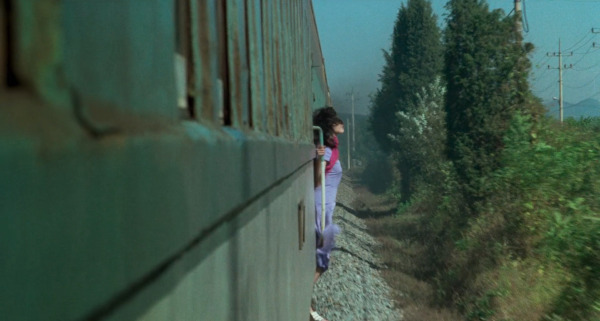
Green Fish (Lee Chang-Dong, 1997). Director Lee Chang-Dong’s visual sense is already extraordinary in his first feature. Green Fish follows Mak-dong (Han Suk-kyu), who heads home after a stint in the military and immediately becomes fixated with Mi-ae (Shim Hye-jin), a woman he sees on the train. She’s a nightclub singer and the girlfriend of a bullying gangster (Moon Sung-keun), which means Mak-dong is bound for a whole lots of messy, violent trouble. There were a few instances when I ached for slightly tighter plotting, but the film is mostly an effective neo-noir. It’s especially fascinated that it seems inspired more by the Hollywood stabs at such a thing from the nineteen-eighties than the true classics made a few decades before that. That gives the whole endeavor an added shimmer and shine that’s weirdly intoxicating, like it’s forcing itself onto the screen from some sort of netherworld that exists outside of cinematic time. Shim has a lot of emotional terrain to cover in her role, and she does it exceptionally well.
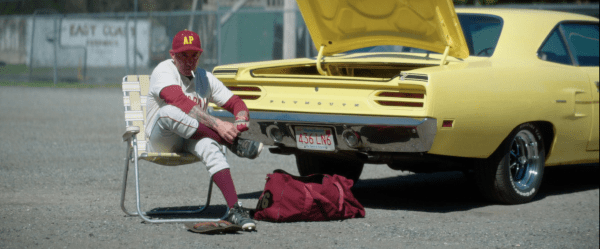
Eephus (Carson Lund, 2025). Officially, Eephus is set in the nineteen-nineties, though its tone — and a few of its visual signifiers — owes far more to the comically forlorn sports movies of two decades before that. It’s like the Bad News Bears grew up and kept playing on the same ball field as it grew seedier and seedier. In this case, it’s the final game of rec league baseball before the park is plowed under to make way for a new school. Whatever fond valedictory feelings might be in place are mostly overtaken by resentments, spurred by the fact that one of the players was involved in the real estate deal that doomed their field of play. It’s not just a park that’s being torn away, it’s what shards of left of the players’ bygone youth. The movie is incredibly special in its scruffy, low-key charms. It develops the characters and the conflicts gradually, all with a keen awareness of how small gestures can reveal full personalities. In his unfussy, unhurried staging — completely in step with the lackadaisical baseball game being played deep into the gloaming — director Carson Lund draws on the key attributes of Richard Linklater and Robert Altman but makes them fully his own.
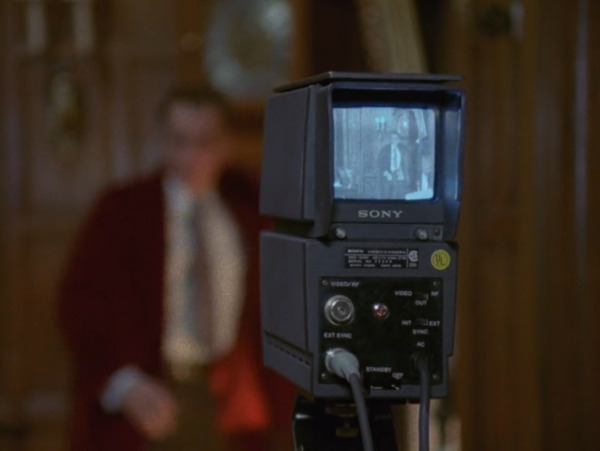
Secret Honor (Robert Altman, 1984). Robert Altman works with writers to Donald Freed and Arnold M. Stone to adapt their stage play about Richard Nixon (Philip Baker Hall), who rants away in the study of his home. He’s dictating into a tape recorder with film cameras capturing his restless movements around the room. It’s maybe legal testimony or maybe a memoir. It’s for certain wild ravings that unpacking a lifetime of grievances and hurl them around the room. There’s only one character in the whole piece, but he fills the space like a resounding chorus. The maniacal fullness means that Altman’s drive for overlapping dialogue is so all-encompassing that he even manages to fit the technique into a one-man show. Hall is exhaustingly intense as the disgraced former U.S. president. His jabbering fury is so full-throttle intense that it often seems like heart attack made into a monologue. There are few embellishments to distinguish the film version of Secret Honor from how it would have played out on stage, and Altman eventually runs out of unique ways to make the very confined material visually interesting before the film is over. He sure gives it a helluva go, though.
Discover more from Coffee for Two
Subscribe to get the latest posts sent to your email.
 Coffee for Two