
Stealing Home (Steven Kampmann and William Porter, 1988). This bland coming-of-age drama is jolted to life whenever Jodie Foster is on the screen. Foster plays Katie Chandler, who was the idealized older girl crush of washed-up baseball player Billy Wyatt (Mark Harmon) when he was a teenager (William McNamara). After hearing that Katie died, Billy returns to his hometown and slowly deals with his issues as he reunites with friends and loved ones. Foster is regularly present in the flashback sequences and puts real life and insight into a character who is little more than a concept in the script. Steven Kampmann and William Porter are co-credited on the screenplay and they also share directing duties. Aside from Foster, every bit of Stealing Home is flat and flavorless, even as the due prove to be competent visual storytellers. In the few moments that the film does approach authenticity, the effect is severely undercut by David Foster’s treacly score.
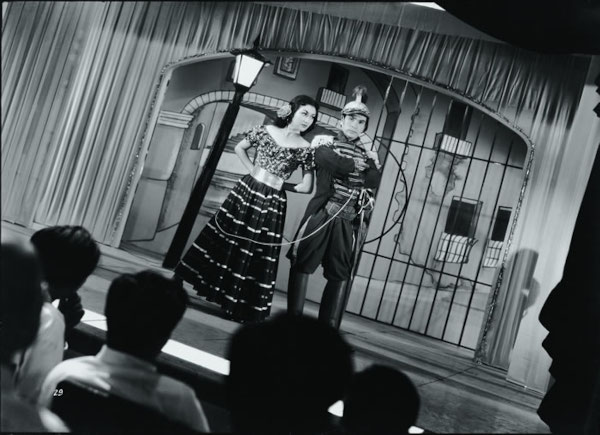
Carmen’s Innocent Love (Keisuke Kinoshita, 1952). There’s so much packed into this movie. It’s a sex farce, a cynical political and social satire, a sprightly comedy about friendship, and a stealth musical. Impressively, Carmen’s Innocent Love plays all of these divergent genres and tones fairly well. This sequel to the 1951 film Carmen Comes Home follows Carmen (Hideko Takamine), a showgirl who plays every angle she can think of in an effort to improve her lot in life. Takamine is terrific in this role that requires her to cover more ground than a marathoner: sometimes she’s weepy and vulnerable, sometimes she’s steely and sharp, and sometimes she’s so worn down by patriarchal bullshit that she seems on the verge of emotional collapse. Director Keisuke Kinoshita employs lively camerawork, including a propensity for canted angles that can make it seem like the action is taking place on the SS Poseidon.
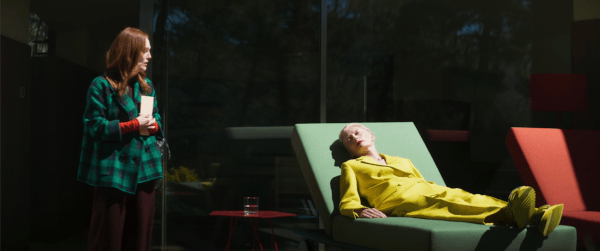
The Room Next Door (Pedro Almodóvar, 2024). Pedro Almodóvar’s first film in English implicitly makes the argument for sticking with his mother tongue. Like all of his films, it looks fantastic. Under Almodóvar’s unmistakable guidance, Edu Grau’s cinematography, Inbal Weinberg’s art direction, and Bina Daigeler’s costume design are all ravishing. It’s Almodóvar’s script that falters. Freely adapted from the Sigrid Nunez novel What Are You Going Through, the film’s dialogue is excruciatingly stilted. The story centers on Martha (Tilda Swinton), an acclaimed author who’s reached the end of her tolerance for fighting the cancer that’s been a shadow on her life for years. She secures an allotment of euthanasia pills with plans to end her life on her own terms, and she asks an old acquaintance (Julianne Moore) to accompany her to a rental home where, at some indeterminate and unannounced time, she will take the pills and be done. The powerful topics in the film are sabotaged by a dramatization that prevents anything real from intruding. Even the strong actors in the cast can’t overcome the words they’re given to develop emotional truth.
Discover more from Coffee for Two
Subscribe to get the latest posts sent to your email.
 Coffee for Two