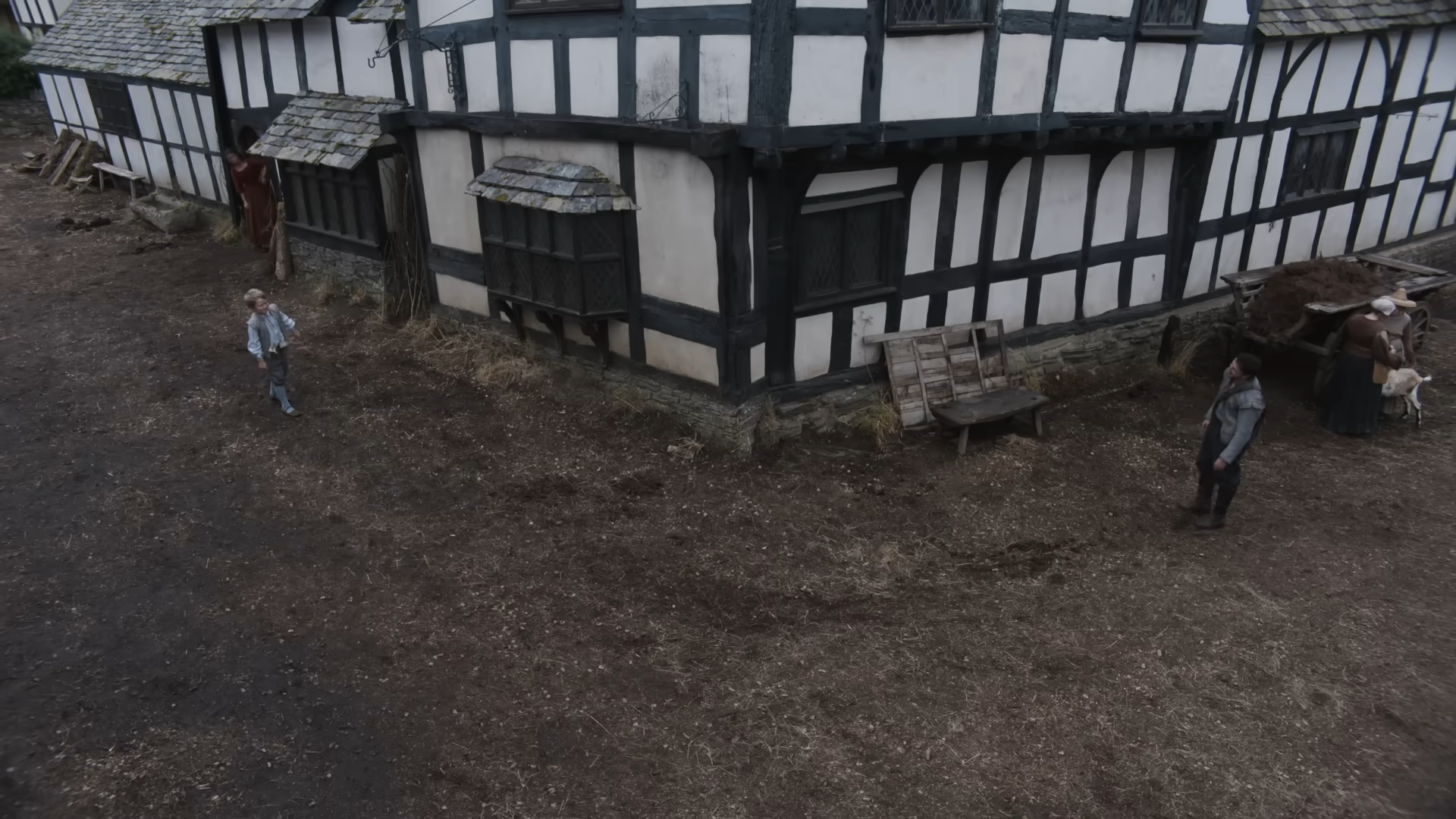
Hamnet, the new film from director Chloé Zhao, begins with what is in effect a footnote. Hamnet and Hamlet, it is explained, were interchangeable names in the England of Shakespeare’s time. Vital as that information is for the film’s devastating third act, the detail maybe could have been intuited by most viewers without the onscreen preamble. In this vividly emotive film, that is arguably the last time Zhao holds the audience’s hand.
Holding hands is something of a specialty of Agnes (Jessie Buckley). When she grips someone’s hand is the right way, she can see into their inner being and even their future. This claim is a major part of how Agnes has earned a reputation in the village and surrounding environs as an otherworldly woman to be avoided. That community reticence isn’t shared by a young Latin teacher and aspiring writer; he’s unnamed for much of the film, but it’s made abundantly clear than he’s William Shakespeare (Paul Mescal). William is drawn to Agnes. Against the protestations of their respective families, they wed, start a family, and embark on a complicated life together.
In her novel Hamnet, Maggie O’Farrell entwines the story of the romance and marriage of Agnes and William with a particularly tragic turn they faced. O’Farrell wrote the adapted screenplay with Zhao, and the chronology is unwound to a straight line. If it’s a more conventional choice in some ways, the plainer path also brings a different sort of weight to the pain that descends on the Shakespeare household. On the page, O’Farrell could go inside the character’s heads and hearts to develop the depth of feeling. Zhao knows she has to earn it in a different way, dramatic beat by dramatic beat. In her strongest films to date — The Rider and Nomadland — Zhao demonstrated an uncommon ability to make her characters’ inner lives revealed without resorting to short cuts like voiceover or implausible monologuing. That ability serves her well here.
There might be another name actress working today who could hit all the required points on the strange range required for Agnes — wrenching sorrow, headstrong determination, and unworldly wonder and a sort of ethereal cunning in coexistence — but I don’t anyone could make it all come across as naturally as Buckley. She gives one of those magical performances that feels lived rather than acted. Others in the film are also excellent, most notably Mescal and young Jacobi Jupe, as Hamnet Shakespeare. Buckley is at another level.
The strength of the acting is matched by the other elements of the production. There is an assured director at work here. Zhao makes strong choices throughout. The technical aspects are all exemplary, especially Łukasz Żal’s cinematography, and Zhao carefully builds to the powerhouse closing scenes, knowing they will necessarily serve as teary catharsis. I’m not sure every choice works — the expansion of William’s narrative prominence from the original book brings a couple mildly wrong moments for me — but they are definitively choices, and that is blessed, increasingly rare thing for cinema that has major aspirations. Hamnet, thankfully, is the work of a filmmaker.
Discover more from Coffee for Two
Subscribe to get the latest posts sent to your email.
 Coffee for Two