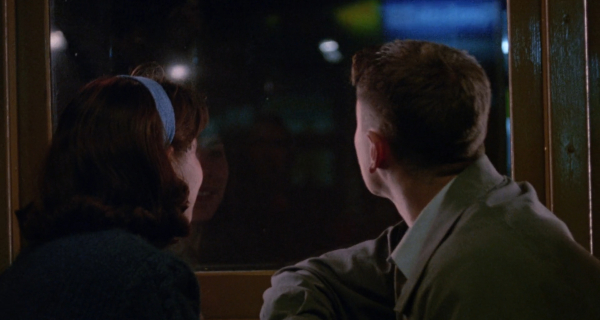
Dogfight (Nancy Savoca, 1991). Eddie (River Phoenix) is a young marine who is on leave with a few of his buddies the day before they ship out to an overseas deployment. The group of them decides to kills some time on their last night stateside with a meanspirited contest where they all secure dates and the person whose girl is judged to be the least attractive will collect a pool of cash. After striking out a few times, Eddie convinces Rose (Lili Taylor), a waitress at her family’s coffee shop, to accompany him. Although the film is set in 1963 and is rich in period trappings, director Nancy Savoca doesn’t excuse the misogynistic behavior as some remnant of a bygone past. Working from a screenplay credited to Bob Comfort, Savoca treats the unkind actions of these men as reprehensible and a nearly inevitable side effect of their broken subculture. Eddie proves to be an exception. He quickly grows to care for Rose, in part because she is willing to push back at his masculine posturing in an attempt to understand him as a real, full person. It’s a marker of how good both Taylor and Phoenix are — and how good they are together — that everything that isn’t centered on their acting duet feels extraneous. If Dogfight had been a true two-hander, sticking intently with Eddie and Rose, it could have been extraordinary. The subplots and side characters keep getting in the way.

Babygirl (Halina Reijn, 2024). Babygirl is quite an acting showcase for Nicole Kidman, and Halina Reijn directs the hell out of it. The film also raises thornier questions than I think it’s prepared to answer. Kidman plays Romy Mathis, the CEO of a tech company based in New York. She’s powerful, stressed, and woefully unsatisfied. She fixates on Samuel (Harris Dickinson), a confident intern at her company who she first spied getting a stranger’s agitated dog to heel in the street. Romy and Samuel embark on a sexual affair that largely involves her ceding control to him, a complete inversion of her existence on the other side of that particular closed door. Reijn’s screenplay has plenty of kink but not quite enough thought about what the warping power dynamics really mean. Part of the film’s shortcoming in making a wholly coherent argument is that every character other than Kidman’s is elusive to the point of hollowness. It’s hard to discern what Samuel wants out of this relationship, even if it’s as simple as just getting some sleazy kicks. That emptiness might be part of the point, a feminist switcheroo making the male figures into pinging satellites around the female lead. If so, the drama is still blunted.
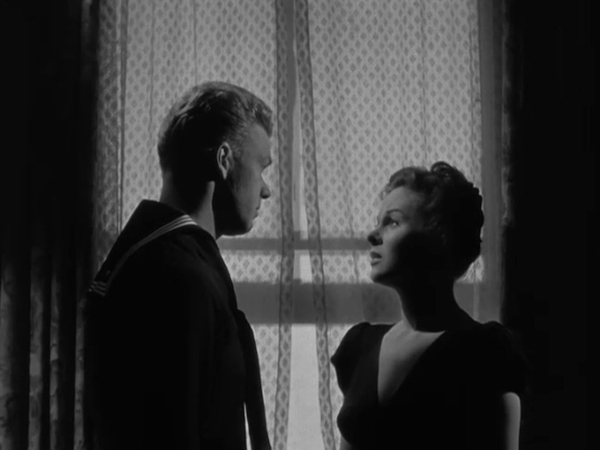
Deadline at Dawn (Harold Clurman, 1946). Fantastic dialogue, striking cinematography, and a sharp performance by Susan Hayward are the main highlights of this film noir. The quality of the script’s words can probably be directly attributed to the fact that it’s written by no less a talent than Clifford Odets, who was at the time deep into a Hollywood stint during a lull in his formidable career as a playwright. Adapted from a 1944 novel of the same name, Deadline at Dawn involves a sailor on leave named Alex (Bill Williams) who wakes up from a blackout drunk with a wad of mysterious cash in his pocket. He connects with June (Hayward), a kind-hearted dance hall girl, who helps him attempt to return the money. The two get drawn into a twisty mess of murderous recriminations and are left scrambling to clear their names. Sure, the story gets convoluted at times, but it’s largely in the commendable service of filling scenes with a bevy of colorful characters who roam the city at night. Harold Clurman does his best to keep all the flailing plot threads straight. That’s a losing battle. Luckily, he does better at the more important task of making the film into a glorious mood piece that’s understandably enamored with its own shadows.
Discover more from Coffee for Two
Subscribe to get the latest posts sent to your email.
 Coffee for Two