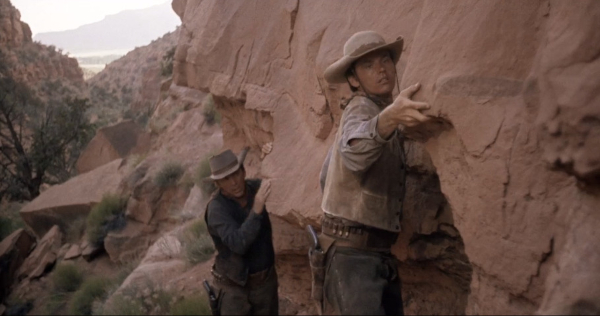
Ride in the Whirlwind (Monte Hellman, 1966). This Western is serious, cynical, and sorta dull. Released as the genre was ceding its former primacy in the Hollywood firmament, Ride in the Whirlwind depicts a wary standoff between murderous stagecoach robbers and a trio of cowboys who just happen to be passing by the outlaws’ hideout shack. The safe stasis between the suspicious parties comes to an end when a third group, a band of vigilantes, arrives on the scene. Even as there’s an appeal to the understatement present in this Western, it is ultimately too slow and deliberate. Monte Hellman directs with visual precision but also a distinct lack of urgency, as if he’s trying to stretch the thin story to the length of a feature. The film is most notable for providing early roles for Harry Dean Stanton and Jack Nicholson. The former is taciturn and oily as one of the robbers, and the latter is a little drowsy, giving scant indication of the semi-hinged brilliance that defined his career.
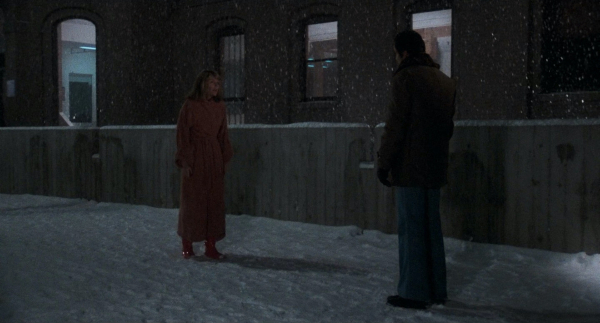
Starting Over (Alan J. Pakula, 1979). The first produced feature film screenplay from James L. Brooks is filled with scenes that show off his expertise in revelatory dialogue that balances comedy and drama (“It’s getting late. I was beginning to worry. I was afraid you weren’t in an accident.”). It also has too much frivolous schtick. Adapted from a 1973 novel by Dan Wakefield, Starting Over finds Phil Potter (Burt Reynolds) sullenly trying to rebound from a divorce. He joins a men’s talk therapy group and starts dating. He eventually enters into a fitful romantic relationship with Marilyn Holmberg (Jill Clayburgh), a teacher who’s warm but wary. This situation gets yet more complicated when Phil’s ex-wife (Candice Bergen) seeks to rekindle their relationship. Director Alan J. Pakula doesn’t have a great feel for this lighter material. He grinds through scenes in a manner that emphasizes rather than elides the story’s weak spots. Reynolds and Clayburgh both deliver nice performances that help keep the film centered.
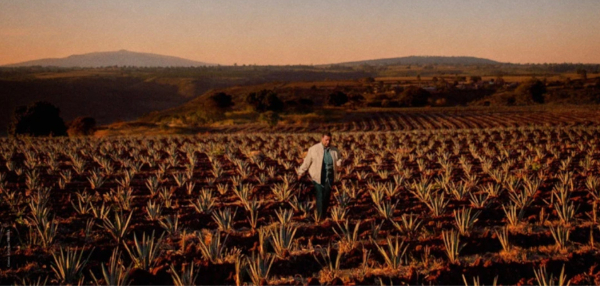
Dos Estaciones (Juan Pablo González, 2022). María (Teresa Sánchez) is the proprietor of a struggling tequila factory in Jalisco, Mexico. She runs her business with the dour menace of a Mafia don. One of the few people who receives kindness from her is Rafaela (Rafaela Fuentes), a young woman with experience at a rival tequila concern who María hires as an employee. María’s appreciation for Rafaela doesn’t seem to be strictly professional. Sánchez’s performance is necessarily focused on interiority, but there are tremors of intense emotion that come to the surface. The drama in Dos Estaciones is rendered so naturalistically that the film can feel like a cinéma vérité documentary, especially in the early going as it establishes its settings. When director Juan Pablo González feels a strong obligation to serve the plot, the film can stiffen up. His clear talent is for mood and feel. The more mechanical requirements of narrative comes across as almost intrusive to his process.
Discover more from Coffee for Two
Subscribe to get the latest posts sent to your email.
 Coffee for Two