So much attention and outrage has been leveled at the sorry state of the American food industry in recent years, from the meticulous reporting of Eric Schlosser’s Fast Food Nation to Morgan Spurlock’s Super Size Me up through the hugely successful nourishment manifestos of Michael Pollan. Many of the arguments are persuasive, especially when coupled with the avalanche of food recalls that have helped network news producers fill their allotted airtime with precisely the sort of alarmist warnings of danger around every domestic corner that they thrive upon. And yet the mounting research hasn’t provoked a sea change. McDonald’s remains an international force like no other and the American appetite for sugar and grease stands unabated. Have we become so culturally jaded, so ambivalent about corporate maliciousness and the slow corruption of societal well-being that the paradigm-shifting impact of The Jungle or Silent Spring will never be seen again?
Food Inc. is the latest attempt to wrest American consumers out of their deep-fried complacency. Directed by Robert Kenner, the documentary includes some commentary from both Schlosser and Pollan. Schlosser, in fact, serves as one of the film’s producers, and it bears some resemblance to Fast Food Nation in its breadth and ambition. In ninety brisk minutes, Kenner tries to examine each and every link of the corporate food chain. Many of the topics covered could arguably come close to filling a feature with a little more robust exploration. Instead, they’re all piled up here. It does contribute to a sense of the vastness of the problem, and the interlocking nature of some facets: the way that the negligence which leads to grave foodborne illness is obscured from public scrutiny by the food libel laws that make it costly for critics to directly, forcefully address the problem, or the methods employed by different corporations to keep small farmers entirely beholden to their contracted patronage. Showing all the different moving parts helps the full extent of the damage to the entire system become apparent.
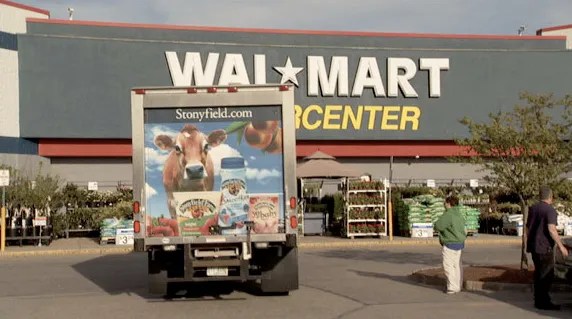
That rapid race through multiple theses can sometimes leave some of them feeling under-considered. The founder and chariman of Stonyfield Yogurt can insist all he wants that the most devout adherents to the organic food movement stop criticizing him for selling his product to the evil empire of Wal-Mart when he talks about the size of the orders, but it would have been nice to hear some of them say it. For that matter, it would have been nice to hear from someone expressing a different view on whether or not companies like Stonyfield remain true to their origins when they’re purchased by big corporations and start jockeying for space on box store shelves, but Kenner doesn’t have time for competing voices. There’s always another point to make. Those points remain well-argued, compelling, revelatory, infuriating. The film, however, feels a little less full.
Discover more from Coffee for Two
Subscribe to get the latest posts sent to your email.
 Coffee for Two