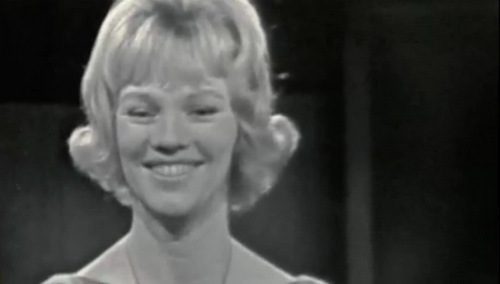
Sarah Polley has directed two prior feature films, but Stories We Tell represents her first foray into the documentary form. It’s not hard to fathom what led her to explore this particular story as a non-fiction effort. A skilled screenwriter, Polley could have probably come up with a script that transposed the basic facts of her familial history that are revealed in Stories We Tell, but the result surely wouldn’t have been as satisfying. Instead, she points her camera at various members of her family and a few acquaintances of her mother, instructing them all to simply relay the saga of secrets that was the impetus for the project in the first place. On the basis of the appealing rough montage at the beginning of the film, Polley’s prompt–at least her opening prompt–to these interview subject was simple: tell your version of the story.
That is what Polley is interested in, after all: different versions of the same story, the evolutions they go through, the way different people shape them in accordance with their own perceptions. Certainly she has a sad, odd soap opera to spin in recounting an unexpected revelation that changed nearly everything about her own history and, perhaps, her sense of self. But that history is the framework of Stories We Tell, not the real purpose. Polley is digging at the variations on truth that exist. None of the interviewees, it seems, are anything less than assiduously honest. They’re simply helpless in revealing the limits of their own observational skill rather than something that can stand as plain reality.
It’s interesting that among the abundance of voices, it is Polley’s that is most conspicuously minimized, despite the fact that the family secret she shares is centered on her. No one else’s perspective is necessarily lacking in emotion, insight or wry humor (in particular, I suspect I could have listened solely to her brother Johnny’s version of events and been highly entertained), but it can be seen as curious that Polley never subjects herself to a version of the interrogation or confession that everyone else endures. It seems like it could be a natural reticence or even an artistic acknowledgement that the film is evidence that she’s still working through her feelings on the matter. Then towards the end, Polley places her hand on the table. Helped by the observations of one of the interview subjects, a filmmaker himself, Polley is able to make it clear that this reconstruction of the past–replete with mysteries and revelations–is without question her expression of what happened, her telling of the story. No matter how much freedom she gives to everyone else in their halves of the on-camera interlocutions, it is Polley who finally decides how the truth will be shaped, exactly what fictions might enhance it. By speaking the least, Polley gets the last word, ingeniously so.
Discover more from Coffee for Two
Subscribe to get the latest posts sent to your email.
 Coffee for Two