Late in the closing credits of Inside Out, the latest feature from Pixar Animation Studios, there’s a dedication offered out by the filmmaking team to their collected children, urging them to never grow older. Ever. That’s hardly an original sentiment for parents to express. It even borders on the banal. That’s not what makes it notable. What makes it truly stand out is the way the wish for eternal childhood is at complete odds with the message of the movies that’s just preceded it. The creators may want their kids to stay kids. The film argues, persuasively, that growing up is okay.
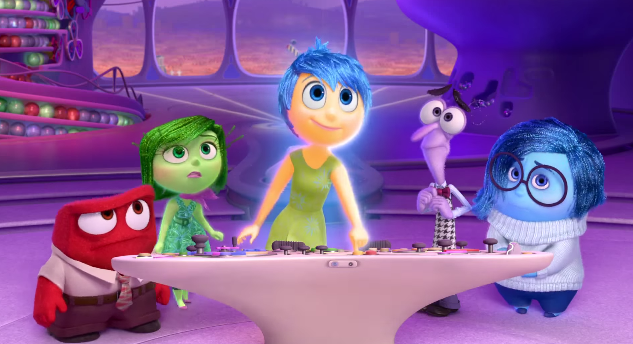
Maybe more so than any other Pixar effort, Inside Out begins with a conceit rather than a plot or a batch of characters. The film purports to show the inner workings of the mind, with emotions represented by humanoid figures, personality traits by churning, mechanized islands, and memories by glowing marbles that accumulate during the day before being dispatched to walls of storage that look like they’ve been borrowed from the most massive bowling alley in history. The emotions are at the control panel, adjusting reactions. In this case, they’re driving a tween named Riley (voiced by Kaitlyn Dias), a hockey-loving girl from Minnesota who’s having difficulty adjusting after a cross-country move to San Francisco.
Giving away much more of the plot seems unkind. All that needs to be conveyed is admiration for the ways in which the film creative explores the landscape of the mind, playing with notions of how a person is developed by their experiences or simply finding a clever way to depict abstract thought. Director and co-writer Pete Docter — whose Up contends for the highly competitive title of Best Pixar Film Ever — manages the remarkable feat of caressing all this tomfoolery of the mind in such a way that it feel right (or right enough) and always serves the main story. Plus, he (along with credited co-director Ronaldo Del Carmen) has assembled perhaps the most spot-on perfect voice cast since the heady days of Toy Story, when the Pixar braintrust surely knew they were on to something great from at least the moment they placed a Mr. Potato Head in front of Don Rickles and announced, “This is who we’d like you to play.” The film features Bill Hader as Fear, Mindy Kaling as Disgust, Lewis Black as Anger, and Phyllis Smith as Sadness, all of them wonderful and yet none quite comparing to the tremendous vocal turn of Amy Poehler as Joy.
Inside Out is boundlessly inventive and enjoyable, but what makes it a truly special film is the depth of wisdom to its thesis that growing into more complex emotions is challenging but worth it. On one level, the film is about accepting that sadness is a valuable part of the human experience, and Docter has indicated that it was precisely that inspiration that motivated his approach to the story. But there’s more to it than that. As the eventual shifting colors of the orbs of memories suggest, the mark of a maturing mind is the ability to recognize, process, and accept multifaceted reactions to the stuff of life. It’ll get tougher, but ultimately more rewarding, too. So Pixar kids shouldn’t take the suggestion presented by their parents at the end of Inside Out. There’s no rush to rush towards growing up, but no reason to delay it either. It may be scary on the other side of childhood. It’s also wondrous, exciting, enriching, and, yes, even beautiful.
Discover more from Coffee for Two
Subscribe to get the latest posts sent to your email.
 Coffee for Two