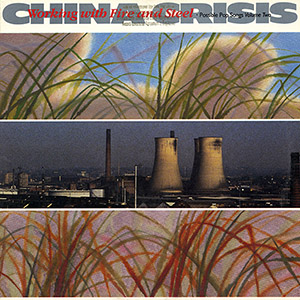
812. China Crisis, Working with Fire and Steel (1983)
It is probably a fair measure of the rather arch sensibility of the band China Crisis that the subtitle of their sophomore album is Possible Pop Songs Volume Two. In any reasonable evaluation of Working with Fire and Steel, the album in question, there’s not much mystery about whether or not these are pop songs. They shine and swoon and eagerly cavort, reveling in the emerging studio artistry options of the day. The album is produced by Mike Howlett, but his time as a member of prog rock oddballs Gong doesn’t divert the individual cuts much from the sonic path already broken by chief creators Gary Daly and Eddie Lundon. These are pop offerings straight from a heaven decorated in a futuristic minimalism aesthetic.
The band’s methodology was basically working. “Wishful Thinking,” the album’s biggest hit, was the first and only China Crisis single to cross into the U.K. Top 10. The track is gentle and charming in its lovelorn elegance, a template they comfortably revisit without becoming overly beholden to it. The title cut is skittering disco, and “Animals in Jungles” contorts itself with a swinging verve. The band sounds like a less amped-up Howard Jones on “When the Piper Calls” (“I found a silent dream/ And held it for a day/ But just like water/ I let it slip away”), which makes it both on point for the era and atypically relaxed and confident.
The band’s future was also contained in these tracks, if only because “Papua,” one of the more politically minded tracks on the album, caught the ear of Steely Dan’s Walter Becker. Before long, he sought out China Crisis and offered to produce their next album, highly buffed Flaunt the Imperfection.

811. Return of the Living Dead soundtrack (1985)
Released in 1985, Return of the Living Dead was part of the long legacy of George Romero’s 1968 horror classic Night of the Living Dead. As with most lucrative tributaries from Romero’s original creation, the filmmaker saw no personal financial reward from it. Instead, it was John Russo, co-screenwriter of the earlier film, who orchestrated this bleakly comic romp with zombies. After Romero and Russo acrimoniously parted ways, it was the latter who retained the movie rights to the “Living Dead” branding. Russo tapped out a novel and script adaptation called Return of the Living Dead, eventually giving it to Alien screenwriter Dan O’Bannon to revise. When original director Tobe Hooper dropped out of the project, O’Bannon stepped in to make his feature directorial debut.
Enigma Records picked up the rights to the film’s soundtrack, and the task of getting a lineup of appropriate artists and songs was given to producers Steve Pross and Bill Hein. Pross, in particular, was deeply knowledgable about punk rock and was an equally devoted fan of horror movies. Given the ripe tomfoolery animating the film — and the presence of dyed hair, generously pierced punk rockers among the cast of characters — assembling a group of especially playful practitioners of one of the more bludgeoning forms of rock ‘n’ roll made perfect sense. Any album that included Lux Interior intoning, “Ah, my favorite brain soup/ Cream of nowhere” (on the Cramps’ selection “Surfin’ Dead”) is doing the greater populace a service simply by existing.
Other highlights on the album included 45 Grave’s snarling “Party Time,” Roky Erickson’s wonderfully weird and dramatic “Burn the Flames,” and the Damned blitzing the ballroom with “Dead Beat Dance.” Then the album makes a genre change so pronounced, it goes past changing lanes to careening over the median to race off in the opposite direction. The soundtrack closes with two synth-driven songs by SSQ, including the post-apocalyptic disco track “Tonight (We’ll Love Until We Die)” (“Rising from your earth bed/ It lingers in the air/ A smell gone sweetly rancid/ I know that you are near”). It likely created annoyance for devoted punk record buyers who otherwise hurled their stud-adorned first skyward through the duration of the disc. For college radio, though, it was just another reason to return to this unlikely soundtrack while it edged through the new music rotation.
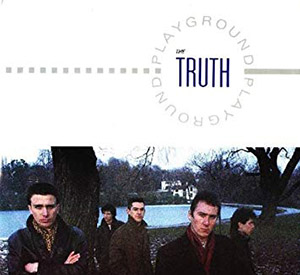
810. The Truth, Playground (1985)
The Truth formed in the U.K. in the early nineteen-nineties, after guitarist and vocalist Dennis Greaves finished his initial tenure with the band Nine Below Zero. Greaves teamed with Mick Lister, who also wielded the guitar and sang, and the two moved collaborators in an out of the lineup and they released a small batch of singles on the way to their full-length debut, Playground.
The album is a splendid piece of smartly crafted pop, moving enticing between slightly varied styles, merging old and new elements to come up with songs that are wholly unique with a tinge of the familiar. Sometimes, those echoes are of the music that was happening more or less concurrently. “Spread a Little Sunshine” has a through line that sounds like Cyndi Lauper’s “Time After Time” played on the wrong speed, and “Exception of Love” is not all that far removed from a Wham song. There’s a Joe Jackson vibe on “I’m in Tune,” and the big blast of sound of the title cut suggests Julian Cope fronting the E Street Band.
The album is broad enough in its construction that the specific comparisons can only fill in so much. The retro-tinged seduction on “It’s a Miracle” or the galvanizing, punching drum sound on “You Play with My Emotions” tell their own tales of the Truth’s creativity. The material holds so much promise, but the band was relatively short-lived. They released two more albums to precipitously diminishing interest. The band closed up shop before the eighties ended. A reunion, of course, followed.
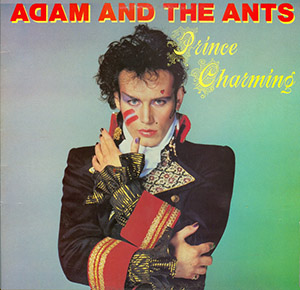
809. Adam and the Ants, Prince Charming (1981)
Officially the third album billed to Adam and the Ants, there was little doubt that Prince Charming largely belonged to the similarly monikered fellow at the front of the group. Success on the U.S. charts was still proving elusive, but Ant was routinely taking his group to the upper reaches of the U.K. equivalent. He enjoyed three straight Top 10 hits across the end of 1980, and the music press focused its fascination squarely on him. Prince Charming took it up yet another level.
The album’s first two singles — “Stand and Deliver” and the title cut — both topped the U.K. chart, in the process cementing Ant’s musical persona: theatrical, confident, mischievous, and just a touch bawdy. His was a kingly seduction, relentless and utterly disinterested in nuance. Prince Charming was released within the first three months of MTV’s existence. Ant’s timing couldn’t have been better.
Unlike some of the other albums released at the time with a similar sound, Prince Charming lacks the infectious sense of crafty inspiration that lends a certain timelessness, or at least endurance. “Ant Rap” has a clumsy goofiness, “Five Guns West” is a dull pastiche, and “S.E.X.” is like a discard from a nineteen-seventies movie satire taking aim at rock ‘n’ roll excess. Despite declarations of his own perfectionist streaks, Ant often seemed to be putting on an act, sometimes bordering on a reflexive subversion of form the likes of Andy Kaufman at his most indulgent.
Whether or not Ant’s impulses were sound, he was devoted to them and fully prepared to claim them as solely his own. Prince Charming was the last record that billed Adam as backed by Ants. After this, he was on his own.
To learn more about this gigantic endeavor, head over to the introduction. Other entries can be found at the CMJ Top 1000 tag. Most of the images in these posts come straight from the invaluable Discogs.
Discover more from Coffee for Two
Subscribe to get the latest posts sent to your email.
 Coffee for Two