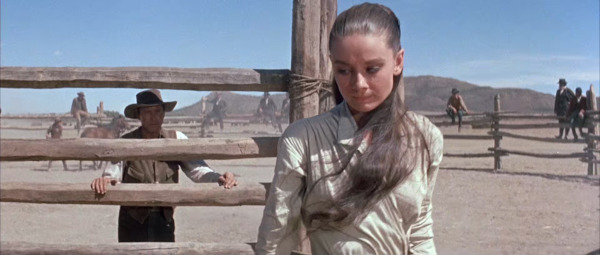
The Unforgiven (John Huston, 1960). Adapted from a 1957 novel by Alan Le May, The Unforgiven settles in with the Zachary family, Texas ranchers whose status in their frontier community is set into turmoil when a mysterious stranger (Joseph Wiseman) arrives. He claims that Rachel (Audrey Hepburn) that the family adopted when she was an infant is a Native American, in direct opposition to the long-held belief that she was orphaned when her white parents were killed in an attack by members of the Kiowa tribe. The film addresses the bigotry against Rachel, though its clear that punches are being pulled, reportedly at the behest of the studio and star Burt Lancaster. Director John Huston wanted to go further, and he’s clearly most engaged in the moments of social dispute. When the last act is turned over to a protracted gunfight standoff, the film becomes numbingly turgid. Hepburn is characteristically vibrant in the film, playing the pivoting emotions of Rachel with grace, depth, and personality.
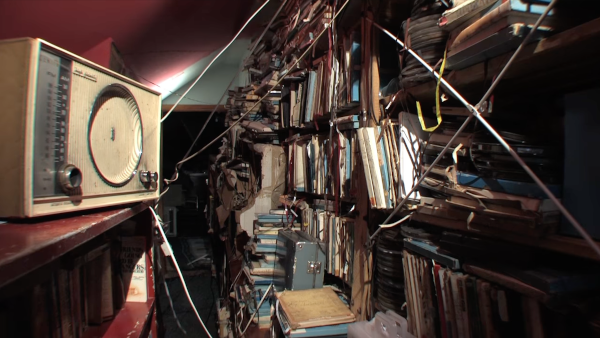
Radio Unnameable (Paul Lovelace and Jessica Wolfson, 2012). This documentary traces the broadcasting career of Bob Fass, who famously manned the overnight shift on listener-supported radio station WBAI-FM, in New York City, for several decades. His real heyday was the nineteen-sixties and nineteen-seventies, when a stream of counterculture figures came through the studio. Because Fass was a devoted recorder of his own program and a packrat, directors Paul Lovelace and Jessica Wolfson have an abundance of audio to draw on. They deploy it well, interweaving it with the recollections of Fass and others to make a convincing case that something special was riding the airwaves in the wee hours of the morning. Radio Unnameable loses its shape in its latter portion, when Lovelace and Wolfson can’t quite figure out how to address Fass’s eroded stature within an increasingly scattershot station. Even then, the film’s thesis arguing for value of iconoclastic voices comes through.
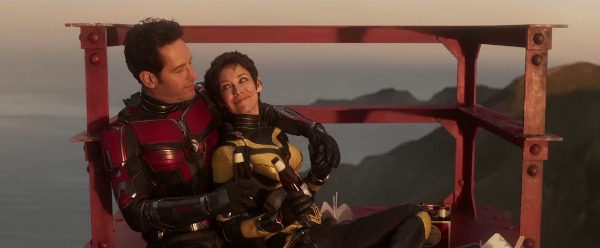
Ant-Man and the Wasp: Quantumania (Peyton Reed, 2023). With few exceptions, the movies spewing the marauding Marvel machine are hampered by cacophonous closing action sequences that are CGI eyesores of varying narrative coherence. This is true even of the good ones. Ant-Man and the Wasp: Quantumania poses the radical question “What if almost an entire feature was given over to that digitally rendered gobbledygook?” Continuing the studio’s disastrous dalliance plots that are onion-layered with perplexing multiverse business, the film follows the superheroic family unit that includes Ant-Man (Paul Rudd) and the Wasp (Evangeline Lilly) as they tumble into the Quantum Realm, the submicroscopic place where the latter’s mom, Janet Van Dyne (Michelle Pfeiffer), was stranded for decades. There, they come into conflict with Kang, played by Jonathan Majors with a soothing calm that explodes into raging sociopathy, which now plays particularly poorly given the ugly details that have emerged about his life off screen. Written by Jeff Loveness, a Rick and Morty veteran, the film is obviously meant to take a playful approach to some of the wilder imaginings that can be drawn from the comic book source material. Instead, the whole endeavor is tediously inane. The deft touch director Peyton Reed showed in the two previous outings spotlighting these characters is entirely absent here. More surprisingly, most of the performances in the film are actively bad. Based on the film, Pfeiffer is the only one who regularly came to set with intentions of acting rather than merely shouting or mugging with dead-eyed double takes.
Discover more from Coffee for Two
Subscribe to get the latest posts sent to your email.
 Coffee for Two