
Julia (Fred Zinnemann, 1977). The period docudrama is sort of a biopic, sort of a wartime thriller, and sort of a exploration of complicated female friendship. It hitting all these different beats, Julia never finds a wholly satisfying rhythm. Jane Fonda plays Lillian Hellman, who is straining to establish herself as a writer while engaged in a chilly romance with Dashiell Hammett (Jason Robards) and occasionally circling back to her childhood friend (played as a adult by Vanessa Redgrave), who is immersed in various fraught efforts to stave off the advance of the Nazis across Europe. Screenwriter Alvin Sargent adapts one chapter from Hellman’s 1973 book, Pentimento: A Book of Portraits, and he does so with care, dignity, and a discernible lack of verve. At the absolute height of her powers, Fonda in a powerhouse in the leads role, jolting scenes to life with her pinpoint focus and whiplash emotions. She goes a long way towards making the film work despite itself. Both Redgrave and Robards claims Oscars for their performances, but neither is really all that memorable. Fred Zinnemann’s direction is stiff and serviceable.
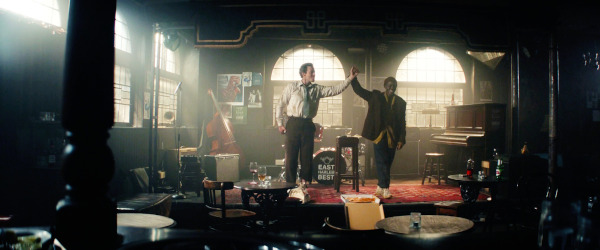
A Quiet Place: Day One (Michael Sarnoski, 2024). A Quiet Place: Day One is so remarkably rich and thoughtful that it could almost rescue franchise filmmaking from its well-earned reputation for artistic disrepute. Writer-director Michael Sarnoski’s storytelling is downright elegant, increasing in impressiveness the further away he’s allowed to get from the demands of monster mayhem. The film centers on Samira (Lupita Nyong’o), a terminal cancer patient who has the bad fortune to grudgingly consent to a field trip away from her hospice care on the very day that ravenous man-eaters with a predilection for lethally shushing noisy people first come careening down from outer space. She proves remarkably resilient and befriends Eric (Joseph Quinn), a British student whose crossed the Atlantic to study law. Nyong’o and Quinn are both marvelous in performances that, by necessity, often call upon the modern version of silent-movie emoting. Eschewing typical acting shortcuts employed in horror movies, the make the fear, determination, and tender foxhole friendship of the characters piercingly real. Implausibilities abound in the story, but that flaw is woven into the foundational premise of the film, as introduced in writer-director John Krasinski’s surprise 2018 hit. That Sarnoski largely makes his entry in the series so affecting anyway is a wonder.
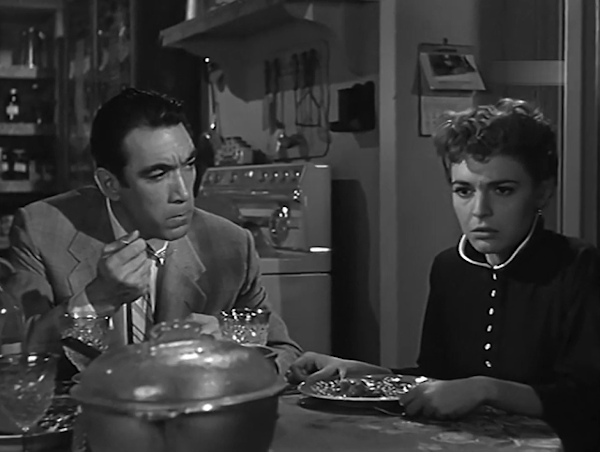
The Naked Street (Maxwell Shane, 1955). This feisty film noir follows a barbed wire–tough racketeer named Phil Regal (Anthony Quinn) as his carefully constructed world grows shaky following his orchestrations to protect the reputation of his family. Phil’s sister, Rosalie Regalzyk (Anne Bancroft), is pregnant out of wedlock, and the father is a no-good thug (Farley Granger) on death row for killing a liquor store owner during a robbery. Phil uses his connections and a some hefty wads of bribe money to spring the lowlife so he can marry Rosalie. The understanding is that the thug will keep his nose clean. Fat chance. Quinn is fantastic in the role, playing the crime boss’s quick pivots from gregarious brutishness to seething menace with a cunning and clarity that strikes me as very modern. Director Maxwell Shane (who’s also co-credited on the screenplay) is straightforward with his visuals but does fine work striking the right cynical tone. In a supporting role, as an intrepid reporter who has some dubious notions about how chummy he should get with the criminals he’s covering, Peter Graves gives exactly the sort of the performance that made him the linchpin of Airplane! a couple decades later.
Discover more from Coffee for Two
Subscribe to get the latest posts sent to your email.
 Coffee for Two